President William Ruto has said the planned Dangote refinery in Lamu will create 60,000 jobs as Kenya moves to establish a large-scale petroleum processing and industrial complex on the Coast.
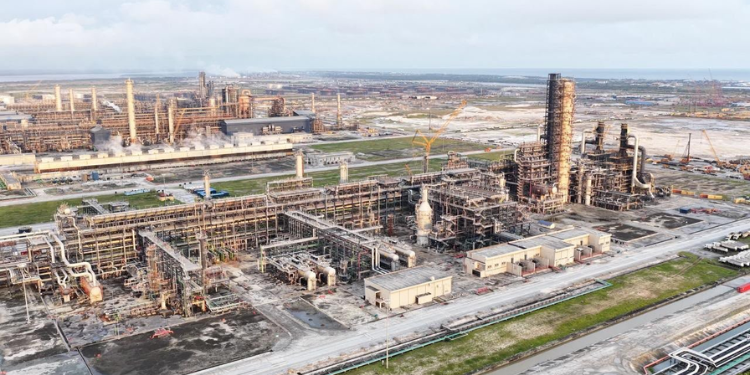
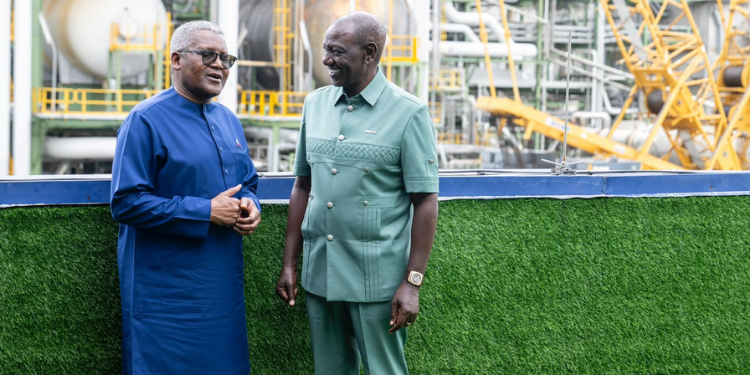
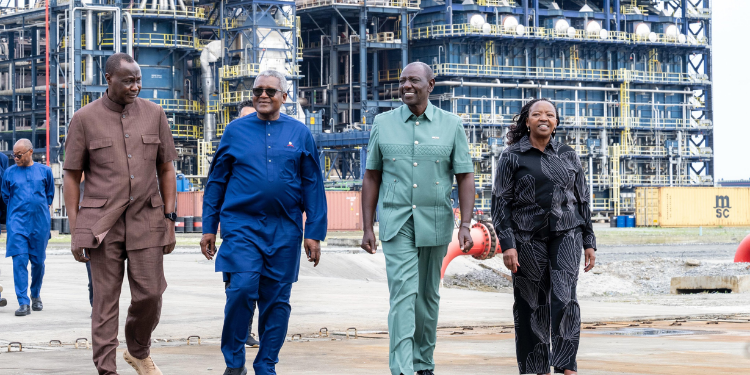
Ruto made the announcement on Friday, September 25, after touring the Dangote Petroleum Refinery in Lekki, Lagos, ahead of the planned groundbreaking of the Kenyan project on September 30, 2026.
“The refinery whose construction we launch in Kenya next week will be bigger. It will transform the petroleum sector in our country and region, providing fuel reliability and security, scaling up industrialization and creating 60,000 jobs,” Ruto said.
He added that the Lamu refinery project would create demand for other industries once the refinery is completed.
“When the refinery is completed, spin-off industries will emerge, including the production of fertilizers, chemicals, and packaging,” he said.
The proposed Lamu refinery is expected to have a capacity of 700,000 barrels of crude oil per day, matching the capacity of the existing Dangote refinery in Nigeria.
The September 30 groundbreaking is expected to mark the start of construction of the Lamu facility, planned as part of a wider petroleum and petrochemical development.
Degree, Diploma and Non-Skilled Kenyans Who Could Get Jobs as Dangote Builds Lamu Refinery
Degree Holders
University graduates are likely to be needed in the technical and professional sections of a refinery, particularly during construction and later when the plant begins operations.
Potential areas include chemical engineering, mechanical engineering, electrical engineering, instrumentation, process engineering, environmental management, laboratory science, health and safety, information technology, finance, procurement, human resources and project management.
Dangote’s existing operations show the company employs professionals across several technical and business functions.
Its current careers listings include instrumentation engineers, finance officers, production heads, project and operational readiness managers and other professional positions.
Dangote also operates a Graduate Trainee Programme. The company says the programme provides structured training, on-the-job learning and hands-on projects, with trainees receiving support from supervisors during their development.
This could provide a route for Kenyan graduates if Dangote eventually opens graduate recruitment for the Lamu project.
Diploma and Technical Jobs
The refinery will also require workers with technical training rather than university degrees.
Potential areas include mechanical maintenance, electrical maintenance, instrumentation, welding, fabrication, plant operations, equipment maintenance and laboratory work.
Dangote’s current vacancies show the importance of technical workers within its industrial operations.
The company is currently advertising positions including mechanical technicians, junior mechanical technicians, mechanical fabricators and welders, and instrumentation-related roles.
A current Dangote mechanical technician vacancy, for example, covers fabrication, installation, maintenance, repair and servicing of mechanical equipment and structures used within a plant.
An instrumentation engineer position includes testing, repairing, calibration, and troubleshooting of instrumentation control systems, as well as supervising technicians.
Welders, Fabricators and Other Skilled Workers
Construction of a refinery requires large numbers of workers involved in installing equipment and building the supporting infrastructure.
Among the possible areas are welding, fabrication, mechanical installation, electrical installation, plumbing, equipment maintenance and other construction trades.
Dangote currently lists mechanical fabricator and welder positions within its wider operations.
Other skilled workers could be needed for heavy equipment, plant maintenance, transport and site operations.
Production and Plant Operations
Once construction is completed, the refinery will require employees to run the plant.
Dangote’s current careers listings include positions such as sectional head of production and shift manager.
Production staff in a refinery would be responsible for monitoring and managing processing operations, while shift teams would oversee production activities around the clock.
Other operational roles could include plant operators, process technicians, control-room personnel and maintenance teams.
The exact positions and qualifications for the Lamu refinery will depend on the recruitment structure adopted by Dangote and its contractors.
Instrumentation and Control
Modern refineries rely heavily on automated systems to monitor pressure, temperature, flow, equipment performance and other plant processes.
Dangote currently recruits instrumentation engineers and sectional heads of instrumentation in its industrial operations.
This creates potential opportunities for electrical, electronics, instrumentation, automation and control specialists.
Technicians in this area may work on calibration, troubleshooting, testing and maintenance of control equipment.
Also Read: Ruto Takes Dangote to UNGA to Sell $17 Billion Lamu Refinery
Mechanical and Electrical Maintenance
A refinery requires teams to keep machinery and electrical systems running.
Dangote’s current careers page includes mechanical technicians as well as electrical and mechanical positions within power plant operations.
Workers in this area can be involved in equipment inspections, repairs, preventive maintenance, troubleshooting, and replacing faulty components.
These positions may require university degrees, diplomas, or specialized technical qualifications, depending on the level of responsibility.
Power Plant Jobs
The Lamu project will also require supporting infrastructure to keep a large industrial facility operating.
Dangote’s current recruitment listings include power plant operations managers, mechanical managers and electrical managers.
Such positions indicate the range of expertise required around industrial power systems, although the specific structure of the Lamu refinery’s power operations has not yet been announced in detail.
Logistics and Transport Jobs
A refinery will need to move crude oil, equipment, fuel products, spare parts and other materials.
Dangote currently advertises fuel loading and logistics positions, as well as transport-related roles, across its businesses.
Potential employment areas around the Lamu project could therefore include logistics, fleet operations, fuel handling, transport coordination, warehousing and material movement.
These jobs could involve both professional staff and workers with technical or vocational qualifications.
Stores and Inventory Jobs
Large industrial plants require stores teams to receive, record, organize and issue equipment, spare parts and other materials.
Dangote’s current careers listings include store managers responsible for receiving, issuing and inventory control.
This means employment linked to the project could also extend into warehouse management, inventory control, procurement and materials handling.
Finance, Administration and Human Resources
The refinery will also require employees outside engineering and plant operations.
Dangote’s current vacancies include finance officers, financial reporting managers and administrative positions such as receptionists and secretaries.
Other support functions can include human resources, procurement, accounting, legal services, information technology and office administration.
The range of Dangote’s current vacancies shows that a large industrial operation requires workers across both technical and non-technical departments.
Jobs for Non-Skilled Workers
The 60,000 figure announced by Ruto should not be interpreted as 60,000 direct Dangote vacancies.
The figure relates to employment expected to be generated by the project and its wider industrial activity.
During construction, opportunities can arise in areas such as general labour, site support, material handling, cleaning, catering, security, transport and other services.
Some of these jobs may not require university qualifications, although employers will still set their own requirements.
The construction phase can also create work for drivers, machine operators, loaders, store assistants and other workers supporting contractors at the site.
Also Read: Dangote Taps Indian Gov’t Firm for KSh58 Billion Kenya Oil Refinery Project
Contractors Will Also Recruit
Not every worker involved in building the refinery will necessarily be employed directly by Dangote.
Large refinery projects require engineering firms, construction companies, equipment suppliers, transport companies and other contractors.
These companies can recruit workers for specific parts of the project.
Kenyan workers could therefore find opportunities through contractors as well as through Dangote itself.
The distinction is important because a vacancy advertised by a contractor working on the refinery would not necessarily be a Dangote employee position.
Ruto said the refinery would also stimulate the development of other industries.
“When the refinery is completed, spin-off industries will emerge, including the production of fertilizers, chemicals, and packaging,” he said.
These industries could create additional demand for workers in manufacturing, engineering, laboratory services, logistics, maintenance, sales, transport and administration.
The employment impact could therefore extend beyond people working inside the refinery.
How Dangote Recruits
Dangote’s existing recruitment system indicates how Kenyans could apply for jobs if the company opens positions for the Lamu project.
The company directs applicants to its official careers platform, where they can search jobs by keyword and location.
Dangote’s careers FAQ says applicants can filter available positions by location and apply through its careers platform. The company also operates a Graduate Trainee Programme that provides structured training, on-the-job learning and hands-on projects.
The group says it operates across more than 10 countries and has more than 30,000 employees, with opportunities across its different businesses.
Its current careers listings include positions in Nigeria, Tanzania and the Republic of Congo, among other locations.
This shows that recruitment is not limited to one type of worker.
Follow our WhatsApp Channel and X Account for real-time news updates.