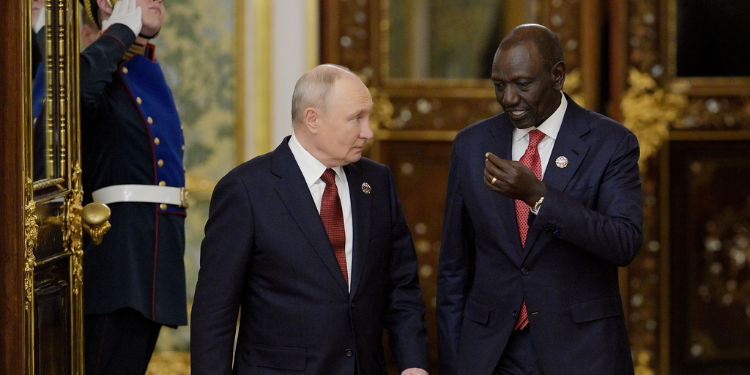
Kenya has voted in favour of a Russian-sponsored United Nations resolution condemning the glorification of Nazism and neo-Nazism, joining 116 other countries in supporting the measure despite opposition from the United States, the United Kingdom and several European countries.
The UN General Assembly’s Third Committee approved the resolution on Tuesday, November 10, 2026, with 117 countries voting in favour, 53 against and nine abstaining.
Kenya’s vote placed it among the countries supporting the Russian initiative amid divisions over Moscow’s invasion of Ukraine and its use of anti-Nazism arguments to defend its military actions.
The resolution was introduced under the title Combating glorification of Nazism, neo-Nazism and other practices that contribute to fuelling contemporary forms of racism, racial discrimination, xenophobia and related intolerance.
It calls on countries to oppose the glorification and propaganda of Nazism, neo-Nazism and related extremist ideologies.
It also condemns attempts to deny or distort crimes committed during the Second World War, including efforts to rehabilitate Nazi collaborators.
The text addresses racism, racial discrimination, xenophobia and intolerance based on ethnic origin, nationality, religion or belief. It also calls for preserving historical records and protecting the historical truth surrounding the Second World War.
Russia has sponsored versions of the resolution annually since 2005, presenting the initiative as part of international efforts to prevent the rehabilitation of Nazism and protect the historical legacy of the victory over Nazi Germany.
Kenya’s Position in the Vote
Kenya’s vote placed the country alongside Russia and the majority of countries that supported the draft.
Also Read: Kenya Responds to Saudi Arabia Sentencing Its Citizen to 100 Lashes for Getting Pregnant
Other countries voting in favour included several African, Asian, Middle Eastern and Latin American states.
The voting pattern reflected broad support for the resolution among countries outside the Western bloc.
The United States, United Kingdom, France, Germany, Italy, Canada, Japan, Australia, Poland and Ukraine were among the 53 countries that voted against it.
Nine countries abstained, including Switzerland and Türkiye.
Kenya’s support came despite the disagreement between Russia and Western governments over the interpretation and application of the resolution.
UK Amendment Introduces Ukraine War Dispute
Before the committee voted on the resolution, it considered an amendment introduced by the United Kingdom.
The amendment directly addressed Russia’s justification for its military actions in Ukraine, arguing that Moscow had sought to justify its territorial aggression by claiming it was eliminating neo-Nazism.
It stated that using neo-Nazism as a justification for territorial aggression undermined genuine international efforts to combat the ideology.
The amendment passed 64 to 44, with 55 countries abstaining.
Its adoption meant the Russian-sponsored resolution was amended to include an explicit reference to Moscow’s war in Ukraine before the committee considered the complete document.
Also Read: U.S. Embassy in Kenya Announces Temporary Closure
The United Kingdom maintained that Russia had repeatedly presented its military campaign in Ukraine as a fight against Nazism since the invasion began in February 2022.
Russia, however, opposed the amendment, describing the move as an attempt to introduce an anti-Russian position into a resolution intended to address Nazism.
The disagreement exposed the diplomatic divisions surrounding the initiative, with countries taking different positions on whether the resolution adequately addressed the use of anti-Nazism rhetoric in international conflicts.
What Happens After the Vote?
The Third Committee, which handles social, humanitarian, and human rights matters within the UN General Assembly, made the November 10 decision.
Its approval does not constitute the final adoption of the resolution by the full General Assembly.
The draft will proceed to the General Assembly plenary for consideration and a final vote expected in December 2026.
The outcome will determine whether the resolution receives formal approval from the wider UN membership.
Follow our WhatsApp Channel and X Account for real-time news updates and our YouTube Channel for in-depth interviews.