
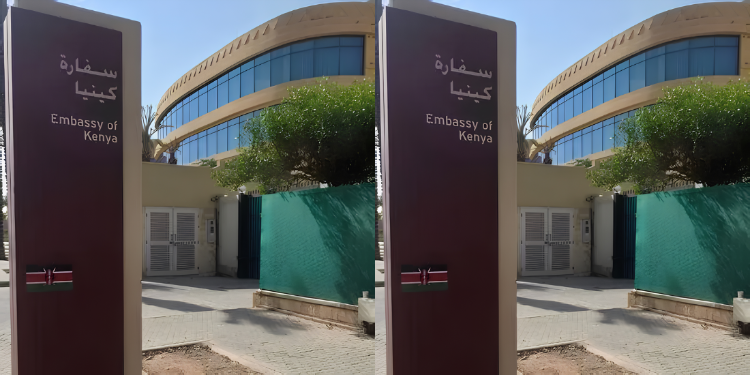
Kenyan domestic worker Esther Wanja Muthoni has been sentenced to 100 lashes and one year of banishment in Saudi Arabia, but her punishment is only part of the ordeal facing the 40-year-old mother, who has been unable to return home with her child for more than a year.
Muthoni was convicted of having sex outside marriage after giving birth to her son, Abudy, in August 2025.
She had become pregnant during a relationship with an Egyptian man while working legally as a domestic worker in the kingdom.
A Saudi court in Riyadh delivered the sentence in October 2026 after several hearings conducted during the summer.
According to an investigation published by the New York Times on November 10, Muthoni attended the proceedings without a lawyer, although she had access to a court translator.
She did not appeal the conviction, saying she wanted to return to Kenya and reunite with her other children.
The mother of five told the publication that she feared the punishment and was uncertain about what would happen next.
The court also sentenced her to one year of banishment. However, the judgment did not specify where she would be sent.
Under Saudi rules, a person sentenced to banishment without a specified destination is generally sent to another city within the kingdom.
Courts can review such sentences in cases involving women without male relatives to accompany them.
Her immediate challenge is securing permission to leave Saudi Arabia with her son.
Her Kenyan exit documents have expired, leaving uncertainty over whether and when the two will be allowed to return.
Muthoni had previously received assistance from Kenyan authorities in obtaining travel documents while awaiting the conclusion of her criminal proceedings.
Kenyan Court Orders Government to Protect Migrant Workers
Muthoni’s circumstances come months after Kenya’s Employment and Labour Relations Court ordered sweeping changes to the country’s labour migration protection system.
Also Read: U.S. Embassy in Kenya Announces Temporary Closure
On June 19, 2026, Justice Jemimah Keli delivered judgment in Constitutional Petition E038 of 2023, filed by Legal Advice Centre, also known as Kituo Cha Sheria, and 13 others against government agencies.
The court found that the State had failed in its constitutional responsibility to protect Kenyan migrant workers in the Middle East from exploitation, human trafficking, violence, torture, physical injury and other human rights violations.
It directed the Ministry of Labour, the National Employment Authority, the Ministry of Foreign Affairs and other relevant government agencies to enforce existing laws governing foreign employment contracts.
Among the orders was a requirement for recruitment agencies to deposit security bonds to provide financial protection in cases involving contractual breaches, workers in distress and deaths abroad.
The court also ordered fresh vetting of locally licensed recruitment agencies involved in overseas employment.
It directed that the judgment be forwarded to the Attorney-General for consideration in developing comprehensive Labour Migration legislation and a harmonised national labour migration policy.
Another order required the government to repatriate the remains of Lucy Wambui Ng’ang’a, a Kenyan migrant worker, at State expense.
The court declined to award monetary compensation to the petitioners and directed each party to bear its own legal costs.
Kenya, Saudi Arabia Sign New Domestic Worker Agreement
On July 5, 2026, Kenya and Saudi Arabia signed a new agreement to regulate the recruitment and employment of Kenyan domestic workers in the kingdom.
Also Read: New Report Exposes Sector Taking Biggest Share of Kenya’s Salaries
Labour Cabinet Secretary Alfred Mutua signed the agreement in Riyadh alongside Saudi Arabia’s Deputy Minister for Labour, Abdullah bin Nasser Abuthnain.
The agreement seeks to ensure lawful recruitment, protect the rights of domestic workers and employers, regulate employment contracts and strengthen cooperation between the two countries.
Saudi Arabia’s Ministry of Human Resources and Social Development said the arrangement would update the framework governing domestic worker recruitment between the two countries.
However, the agreement’s announcement did not specify how cases involving migrant workers facing criminal proceedings, expired travel documents or difficulties securing their children’s travel papers would be handled.
Follow our WhatsApp Channel and X Account for real-time news updates and our YouTube Channel for in-depth interviews.