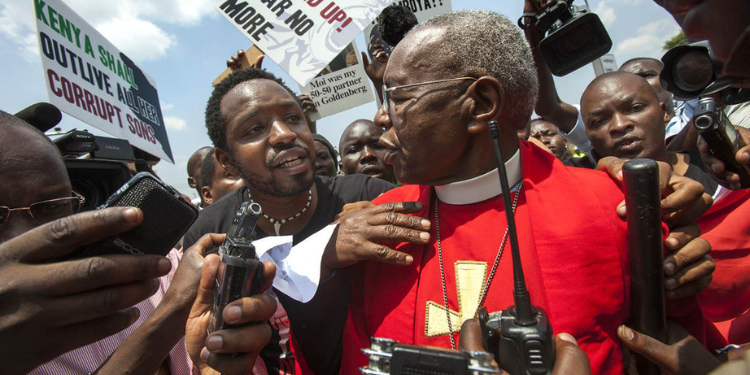
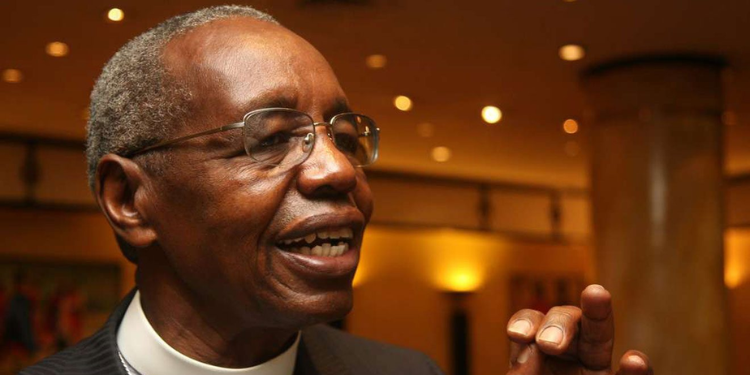
Rev. Timothy Njoya is one of Kenya’s most influential clerics and pro-democracy activists, remembered for his fearless opposition to President Daniel arap Moi’s authoritarian rule and his prominent role in the historic Saba Saba movement that helped pave the way for the return of multiparty democracy in Kenya.
Early Life and Education
Rev. Dr. Timothy Murere Njoya was born on April 7, 1941, in Nyeri District, in Kenya’s Central Region.
He grew up during the colonial period and witnessed the social and political changes that accompanied Kenya’s struggle for independence, experiences that later shaped his commitment to justice and democratic freedoms.
After his early education in Kenya, Njoya pursued theological training and prepared for a life in Christian ministry.
His academic abilities earned him an opportunity to further his studies in the United States, where he attended Princeton Theological Seminary.
There, he obtained a Master’s degree and later a Doctor of Philosophy (PhD) in Theology, graduating in 1971.
In 1998, Knox College at the University of Toronto awarded him an honorary Doctor of Divinity degree in recognition of his contributions to theology, human rights, and public service.
Also Read: Profile of Sue Nsibirwa, Nation Media Group MD in Uganda’s Muhoozi Media Row
His academic background and personal experiences later supported a ministry that combined Christian teachings with vocal advocacy for democracy, human dignity, and social reform in Kenya.
Career and Ministry
Rev. Timothy Njoya was ordained as a minister of the Presbyterian Church of East Africa (PCEA) on March 20, 1967, marking the beginning of a ministry that would span more than four decades.
Throughout his clerical career, he served in several parishes, including Chuka, Tumutumu, Mathari, St. Andrew’s Church in Nairobi, Dagoretti, and Kinoo, where he became known for combining biblical teaching with social and political commentary.
Unlike many clergy of his era, Njoya believed that the church had a responsibility to speak out against injustice and defend the rights of ordinary citizens.
In the 1980s and 1990s, when Kenya was under one-party rule, he emerged as one of the most outspoken critics of President Daniel arap Moi’s government.
From the pulpit, he condemned corruption, abuse of power, human rights violations, and restrictions on political freedoms.
His activism placed him at the center of Kenya’s pro-democracy movement and earned him a reputation as one of the faces of the country’s Second Liberation struggle.
He strongly advocated for the reintroduction of multiparty democracy and frequently challenged the government’s intolerance of dissent.
His outspoken stance led to clashes with both state authorities and some figures within the church who preferred political neutrality
In 1987, Njoya faced disciplinary action within the PCEA and was transferred from St. Andrew’s Church after criticizing the government’s actions and the church’s silence on matters of justice. However, he remained steadfast in his activism and continued championing democratic reforms.
Njoya played a prominent role in the historic Saba Saba movement, which demanded political pluralism and greater democratic freedoms in Kenya.
During pro-democracy demonstrations and prayer rallies, he was arrested several times and was brutally assaulted by police, experiences that further elevated his status as a symbol of resistance against authoritarian rule.
Also Read: Profile of Dan Wema, Kenyan Preacher Turning Charity into Online Fame
Following Kenya’s return to multiparty politics, Njoya continued to advocate for constitutional reform, human rights and gender equality.
He later served as Executive Director of Men for the Equality of Men and Women (MEW), an organization dedicated to promoting equitable gender relations through education and social action.
After retiring from active ministry in 2011, Njoya remained an influential public intellectual, author and commentator on governance, faith and social justice issues in Kenya.
Books, Awards, and Recognition
Rev. Timothy Njoya is also an accomplished author. In 2017, he published his memoir, We the People: Thinking Heavenly, Acting Kenyanly, which chronicles his life in ministry, his role in Kenya’s pro-democracy movement and his reflections on faith and nationhood.
The same year, he published The Divinity of the Clitoris, a book that examines gender equality, women’s rights and the campaign against Female Genital Mutilation (FGM).
The publication sparked national debate and reinforced his long-standing advocacy for social justice and gender equity.
Among his notable honors is the John Humphrey Freedom Award, which he received in 2000 from the International Center for Human Rights and Democratic Development for his commitment to human rights and democratic governance.
He is also a recipient of the E.H. Johnson Award awarded by the Presbyterian Church of Canada and the E.H. Johnson Memorial Trust in 1995 in recognition of his courageous Christian witness and service to society.
In Kenya, Njoya received the Father John Anthony Kaiser Human Rights Award from the Law Society of Kenya, recognizing his role in advancing justice, defending human dignity and championing political freedoms during the country’s struggle for democracy.
Family and Net Worth
Rev. Timothy Njoya is married to Leah Wambui Njau, and the couple has five children. Throughout his years as a church leader and pro-democracy activist, his family stood by him despite the risks of opposing the Moi regime.
Among his children is Dr. Wandia Njoya, a respected Kenyan academic, writer and public commentator.
Njoya has often acknowledged the support of his family during some of the most challenging moments of his activism, including arrests, police harassment and political persecution.
Rev. Timothy Njoya’s net worth is not publicly known.
There are no credible public records or verified disclosures detailing his wealth, assets, or financial holdings.
Follow our WhatsApp Channel and X Account for real-time news updates.