


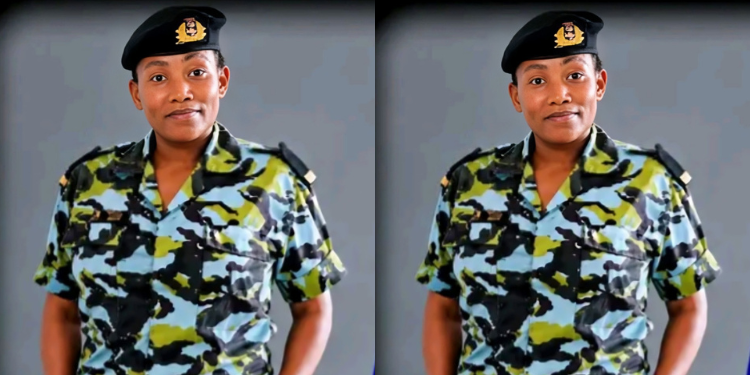
Rosalind Wairimu has earned a place in Kenya’s military history after becoming the first woman in East and Central Africa to qualify as a combat and clearance diver.
Her journey into the highly demanding field has been hailed as one of resilience, intense training, and the determination to prove herself in a profession traditionally dominated by men.
She joined the Kenya Defence Forces in January 2003 and underwent military training before specializing in naval diving.
Before becoming a diver, Wairimu played for teams including Kenya Pipeline, Kenya Commercial Bank, and the Ulinzi women’s volleyball team.
Speaking during an interview with NTV, Wairimu revealed that after the team was disbanded, she returned to Mombasa and found herself searching for a new challenge.
She decided to pursue diving after realizing that the field aligned with her passion for physical fitness and demanding activities.
Also Read: Fiona Akoth: First Kenyan Woman to Become a United States Air Force Pilot
“After that the team was disbanded and then I came back to Mombasa. Then there was no team to train with and I thought diving was the best place because usually they are involved in physical fitness,” she explained.
Her decision marked the beginning of a difficult journey that would eventually see her break barriers within the Kenya Defence Forces.
The diving course required all recruits, regardless of gender, to undergo the same rigorous physical and mental tests.
During her training, Wairimu faced setbacks in her initial attempts, failing the first two fitness assessments before successfully passing her third re-test.
“When I was training, we were two ladies, but one decided to drop. I did the first test and I failed. I took a re-test, I again failed. And because of my interest in diving, I decided to take the third re-test, which I passed,” she said.
Her persistence earned her the respect of diving instructors and fellow trainees, allowing her to continue through military training programmes.
Surviving Extreme Training and 130-Foot Ocean Dives
The Kenya Navy diving course tested recruits both physically and mentally. Wairimu trained alongside 20 candidates, including four officers and 16 service personnel. By the end of the program, only eight trainees successfully graduated.
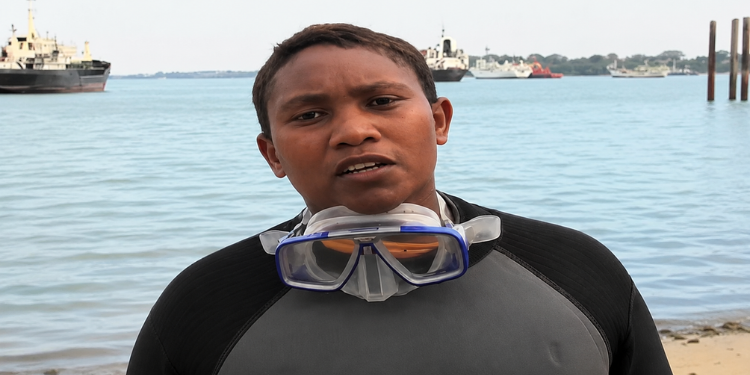
The qualification process included a challenging dive to a depth of 130 feet below sea level in the Indian Ocean, where divers must withstand immense underwater pressure.
Divers must also prepare for encounters with marine life during underwater operations. Wairimu explained that large fish and other sea creatures can approach divers out of curiosity because they are entering their natural environment.
She emphasized that remaining calm is critical because panic can increase the danger during a dive.
“In diving, being prepared mentally and physically is the only way to have a fighting chance of making the cut. It’s tough,” she said.
After completing the demanding course, Wairimu became a combat and clearance diver, taking part in specialized naval training.
Leadership, Operations and Kenya’s Rare Decompression Chamber
Wairimu was later commissioned as an officer in 2012, marking a significant milestone in her military career.
Also Read: Meet Hellen Nyambura, Top Medic Who Made History as First Female Physiology Professor at UoN
Currently, she conducts diving operations mainly when assigned specific tasks by naval commanders, including missions involving Kenya Navy ships.
She has also highlighted the importance of Kenya’s decompression chamber, a specialized medical facility used to treat diving-related illnesses, including decompression sickness.
The equipment is considered rare among African navies and is valued at more than KSh100 million. According to Wairimu, similar facilities are only available in a few locations on the continent, including Kenya, Egypt, and South Africa.
The chamber provides controlled pressurization and oxygen therapy for divers who experience complications after underwater operations. It is also used to treat civilian divers who suffer diving-related conditions after failing to follow proper safety procedures.
Inside the facility, medical teams can regulate pressure levels, provide oxygen, and monitor patients through specialized communication systems during treatment.
Follow our WhatsApp Channel and X Account for real-time news updates.


Congratulations Rosalind. What an achievement!!