Tuesday, June 2, 2026
  • News
    • Latest News
    • Breaking News
    • Fact Check
    • Investigations
    • Explainers
  • Politics
    • Global Politics
    • Elections
    • Government & Policy
    • Diplomacy
    • Conflicts & Security
    • Political Analysis
  • Business
    • Global Economy
    • Markets
    • Technology
    • Startups
    • Energy
    • Finance
  • World News
    • Americas
    • Asia
    • Asia Pacific
    • Africa
    • Europe
    • Middle East
  • Africa
    • Central Africa
    • East Africa
    • West Africa
    • Southern Africa
  • Health
    • Global Health
    • Public Health
    • Health Policy
    • Medical Research
    • Diseases & Conditions
    • Mental Health
    • Nutrition
    • Climate & Health
    • Health Explainers
  • Sports
    • Athletics
    • Basketball
    • Boxing
    • Cricket
    • Football
    • Formula 1
    • Golf
    • Rugby
  • Weather
    • Climate Business
    • Climate Change
    • Climate Solutions
    • Living Green
  • Culture
    • Arts
    • Film & TV
    • Food
    • Music
    • Lifestyle
    • Travel
  • Opinion
    • Editorials
    • Letters
  • Behind The Brand
REGISTER
LOGIN
No Result
View All Result
The Kenya Times
  • News
    • Latest News
    • Breaking News
    • Fact Check
    • Investigations
    • Explainers
  • Politics
    • Global Politics
    • Elections
    • Government & Policy
    • Diplomacy
    • Conflicts & Security
    • Political Analysis
  • Business
    • Global Economy
    • Markets
    • Technology
    • Startups
    • Energy
    • Finance
  • World News
    • Americas
    • Asia
    • Asia Pacific
    • Africa
    • Europe
    • Middle East
  • Africa
    • Central Africa
    • East Africa
    • West Africa
    • Southern Africa
  • Health
    • Global Health
    • Public Health
    • Health Policy
    • Medical Research
    • Diseases & Conditions
    • Mental Health
    • Nutrition
    • Climate & Health
    • Health Explainers
  • Sports
    • Athletics
    • Basketball
    • Boxing
    • Cricket
    • Football
    • Formula 1
    • Golf
    • Rugby
  • Weather
    • Climate Business
    • Climate Change
    • Climate Solutions
    • Living Green
  • Culture
    • Arts
    • Film & TV
    • Food
    • Music
    • Lifestyle
    • Travel
  • Opinion
    • Editorials
    • Letters
  • Behind The Brand
  • News
    • Latest News
    • Breaking News
    • Fact Check
    • Investigations
    • Explainers
  • Politics
    • Global Politics
    • Elections
    • Government & Policy
    • Diplomacy
    • Conflicts & Security
    • Political Analysis
  • Business
    • Global Economy
    • Markets
    • Technology
    • Startups
    • Energy
    • Finance
  • World News
    • Americas
    • Asia
    • Asia Pacific
    • Africa
    • Europe
    • Middle East
  • Africa
    • Central Africa
    • East Africa
    • West Africa
    • Southern Africa
  • Health
    • Global Health
    • Public Health
    • Health Policy
    • Medical Research
    • Diseases & Conditions
    • Mental Health
    • Nutrition
    • Climate & Health
    • Health Explainers
  • Sports
    • Athletics
    • Basketball
    • Boxing
    • Cricket
    • Football
    • Formula 1
    • Golf
    • Rugby
  • Weather
    • Climate Business
    • Climate Change
    • Climate Solutions
    • Living Green
  • Culture
    • Arts
    • Film & TV
    • Food
    • Music
    • Lifestyle
    • Travel
  • Opinion
    • Editorials
    • Letters
  • Behind The Brand
No Result
View All Result
The Kenya Times ~ Trending, Breaking News and Videos
No Result
View All Result
ADVERTISEMENT

Beyond Recognition: The Challenges of Creating a New Palestinian State Are So Formidable, Is It Even Possible?

The ConversationbyThe Conversation
August 12, 2025
Reading Time: 8 mins read
Beyond Recognition: The Challenges Of Creating A New Palestinian State Are So Formidable, Is It Even Possible?

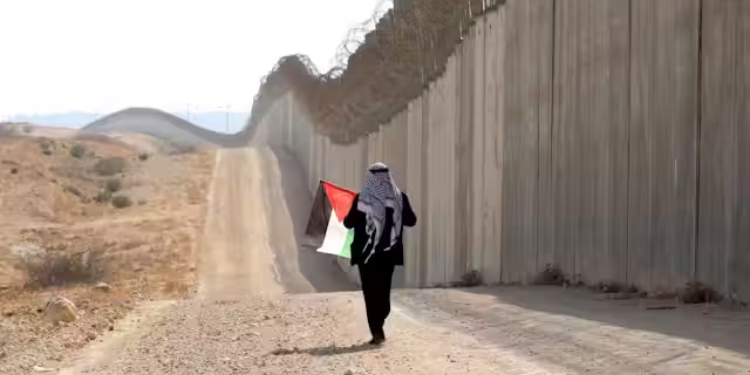
A man walks with a Palestinian flag in front of the Israeli separation barrier near Hebron in the West Bank in 2022. Abed Al Hashlamoun/EPA

FacebookTwitterLinkedInRedditWhatsApp
Advertisement

Australia will recognise a Palestinian state at the UN General Assembly meeting in September, joining the United Kingdom, Canada and France in taking the historic step.

Recognising a Palestinian state is at one level symbolic – it signals a growing global consensus behind the rights of Palestinians to have their own state. In the short term, it won’t impact the situation on the ground in Gaza.

Practically speaking, the formation of a future Palestinian state consisting of the West Bank, Gaza Strip and East Jerusalem is far more difficult to achieve.

The Israeli government has ruled out a two-state solution and reacted with fury to the moves by the four G20 members to recognise Palestine. Israeli Prime Minister Benjamin Netanyahu called the decision “shameful”.

So, what are the political issues that need to be resolved before a Palestinian state becomes a reality? And what is the point of recognition if it doesn’t overcome these seemingly intractable obstacles?

Settlements have exploded

The first problem is what to do about Israeli settlements in the West Bank and East Jerusalem, which the International Court of Justice has declared are illegal.

Since 1967, Israel has constructed these settlements with two goals in mind: prevent any future division of Jerusalem, and expropriate sufficient territory to make a Palestinian state impossible. There are now more than 500,000 settlers in the West Bank and 233,000 in East Jerusalem.

Palestinians see East Jerusalem as an indispensable part of any future state. They will never countenance a state without it as their capital.

In May, the Israeli government announced it would also build 22 new settlements in the West Bank and East Jerusalem – the largest settler expansion in decades. Defence Minister Israel Katz described this as a “strategic move that prevents the establishment of a Palestinian state that would endanger Israel”.

The Israeli government has also moved closer to fully annexing the West Bank in recent months.

Beyond Recognition: The Challenges Of Creating A New Palestinian State Are So Formidable, Is It Even Possible?
The West Bank Jewish settlement of Efrat. Mahmoud Illean/AP

Geographical complexities of a future state

Second is the issue of a future border between a Palestinian state and Israel.

The demarcations of the Gaza Strip, West Bank and East Jerusalem are not internationally recognised borders. Rather, they are the ceasefire lines, known as the “Green Line”, from the 1948 War that saw the creation of Israel.

However, in the Six-Day War of 1967, Israel captured and occupied the West Bank, Gaza, East Jerusalem, Egypt’s Sinai Peninsula (since returned), and Syria’s Golan Heights. And successive Israeli governments have used the construction of settlements in the occupied territories, alongside expansive infrastructure, to create new “facts on the ground”.

Israel solidifies its hold on this territory by designating it as “state land”, meaning it no longer recognises Palestinian ownership, further inhibiting the possibility of a future Palestinian state.

For example, according to research by Israeli professor Neve Gordon, Jerusalem’s municipal boundaries covered approximately seven square kilometres before 1967. Since then, Israeli settlement construction has expanded its eastern boundaries, so it now now covers about 70 square km.


Also Read: Palestinian Govt Responds After UK Signals Plan to Recognize Palestine as a State


Israel also uses its Separation Wall or Barrier, which runs for around 700km through the West Bank and East Jerusalem, to further expropriate Palestinian territory.

According to a 2013 book by researchers Ariella Azoulay and Adi Ophir, the wall is part of the Israeli government’s policy of cleansing Israeli space of any Palestinian presence. It breaks up contiguous Palestinian urban and rural spaces, cutting off some 150 Palestinian communities from their farmland and pastureland.

The barrier is reinforced by other methods of separation, such as checkpoints, earth mounds, roadblocks, trenches, road gates and barriers, and earth walls.

Then there is the complex geography of Israel’s occupation in the West Bank.

Under the Oslo Accords of the 1990s, the West Bank was divided into three areas, labelled Area A, Area B and Area C.

In Area A, which consists of 18% of the West Bank, the Palestinian Authority exercises majority control. Area B is under joint Israeli-Palestinian authority. Area C, which comprises 60% of the West Bank, is under full Israeli control.

Administrative control was meant to be gradually transferred to Palestinian control under the Oslo Accords, but this never happened.

Areas A and B are today separated into many small divisions that remain isolated from one another due to Israeli control over Area C. This deliberate ghettoisation creates separate rules, laws and norms in the West Bank that are intended to prevent freedom of movement between the Palestinian zones and inhibit the realisation of a Palestinian state.

Who will govern a future state?

Finally, there are the conditions that Western governments have placed on recognition of a Palestinian state, which rob Palestinians of their agency.

Chief among these is the stipulation that Hamas will not play a role in the governance of a future Palestinian state. This has been backed by the Arab League, which has also called for Hamas to disarm and relinquish power in Gaza.

Fatah and Hamas are currently the only two movements in Palestinian politics capable of forming a government. In a May poll, 32% of respondents in both Gaza and the West Bank said they preferred Hamas, compared with 21% support for Fatah. One-third did not support either or had no opinion.


Also Read: As Netanyahu Moves Toward Full Takeover of Gaza, Israel Faces a Crisis of International Credibility


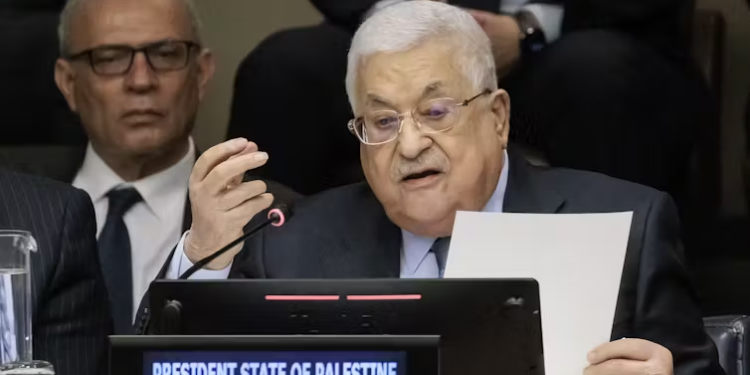
Mahmoud Abbas, leader of the Palestinian Authority, is deeply unpopular, with 80% of Palestinians wanting him to resign.

A “reformed” Palestinian Authority is the West’s preferred option to govern a future Palestinian state. But if Western powers deny Palestinians the opportunity to elect a government of their choosing by dictating who can participate, the new government would likely be seen as illegitimate.

This risks repeating the mistakes of Western attempts to install governments of their choosing in Iraq and Afghanistan. It also plays into the hands of Hamas hardliners, who mistrust democracy and see it as a tool to impose puppet governments in Palestine, as well as Israel’s narrative that Palestinians are incapable of governing themselves.

Redressing these issues and the myriad others will take time, money and considerable effort. The question is, how much political capital are the leaders of France, the UK, Canada and Australia (and others) willing to expend to ensure their recognition of Palestine results in an actual state?

What if Israel refuses to dismantle its settlements and Separation Wall, and moves ahead with annexing the West Bank? What are these Western leaders willing or able to do? In the past, they have been unwilling to do more than issue strongly worded statements in the face of Israeli refusals to advance the two-state solution.

Given these doubts around the political will and actual power of Western states to compel Israel to agree to the two-state solution, it begs the question: what and who is recognition for?The Conversation

Martin Kear, Sessional Lecturer, Department of Government and International Relations, University of Sydney

This article is republished from The Conversation under a Creative Commons license. Read the original article.

Follow our WhatsApp Channel and X Account for real-time news updates
Beyond Recognition: The Challenges Of Creating A New Palestinian State Are So Formidable, Is It Even Possible?
Palestinian President Mahmoud Abbas speaks at the UN in 2024. Justin Lane/EPA
Tags: GazaIsraelMahmoud AbbasPalestinePalestinian State
The Conversation

The Conversation

The Conversation is an independent news organization that publishes evidence-based articles written by experts to help readers understand diverse topics. We cover a wide range of areas including arts, culture, education, health, politics, science, and more¹. Their content is characterized by in-depth analysis, research, news, and ideas from leading academics and researchers. The Conversation aims to provide academic rigor with journalistic flair.

Related Posts

Nairobi Mentioned As Trump Cut Number Of Embassies In Africa That Can Process Visa

Nairobi Mentioned as Trump Cut Number of Embassies in Africa

June 2, 2026
Federal Appeals Court Says Trump Administration’s Transgender Military Ban Is Likely Unconstitutional

Why Transgender Troops Can Now Serve in the U.S. Military

June 2, 2026
“I Couldn’t Care Less”: Trump Responds After Iran Reportedly Ends Talks With Us

“I Couldn’t Care Less” Trump Responds After Iran Ends Talks With US

June 1, 2026
Jill Biden Admits She Wouldn’t Have Backed Joe Biden’s 2024 Re-Election Bid In New Interview

Jill Biden Reveals Regret Over Joe Biden’s 2024 Run in New Interview

June 1, 2026
ADVERTISEMENT

The Kenya Times Facebook

LATEST ARTICLES

  • Nairobi Mentioned as Trump Cut Number of Embassies in Africa
  • Why Transgender Troops Can Now Serve in the U.S. Military
  • “I Couldn’t Care Less” Trump Responds After Iran Ends Talks With US
  • Jill Biden Reveals Regret Over Joe Biden’s 2024 Run in New Interview
  • Stars Abroad: Moses Shumah, Kenyan Striker Breaking Records in Zambia
  • Doctors Question Transparency of Trump’s Heart Test Results
  • Corazone Aquino: Kenyan Star Named After Philippines’ Former President
  • KMA Reveals How to Know Licensed Doctors After Deadly Kitale Surgery
  • Iran Ends All Negotiations With US, Vows to “Completely” Block the Strait of Hormuz
  • Wise vs Remitly vs Western Union: Best International Transfer in 2026
  • KDF Soldiers Take Charge as Protests Erupt in Nanyuki Over Ebola Quarantine Facility
  • End of an Era as Paris Lounge & Grill Rebrands, Kentwood Address Undergoes Renovation
  • Benny McCarthy Makes Changes to Harambee Stars Squad Days After Unveiling 24 Players
  • Ruto Delivers Weighty Apology During Madaraka Day Speech [FULL TEXT SPEECH]
  • Njeri Maina Explains Why President Ruto Can’t Be Impeached
ADVERTISEMENT

Company

About Us

Our Authors

Our Experts

Social Media

Policies

Privacy Policy

House Rules

Standards and Policies

Terms and Conditions

Subscription

My Account

Contact Us

Contact Us

Join Our Team

Advertise With Us

© Copyright 2026 | The Kenya Times | All Rights Reserved

Welcome Back!

Sign In with Facebook
Sign In with Google
Sign In with Linked In
OR

Login to your account below

Forgotten Password? Sign Up

Create New Account!

Sign Up with Facebook
Sign Up with Google
Sign Up with Linked In
OR

Fill the forms below to register

All fields are required. Log In

Retrieve your password

Please enter your username or email address to reset your password.

Log In
Your Privacy and Cookies
We use cookies on our website to give you the most relevant experience by remembering your preferences and repeat visits. By clicking “Accept”, you consent to the use of ALL the cookies.
Do not sell my personal information.
Cookie settingsACCEPT
Privacy & Cookies Policy

Privacy Overview

This website uses cookies to improve your experience while you navigate through the website. Out of these cookies, the cookies that are categorized as necessary are stored on your browser as they are essential for the working of basic functionalities of the website. We also use third-party cookies that help us analyze and understand how you use this website. These cookies will be stored in your browser only with your consent. You also have the option to opt-out of these cookies. But opting out of some of these cookies may have an effect on your browsing experience.
Necessary
Always Enabled
Necessary cookies are absolutely essential for the website to function properly. This category only includes cookies that ensures basic functionalities and security features of the website. These cookies do not store any personal information.
Functional
Functional cookies help to perform certain functionalities like sharing the content of the website on social media platforms, collect feedbacks, and other third-party features.
Performance
Performance cookies are used to understand and analyze the key performance indexes of the website which helps in delivering a better user experience for the visitors.
Analytics
Analytical cookies are used to understand how visitors interact with the website. These cookies help provide information on metrics the number of visitors, bounce rate, traffic source, etc.
Advertisement
Advertisement cookies are used to provide visitors with relevant ads and marketing campaigns. These cookies track visitors across websites and collect information to provide customized ads.
Others
Other uncategorized cookies are those that are being analyzed and have not been classified into a category as yet.
SAVE & ACCEPT
LOGIN | REGISTER
  • Login
  • Sign Up
  • Cart
No Result
View All Result
  • News
    • Latest News
    • Breaking News
    • Investigations
    • Explainers
    • Fact Check
  • Politics
    • Global Politics
    • Conflicts & Security
    • Elections
    • Diplomacy
    • Government & Policy
    • Political Analysis
  • Business
    • Global Economy
    • Markets
    • Technology
    • Startups
    • Energy
    • Finance
  • World News
    • Americas
    • Asia
    • Asia Pacific
    • Africa
    • Europe
    • Middle East
  • Africa
    • East Africa
    • West Africa
    • Southern Africa
    • Central Africa
  • Health
    • Global Health
    • Public Health
    • Health Policy
    • Medical Research
    • Diseases & Conditions
    • Mental Health
    • Nutrition
    • Climate & Health
    • Health Explainers
  • Sports
    • Athletics
    • Basketball
    • Boxing
    • Cricket
    • Football
    • Formula 1
    • Golf
    • Rugby
  • Weather
    • Climate Business
    • Climate Change
    • Climate Solutions
    • Living Green
  • Culture
    • Arts
    • Film & TV
    • Food
    • Lifestyle
    • Music
    • Travel
  • Opinion
    • Editorials
    • Letters
  • Behind The Brand
  • Contact Us

Not enough quota to unlock this post
Unlock left : 0
Are you sure want to cancel subscription?