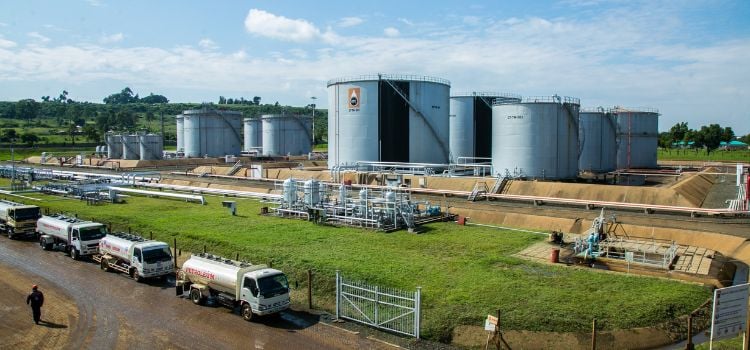
The Consumers Federation of Kenya (COFEK) has filed a petition at the High Court seeking to stop the implementation of a 25-year crude oil storage and handling agreement between Kenya Petroleum Refineries Limited (KPRL) and Gulf Energy E&P B.V.
COFEK claims the agreement was entered into without sufficient public disclosure and transparency, particularly regarding the process through which Gulf Energy was selected and the terms of the deal.
In a statement issued on September 24, COFEK said the agreement, signed on August 26, is projected to generate approximately KSh93.68 billion over its 25-year duration and involves the use of Kipevu Oil Terminal II (KOT II), a strategic petroleum facility.
“We are urging the High Court to suspend implementation now, before contractual rights lock in and Kenyans are left with a fait accompli on strategic petroleum infrastructure,” stated COFEK.
COFEK Raises Procurement Questions
COFEK claimed that the deal was signed without a publicly disclosed tender process, with no details provided on how Gulf Energy was selected or the terms of the agreement.
According to court documents filed under a certificate of urgency, COFEK wants the High Court to suspend implementation of the agreement until it determines the constitutional and legal questions surrounding its execution.
Also Read: Dangote Taps Indian Gov’t Firm for KSh58 Billion Kenya Oil Refinery Project
The organization argued that continued implementation could allow contractual rights, commercial obligations and operational arrangements to take effect before the legality of the agreement is reviewed by the courts.
COFEK said this could make any future reversal of the arrangements more difficult and costly and added that its court action is not aimed at opposing private investment in Kenya’s petroleum sector but at seeking compliance with Article 227 of the Constitution.
Article 227 requires public procurement processes to be fair, equitable, transparent, competitive and cost-effective.
The petition raises questions about how Gulf Energy was selected for the agreement and whether the process complied with constitutional and statutory requirements governing public procurement and the management of strategic public assets.
“Kenyans deserve to know who picked Gulf Energy, how, and why, before a quarter-century of national fuel infrastructure is committed behind closed doors,” COFEK said in the statement.
Kenya Pipeline Enters KSh93 Billion Deal
The court case follows an August 26 announcement by KPC that its wholly owned subsidiary, KPRL, had entered a 25-year crude oil storage and handling contract with Gulf Energy E&P B.V.
Also Read: Ruto Takes Dangote to UNGA to Sell $17 Billion Lamu Refinery
Under the agreement, KPRL will receive, store, handle and deliver crude oil for export through Kipevu Oil Terminal II.
“Kenya Petroleum Refineries Limited (KPRL), a wholly owned subsidiary of KPC, has entered into a long-term Crude Oil Storage and Handling Contract with Gulf Energy E&P B.V. (GEBV),” KPC said.
KPC said its internal projections estimate that the contract will generate approximately KSh93.68 billion in gross revenue over the 25-year period.
The company, however, said the KSh93.68 billion figure is an estimate based on projected crude oil volumes and tariff assumptions, and is not a guaranteed revenue commitment.
“Current internal projections estimate gross revenue of approximately KES 93.68 billion over the 25-year contract period. This estimate is, however, based on projected throughput and tariff assumptions and does not constitute a guaranteed revenue commitment,” the company stated.
The agreement is expected to support the commercial utilization of KPRL’s existing and upgraded infrastructure while expanding the company’s participation in petroleum storage and logistics.
According to KPC, the deal is also expected to contribute to its long-term revenue outlook through fixed service fees and the recovery of qualifying variable costs.
The agreement therefore combines a long-term commercial arrangement for crude oil handling with the use of Kipevu’s existing petroleum infrastructure.
Follow our WhatsApp Channel and X Account for real-time news updates