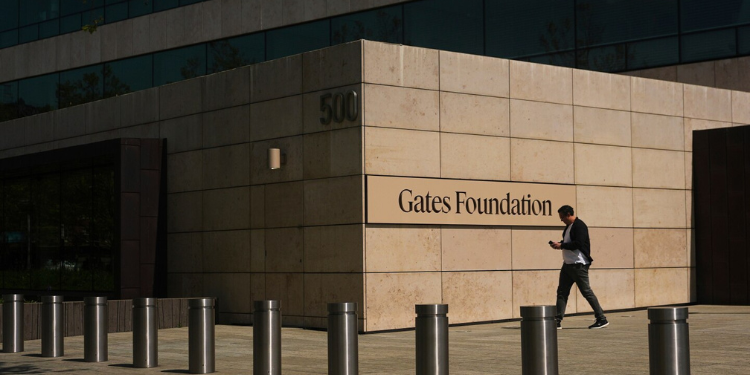
After a two‑year break, Gates Foundation CEO Mark Suzman has sent a 2026 letter outlining a transformative 20‑year roadmap backed by a historic $200 billion commitment.
In the letter, Suzman warns that global health progress has stalled for the first time in decades, highlighting rising child deaths, the rate at which infectious diseases have gained momentum, and shrinking development funding.
The letter has also laid out an ambitious plan to end preventable maternal and child deaths, accelerate breakthroughs against malaria, HIV, and TB, and expand AI‑powered health tools across Africa.
The CEO’s renewed vision is driven by the foundation’s decision to spend down and close by 2045, framing the next two decades as a final push to reshape health, agriculture, and economic opportunity for millions of people in low‑income countries.
“In the next two decades, we believe that the problems the foundation was founded to tackle can finally be solved—for good. That’s what motivated Bill to make this historic announcement last year: the Gates Foundation will accelerate our work over a 20-year timeline, spend an additional $200 billion to help save and improve lives, and close our doors by December 31, 2045,” read part of the letter.
Also Read: Gates Foundation Commits KSh 516 Million in Kenya to Boost Women’s Health Research
Suzman cites 2025 as the first year this century in which child deaths spiked, a reversal he attributes to declining development funding, the lingering effects of COVID‑19, and pressures on already fragile health systems.
Despite remarkable advances in vaccines, maternal care, and nutrition, he says, preventable deaths are rising simply because global priorities shifted elsewhere, allowing gains achieved over decades to erode.
The $200B Investment Goals
The foundation’s decision to accelerate spending and invest $200 billion within the next 20 years will focus on three core goals:
- ensuring no mother or child dies from preventable causes
- eliminating deadly infectious diseases
- helping hundreds of millions of people escape poverty.
Gates Foundation’s Health Vision
The investments will prioritise vaccines, maternal and child health, nutrition, and innovations that make lifesaving interventions more accessible and affordable for communities in the global South.
A central focus of the roadmap is the fight against infectious diseases that have seen a high momentum rise in the past decade, and the CEO highlights promising scientific advances that could redefine global health, including the M72 tuberculosis vaccine candidate undergoing trials in South Africa, which could become the first new TB vaccine in more than a century.
The foundation is also backing next‑generation malaria tools that offer protection before, during, and after exposure, alongside a renewed effort to eradicate polio.
Also Read: Trump Prepares Multimillion Dollar Lawsuit Over Epstein File Claims
He argues that these innovations could allow the next generation to grow up without the burden of diseases that have long shaped life expectancy across Africa and South Asia.
In strengthening health systems, Suzman highlights the Horizon 1000 initiative, a partnership with OpenAI to deploy AI tools in 1,000 primary healthcare clinics across sub-Saharan Africa.
The tools will support patient intake, diagnosis, and follow‑up care, reducing pressure on overstretched health workers and improving the quality of services delivered in low‑resource settings.
The Agriculture Sector
Beyond health, the letter reaffirms the foundation’s commitment to agricultural adaptation amid worsening climate shocks.
The $200B investments include disease‑resistant seeds, climate‑smart AI-driven advisory tools, and long‑term research such as the ENSA project, which aims to help crops like maize generate their own nitrogen, reducing dependence on costly fertilisers and boosting food security across Africa.
The foundation notes that, with stronger cooperation, bold investments, and new scientific tools, the next two decades can deliver historic progress, as its final chapter is designed to leave behind stronger systems, empowered partners, and a more equitable world, one in which the accident of birth no longer determines a child’s chance of survival.
Follow our WhatsApp Channel and X Account for real-time news updates.