The Government of Kenya has approved the importation of 25 million 90-kilogram bags of maize to bridge an anticipated food deficit and prevent shortages following reduced production from drought and other climate-related challenges.
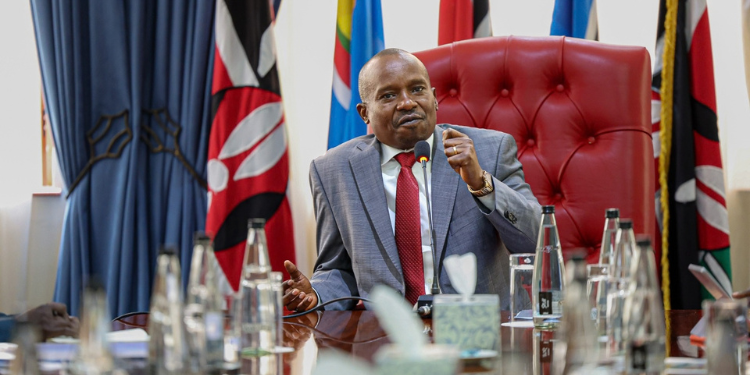
In a statement on August 19, Agriculture and Livestock Development Cabinet Secretary Mutahi Kagwe said the State has already planned to facilitate the imports, assuring Kenyans that it has taken sufficient measures to safeguard the country’s food security.
“We will import maize. We have already made arrangements for that. We will manage the country. The country is not going to go hungry,” Kagwe said.
According to CS Kagwe, Kenya consumes about 75 million bags of maize annually, but reduced harvests in some of the country’s key food-producing regions are expected to create a deficit of nearly 25 million bags. The Government says the imports are intended to stabilize supplies and protect consumers from potential price increases.
Also Read: Win for Kenyan Farmers as Government Raises Wheat Prices
Kenya Banks on Irrigation, Reforms to Boost Food Production
The Agriculture CS said maize imports will provide an immediate solution to the projected shortfall but noted that the Government is also pursuing longer-term strategies to strengthen local food production and reduce the country’s vulnerability to climate shocks.
Among the interventions is the expansion of irrigation projects, including the Galana Kulalu scheme, which is expected to increase agricultural productivity, improve resilience against drought and reduce dependence on rain-fed agriculture.
The Cabinet Secretary also said the Ministry will work with the National Treasury to address tax-related and administrative challenges facing farmers and agribusinesses, making the agricultural sector more competitive and profitable.
Youth employment also featured prominently during the Fifth Joint Consultative Meeting of County Executive Committee Members (CECMs), where the Ministry launched consultations for the forthcoming AgriConnect Compact Programme.
According to Kagwe, the programme is expected to create thousands of jobs as the Government seeks to transform agriculture into a modern, technology-driven and commercially viable industry.
The meeting brought together representatives from the national government, county governments and the World Bank Group to review progress made under the Food Systems Resilience Program (FSRP) and the National Agricultural Value Chain Development Project (NAVCDP), both of which are set to transition into the AgriConnect Compact Programme.
Also Read: Kenya Inflation Hits Highest Level in Nearly Two Years as Food, Transport and Housing Costs Rise
Unga Prices Ease Slightly as Food Inflation Remains High
The planned imports come as households grapple with elevated food prices, despite a drop in the cost of maize flour in recent months.
According to the Kenya National Bureau of Statistics (KNBS), the national average retail price of a two-kilogramme packet of sifted maize flour fell to KSh157.15 in July from KSh159.78 in, representing a monthly decline of 1.6 per cent.
KNBS data shows that food and non-alcoholic beverages inflation stood at 9.0 per cent in July 2026, making it one of the main drivers of the country’s overall inflation rate of 6.5 percent.
The statistics agency noted that while maize flour prices declined during the month under review, pressure on household budgets persisted due to increases in the prices of other food items, including potatoes and fruits.
Kenya states that the maize import programme, together with investments in irrigation and agricultural reforms, will help avert a food shortage while supporting efforts to achieve long-term food security.
Follow our WhatsApp Channel and X Account for real-time news updates.