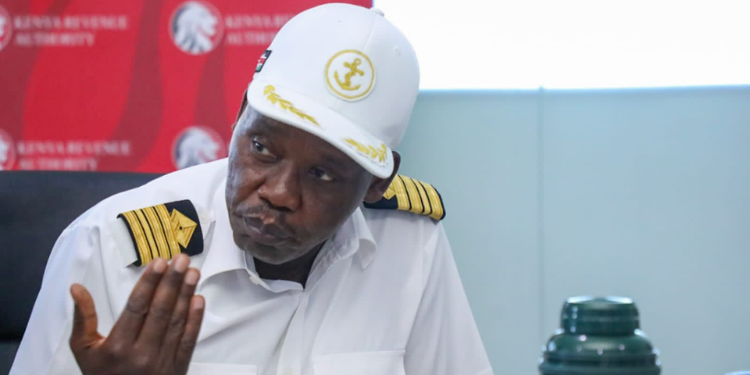
Kenya Ports Authority (KPA) Managing Director Captain William Ruto has moved to calm public concerns over ongoing changes at the country’s ports, emphasising that the government is not privatising any part of the port infrastructure.
Speaking during the “Bonga Na Gava” podcast, hosted by Government Spokesperson Isaac Mwaura at the Port of Mombasa on March 12, 2026, Capt. Ruto said many Kenyans have misunderstood the nature of the planned reforms.
He explained that, despite introducing a landlord port model, the government will continue to own all port assets, including the land, berths, cranes, buildings, and all other infrastructure.
“So, there is nothing like privatisation. It’s a landlord port. All the assets belong to the government through Kenya Ports Authority,” Captain Ruto said.
He stressed that the reforms only allow private companies to operate specific terminals, not to own them, and that the government remains fully in control of the ports.
Private Operators Will Only Run Some Areas, Not Own Them
To make the reforms easier for the public to understand, Capt. William Ruto offered a simple illustration, comparing the arrangement to a house-rental system, intended to show that ownership remains fully with the government even when operations are handled by private firms.
Also Read: KRA and Kenya Ports Authority Launch Major Reforms to Decongest Mombasa Port
“It’s like, I own the plot, and I own the house, but I’ve rented you the house only to live in that house. But the house belongs to me. The land belongs to me.”
Through this model, he explained, the government will still own the entire port, while private companies will be allowed to operate only certain terminals or berths to improve services. They will not own any part of the port infrastructure.
Capt. Ruto said this approach is necessary because several sections of the Port of Mombasa require substantial investment to upgrade and expand, but the government cannot provide all the funding at once. According to feasibility studies:
- Berths 23 and 24 need over $600 million
- Berths 11 to 14 need about $350 million
- Berths 1 to 10 need around $350 million
He explained that bringing in private partners will enable faster fundraising and more efficient improvements. This way, the port can modernize, expand capacity, and meet growing cargo demands without losing government ownership.
“And if we want to bring the private sector to invest in this port, because again, to be able to synergize and to be able to build all this infrastructure, we also need to work with the private sector.”
Capt. Ruto added that these partnerships will help create jobs, increase cargo movement, and make Kenya more competitive in the region. He also noted that the Port of Mombasa has already grown significantly under his leadership from 35 million tonnes in 2023 to 45.5 million tonnes last year, showing the need for continued expansion.
Also Read: Kenya Airports Authority Clarifies Reviving Adani Deal for JKIA Expansion
Ongoing KPA Reforms and Investments
Captain Ruto says that KPA’s move to the landlord port model is part of wider national reforms aimed at improving port efficiency and attracting more investment. The government is already working on plans to bring private operators into Lamu Port berths 1–3 and Mombasa berths 11–14, a move expected to generate KSh44 billion yearly.
He added that it is a path for reaching out to private investors to help upgrade both the Mombasa and Lamu ports, as the country looks for alternatives to expensive external borrowing and seeks to accelerate modernization
Additionally, KPA is carrying out upgrades to handle growing cargo volumes, including:
- Upgrading the Terminal Operating System (TOS) to speed up cargo handling, Building Berth 19B, which will add capacity for 300,000 containers (TEUs)
- Automating port entry and exit gates and expanding container storage areas to reduce delays. A government commitment of KSh41 billion to expand Mombasa Port as container traffic heads toward 2.4 million TEUs.
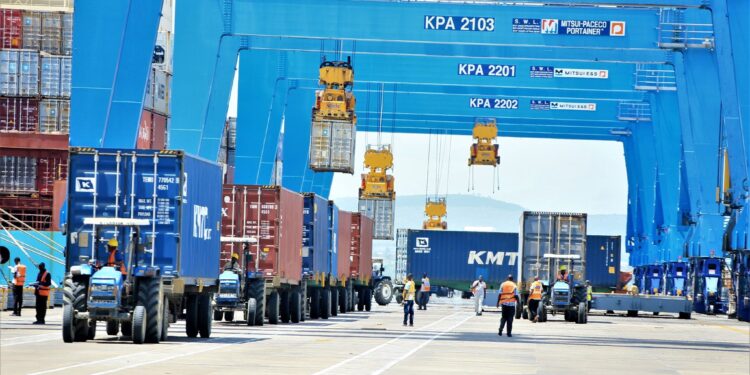
A photo of some of the facilities used by KPA in Mombasa. PHOTO-KPA