State House has released the details surrounding Ebola coordination efforts and a biological agreement the between the Government of the United States of America and the Government of the Republic of Kenya in the 2015 agreement.
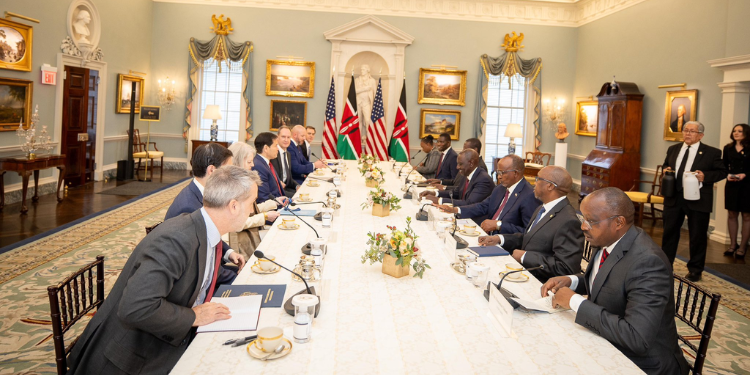
According to State House, the two parties agreed to establish a cooperative program to facilitate mutually beneficial efforts to reduce biological threats of common concern.
In accordance with the agreement, Kenya and the US have agreed to pursue the reduction of the threat from naturally occurring diseases, biological attacks, and the risks posed by non-state actors of bioterrorism.
“This Agreement is by and between the Government of the United States of America, and the Government of the Republic of Kenya, desiring to establish a cooperative program to facilitate mutually beneficial efforts to reduce biological threats of common concern,” the 2015 agreement indicates.
The release of the agreement document follows public concern over the Kenyan government’s establishment of the Laikipia Ebola facility amid the Ebola outbreak.
Scope of the 2015 Agreement
In signing the agreement, the Kenyan government agreed to the United States assisting in identifying, monitoring, and controlling any potential risks without the country incurring any cost.
According to the 2015 agreement, Kenya and the US aimed to establish biosafety and biosecurity through the establishment of national programs to protect the country from harmful pathogens.
Further, through the agreement, a nationwide laboratory system capable of safely and accurately detecting, identifying, and characterizing biological threats was established.
Research and training activities to curb potential biological threats were also established under the agreement.
Under the agreement, both parties were bound to establish supportive, collaborative research in biosurveillance.
In addition to the research, the countries agreed to develop human resources by offering awareness programs and specialized training to health personnel to address potential biological hazards.
Also Read: Ruto, Suluhu and Museveni’s Pointmen Convene Emergency Meeting Over Ebola Crisis
Executive Agent
To ensure that the agreement was adhered to, the agreement gave the power of implementation to various bodies, including the U.S. Department of Defense (DoD).
The US DoD serves as the executive body for the United States. At the same time, the Ministry of Health, Kenya, in collaboration with the Ministry of Defense and the Ministry of Interior and Coordination of National Government, oversees implementation in Kenya.
However, the agreements indicate that during the implementation by the executing bodies, all activities should remain peaceful and compliant with the international treaties, including the Biological Weapons Convention.
Further, any goods and services under the agreement from the executing bodies remain subject to strict controls and cannot be transferred to a third party without the agreement of both signing parties.
Liability and Taxation
As per the 2015 agreement between Kenya and the US, any US civilian and military personnel who are present in Kenya during any program established in dealing with a biological threat are bound to Kenyan Laws.
However, the agreement has an exemption the US personnel, including exempting the personnel from local income tax on their salaries.
Goods imported for the programs by the US personnel during the programs are also exempted from the Value Added Tax (VAT) according to the agreement.
In liability, both the Kenyan and the US governments agreed not to initiate legal proceedings against each other during the program periods for property damage or injuries arising from activities under the agreement.
Also Read: Duale Gives New Staffing Details on U.S.-Backed Laikipia Ebola Facility After Court Suspension
Current Agreement Status
Despite the original 2015 agreement being set for a five-year duration, the agreement provided a renewal agreement clause.
In April 2022, Kenya and the United States officially signed the agreement extension, renewing the partnership for an additional seven years.
Following the renewal of the partnership, the agreement ensures the legal framework for the biological threat reduction and laboratory cooperation is binding on both parties until April 5, 2029.
Follow our WhatsApp Channel and X Account for real-time news updates.