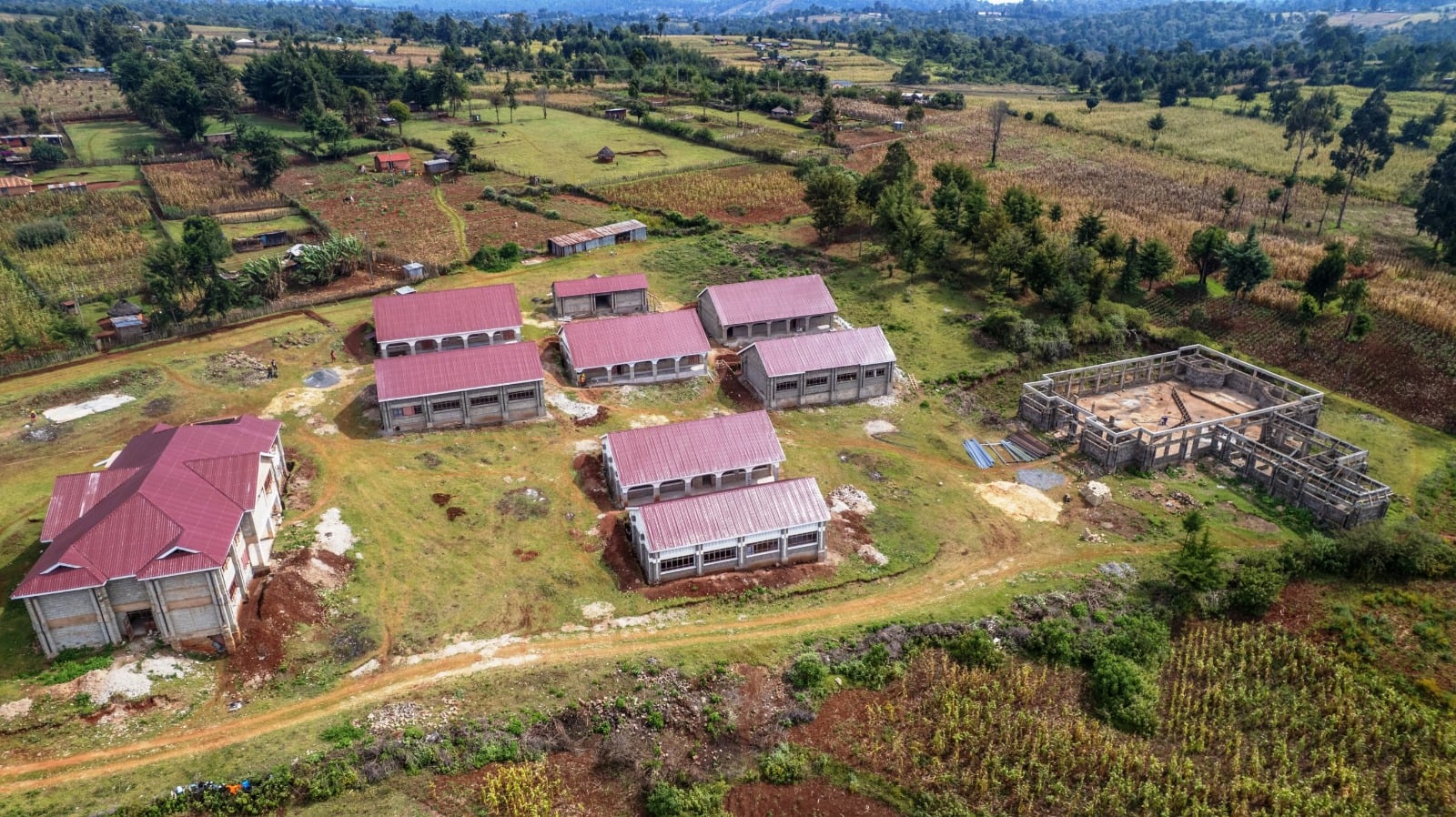
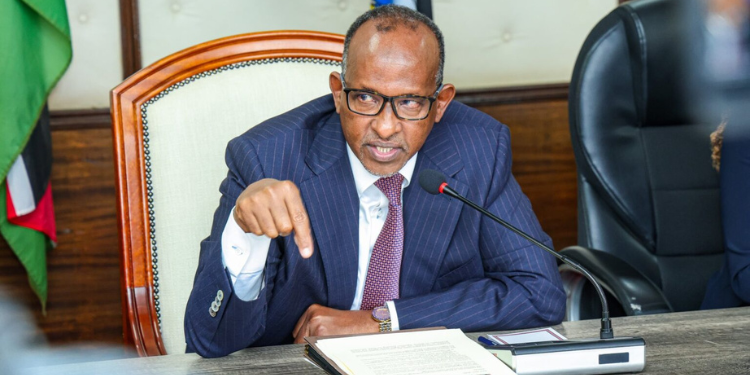
Health Cabinet Secretary Aden Duale has explained how the proposed Ebola preparedness facility in Laikipia County would operate.
Speaking during an interview on Saturday, May 30, Duale disclosed that American health personnel would work alongside Kenyan medical teams at the proposed facility, a project that has sparked legal challenges and public debate.
According to the CS, the facility would not be exclusively for U.S. nationals as has been widely reported, but would also serve Kenyan personnel, particularly members of the Kenya Defence Forces (KDF).
He explained that the military facility would be managed by Kenyan authorities while healthcare operations would involve cooperation between Kenyan and American specialists.
“In terms of health personnel, it will be between the Kenyan health personnel, leading, working with their colleagues from the U.S.,” Duale said.
Duale says U.S. health personnel will work alongside Kenyans
The Health CS also sought to address concerns over access to the facility, maintaining that Kenyan personnel would not require special authorization to use it.
“The facility is a military facility. KDF soldiers and other Kenyans will use that facility,” he said.
Also Read: Kenya Sets Up Special Gate at JKIA for High-Risk Ebola Arrivals
CS Duale further stated that Kenya’s military possesses significant medical expertise to support such an operation.
His remarks come days after the High Court issued interim conservatory orders halting the establishment or operationalization of any Ebola exposure, quarantine, isolation or treatment facility linked to an arrangement between Kenya and the United States.
In orders issued on May 28, Justice Patricia Nyaundi certified a petition challenging the project as urgent and temporarily restrained government agencies from facilitating the facility’s construction pending hearing.
The court further barred authorities from admitting into Kenya, transferring, receiving or facilitating the entry of persons exposed to or infected with Ebola under the disputed arrangement. The matter is scheduled for mention on June 2.
Petition
The case was filed amid growing public scrutiny following reports that Kenya had agreed to host a facility that could monitor or isolate U.S. nationals potentially exposed to Ebola during the ongoing outbreak in Central Africa.
Rights lobby Katiba Institute argued that the arrangement was being pursued without sufficient public participation, transparency or parliamentary oversight.
The organization subsequently notified U.S. authorities of the court orders, informing the U.S. State Department and health authorities that the High Court had halted any plans to establish Ebola quarantine, isolation or treatment facilities under the arrangement.
Katiba Institute maintained that while international cooperation on health matters remains important, constitutional safeguards must be observed before such projects can proceed.
The Law Society of Kenya (LSK) has also entered the dispute, filing a separate constitutional petition opposing the proposal.
The lawyers’ body argued that the reported arrangement raises constitutional, public health, environmental and sovereignty concerns.
It called on the government to halt any discussions or approvals related to the establishment of Ebola quarantine or treatment facilities for foreign nationals within Kenya until the issues raised are addressed through lawful processes.
Despite the legal challenges, the Ministry of Health led by CS Duale has continued to defend the initiative, framing it as part of Kenya’s broader preparedness strategy against a disease outbreak that continues to affect parts of the Democratic Republic of Congo and neighboring countries.
The CS had earlier, in a statement, said that Kenya’s participation in global health security initiatives requires the country to maintain strong surveillance and response systems capable of handling emerging infectious diseases.
He revealed that the government is establishing 11 quarantine, isolation and treatment centers across the country as part of its Ebola preparedness plan and insisted that the Laikipia facility should be viewed within that wider framework.
Incident Management and Emergency Response Center established
According to Duale, the government has already established an Incident Management Center and an Emergency Response Center in Nairobi, and more than 1,000 healthcare workers have undergone Ebola preparedness training.
He also disclosed that 16 people have been tested for Ebola in Kenya so far, with all samples returning negative results.
Also Read: US Reveals What Next After Kenyan Court Blocks Ebola Facility Plan
The Health Ministry has previously stated that dedicated isolation and treatment facilities have already been established at institutions including Kenyatta National Hospital, Moi Teaching and Referral Hospital and the Kenya National Police Hospital, with additional sites identified in high-risk border counties.
Duale further defended cooperation with Washington, arguing that Kenya’s healthcare system has benefited significantly from decades of U.S. support.
He said the Ksh1.74 billion ($13.5 million) announced by the United States would support Ebola preparedness efforts, including laboratory capacity, recruitment of healthcare workers, testing infrastructure and disease surveillance systems.
He also emphasized that Kenya’s disease surveillance system already works closely with international partners including the U.S. Centers for Disease Control and Prevention (CDC), the World Health Organization (WHO), Africa CDC and research institutions linked to KEMRI.
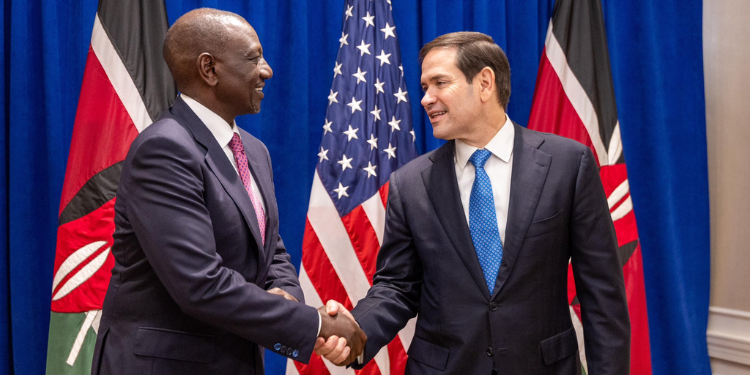
Earlier, the U.S. Foreign Service acknowledged the court action in Kenya and indicated that discussions with Nairobi remain ongoing.
Follow our WhatsApp Channel and X Account for real-time news updates.