Kenya’s blue economy is gaining momentum after the government’s investment in fishing, aquaculture, infrastructure, training and community enterprises, creating new opportunities for coastal communities.
Fish production has increased by 8.1 per cent, rising from 173,741 tonnes in 2022 to 189,151 tonnes as of August 2026, showing increased activity across the fisheries sector.
The Kenya Marine Fisheries and Socio-Economic Development Project (KEMFSED) has driven much of the transformation, providing KSh3.3 billion in grants to 1,263 groups involving 212,033 people.
The grants have particularly targeted women, youth and vulnerable communities, supporting access to training, equipment, financing and businesses linked to fisheries and the wider blue economy.
The government has also trained 875 young people in deep-sea fishing and distributed fishing boats and fish cages to coastal communities.
About 270 boats and 109 fish cages have been provided to fishing communities, while fisheries interventions along the Coast are benefiting more than 83,000 people organised in 1,265 groups.
The support is opening opportunities beyond traditional fishing, with communities venturing into aquaculture, mud crab fattening, shrimp farming, marine tilapia production and seaweed farming.
Also Read: Nyanza Farmers Find New Opportunities in Rice, Fish and Irrigation Farming
New Infrastructure Opens Opportunities
Infrastructure development is another key part of the government’s blue economy programme.
The government is developing nine modern fish landing sites worth KSh1.5 billion in Kisumu, Siaya, Homa Bay and Busia counties, while upgrading other landing sites across the country.
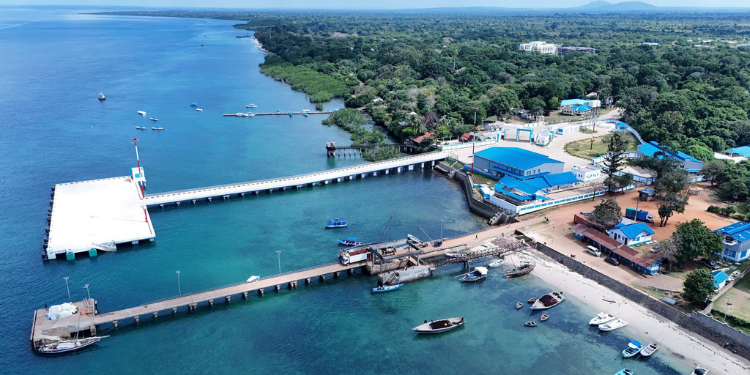
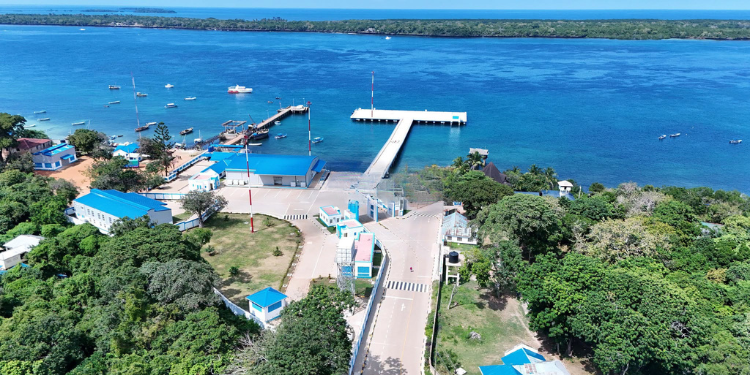
The KSh2.7 billion Shimoni Fish Port has also been completed, including a KSh1.4 billion national mariculture centre of excellence.
The improved facilities are expected to make it easier for fishermen to land, handle, store and process their catch, helping communities capture more value from fisheries before products reach the market.
The government is also strengthening 450 Beach Management Units (BMUs), with women accounting for about 60 per cent of BMU membership.
Efforts are underway to formalise and register marketing cooperatives to improve market access, strengthen resource management and increase the bargaining power of fishing communities.
Security at sea has also improved through patrol boats, better safety measures, and enforcement by the Kenya Coast Guard Service against illegal, unreported and unregulated fishing.
Shimoni Youth See New Opportunities
For coastal communities, the changes are beginning to reshape how residents view the ocean and the opportunities it offers.
Asman Ambeta, a resident of Shimoni and Wasini Island who works as a tour guide and fishes during the low season, says residents have depended on the ocean for generations but previously faced challenges including damaged coral reefs, declining fish stocks, poor storage facilities and low prices.
Also Read: Earnings of Tea and Coffee Farmers in Mt Kenya Rise as Reforms Take Effect
He says the arrival of the Shimoni port has made it easier for fishermen to handle their catch, while new infrastructure is beginning to create employment opportunities for young people.
“Before the government put more focus on the blue economy, residents of Shimoni depended heavily on the ocean. But there were many challenges. When you went out to sea, you would find that the coral reefs had been damaged, and this affected the fish. You could go fishing and end up catching very little,” said Asman.
According to Ambeta, the blue economy is also creating opportunities beyond fishing, including tourism, boat and passenger transport and seaweed farming.
Seaweed farming, he says, is providing women and young people with alternative income sources, including opportunities to make products such as soap and oil.
Ambeta believes continued investment could turn Shimoni into a major development centre over the next five years.
He says improvements in roads, electricity, schools, healthcare, infrastructure and skills development would enable the ocean economy to generate more jobs and businesses while giving young people greater reason to build their futures in their communities.
Kenya Blue Economy Training and Cooperatives Strengthen Fishermen
In Mombasa, fishing communities are also benefiting from training and stronger cooperative structures.
Salim Amin Salim, chairman of the Old Town Beach Management Unit in Mvita Constituency, says BMU leaders have received training in leadership, financial management, and cooperation.
“We have been trained in leadership skills, financial management, how to manage and cooperate, and how to run our Beach Management Units and fishing communities. The aim is to improve them to a level where they can become self-sufficient,” stated Salim.
He says the training has helped fishing communities improve how they manage their organisations and work towards greater financial independence.
Salim also says fishermen have increasingly moved from traditional canoes to motorised fibreglass boats fitted with engines, improving their ability to operate at sea.
BMUs in Mombasa and other coastal areas have also established cooperatives where fishermen can save part of their income and build financial security.
He wants the government to continue investing in training and alternative income-generating activities, particularly for periods when rough seas prevent fishermen from going out to sea.
He points to opportunities such as fish cage farming as an alternative that could help coastal communities diversify their incomes.
For years, many fishing communities depended almost entirely on the ocean without access to modern equipment, adequate training or savings structures.
Follow our WhatsApp Channel and X Account for real-time news updates.