Several agricultural projects in Luo Nyanza have been credited with creating new opportunities for farmers and businesses after recent investments in irrigation, rice farming, and fisheries.
For years, farmers in the region faced challenges including poor infrastructure, limited access to water, low farm productivity, and difficulties finding reliable markets for their produce.
That situation is changing as farmers gain access to irrigation infrastructure, improved farm inputs, and new opportunities in the fisheries value chain.
For farmers in Nyanza, access to water has become one of the major changes supporting agricultural production.
Willis Odhiambo, a farmer in the region, said farming has become easier after the introduction of irrigation canals and water pumps.
He said the government helped construct the canals, provided some water pumps, and introduced improved seeds that farmers are now using.
According to Odhiambo, continued adoption of modern farming methods could help farmers produce enough food while also creating a more reliable supply for buyers.
He said this is different from the past, when farmers struggled to get water to their farms, faced poor drainage and relied heavily on manual labour and older seed varieties that produced lower yields.
Owino Isaac, another farmer from Nyanza, said the cost and availability of fertilizer have also improved.
He said better roads are making it easier for farmers to transport their produce, while lower input costs are helping them increase their earnings.
Owino said better support for agriculture could allow families to improve their incomes, keep children in school and meet other household needs.
Also Read: Ruto’s Biggest Investment in Nyanza Generates 1,000 Daily Jobs for Residents
Fish Farming Creates Jobs
The changes are also being felt around Lake Victoria, where fish farming is creating new opportunities for farmers, traders and young people.
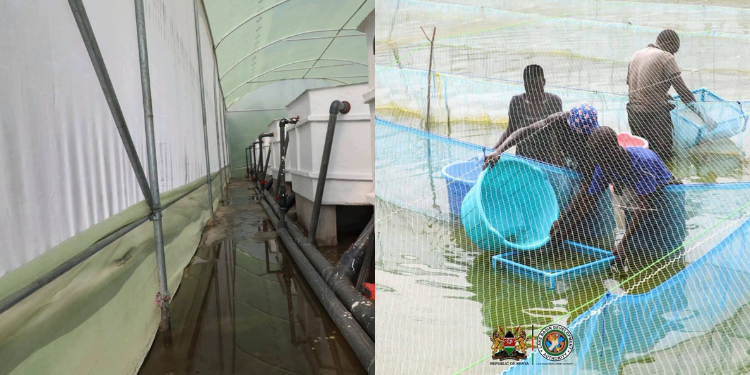
Victor Ochieng DD, a cage fish farmer at Dunga, said the number of fish cages in the area has increased from about 10 to nearly 250.
He said the growth has attracted young people and investors, created employment, and expanded the market for fish.
According to Ochieng, buyers now come from as far as Nairobi, giving farmers access to a wider market and better prices.
He added that although the cost of fingerlings remains a challenge, farmers can access them at lower prices through the Lake Basin Development Authority and AquaRech, supported through a national government partnership with local stakeholders.
Fish traders are also benefiting from the increased production.
Pamela Omolo, a fish trader at Dunga Beach, said her business has grown as more fish become available.
She said she previously worked with one employee but now has five workers, showing how increased fish production is creating opportunities beyond the farms themselves.
Omolo said continued production could improve food supply, increase household incomes and bring more customers to businesses involved in the fish trade.
This marks a shift for the Dunga community, which previously relied heavily on fishing at a time when wild fish catches had declined, and some fish species had become less available.
Also Read: Govt Moves to Boost Power Reliability in Nyanza, Western Kenya
Luo Nyanza Rice Farmers Find New Income Through Sunflower
In Ahero, farmers are also finding ways to make better use of their land outside the main rice-growing season.
Morris Otieno, a farmer from Kore, Block M, said government support for farming and canal maintenance has brought renewed hope among farmers.
He said excavators are clearing dirt from canals, improving the irrigation system and helping farmers maintain production.
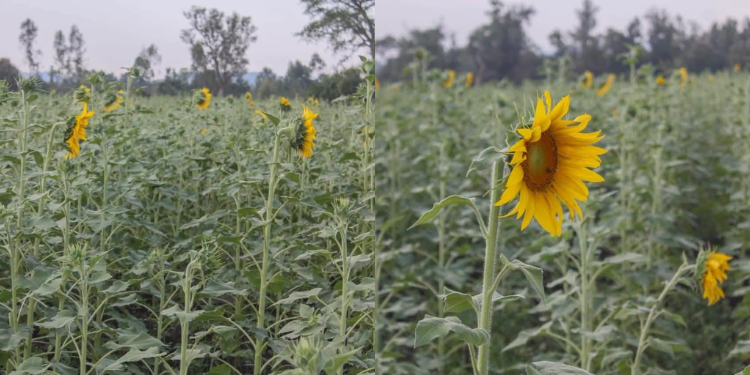
Farmers are also turning to sunflower as an additional source of income during the three to five months after rice harvesting.
Janet Nyaboke, an agronomist with Green Tech Hub, said sunflower was introduced to ensure farmers could continue earning from their land during the period when rice farms would normally remain unused.
She said the crop takes about 90 days to mature and has a ready market.
Sunflower can also be processed into edible oil, diesel and cake, creating several potential sources of income for farmers.
Nyaboke said the additional earnings can help families pay school fees, meet medical expenses and provide food for their households.
For Otieno, the changes have provided farmers with a new sense of hope.
He said farmers are now able to earn money, while workers also benefit from employment opportunities created on the farms.
The farmer said the additional income has also given him confidence that he can improve his family’s living conditions, including replacing the mabati house he previously lived in.
Follow our WhatsApp Channel and X Account for real-time news updates.