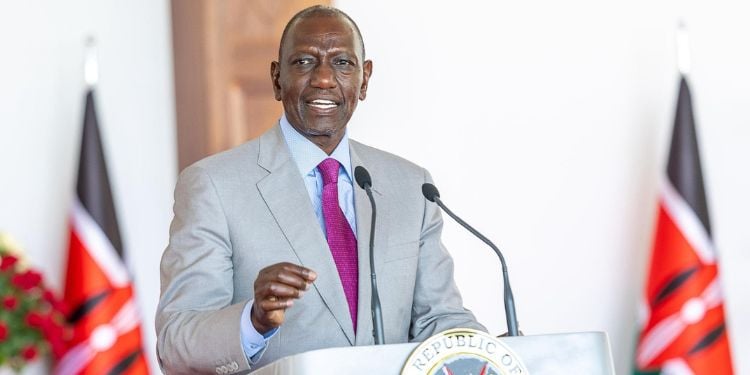
There are statements politicians make that reveal considerably more than their authors intended. President William Ruto reportedly told his supporters: “By God’s grace, we must win the next election. Not for our sake, but for the sake of Kenyans. We have no choice.”
Read those words again. “We must win.” “We have no choice.” Coming from the President of a constitutional democracy approaching an election, those are extraordinary words.
Perhaps they were intended as ordinary political mobilization. Perhaps the President merely wanted to inspire his troops. But after four turbulent years of his administration, the language deserves closer examination because it betrays something increasingly visible in Kenya’s political establishment: the inability to contemplate the possibility that the people may simply say, enough.
Mr President, you have a choice. More importantly, Kenyans have a choice. That is what elections are for. The presidency of Kenya is not a divine inheritance. It is not a lifetime appointment. It is not a covenant between one politician and heaven. It is a temporary constitutional mandate granted by citizens and renewable only with their consent.
God does not issue Form 34As. Kenyans do. There is something particularly uncomfortable about repeatedly wrapping political ambition in religious language. Faith occupies a profound place in the lives of millions of Kenyans. Our people pray in churches, mosques, temples and homes. They turn to God in moments of joy and desperation. Religion comforts the bereaved, sustains struggling families and gives hope to people facing circumstances beyond their control.
If God supposedly wants one candidate to win, what does that make citizens who vote for somebody else? The answer, constitutionally, is simple. Citizens. Nothing more and nothing less.
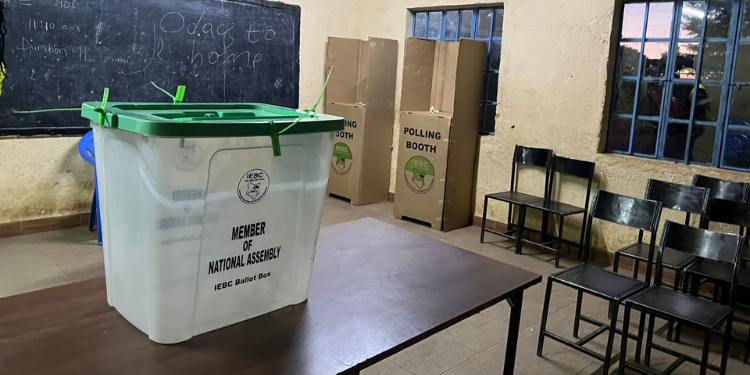
The Constitution does not require Kenyans to discern God’s preferred presidential candidate. It requires them to enter polling booths and exercise sovereign power according to their own conscience. President Ruto therefore does not need divine protection from electoral accountability. He needs a record capable of surviving it.
And that is where the real problem begins. Across this country, households are wrestling with the cost of living. Workers examine payslips that seem increasingly crowded with deductions. Small businesses struggle with taxes, credit, electricity, licenses and shrinking consumer purchasing power. Young graduates send application after application into an economy incapable of creating sufficient decent employment. Parents are calculating school fees. Patients are calculating medical bills. Motorists are calculating fuel. Mama mboga is calculating whether today’s customers will leave enough profit to buy tomorrow’s stock and still feed her children.
These calculations are considerably more important than the political calculations being made about 2027. You cannot answer them with “By God’s grace.” Prayer is not a fiscal policy. Faith is not a substitute for competent economic management. And divine vocabulary cannot refinance public debt, create jobs, reduce taxation or restore purchasing power.
Also Read: Kenya 2027 Elections: Resignation, Primaries and Nomination Dates Explained
The President must be judged not by how frequently he invokes heaven, but by what his government has done here on earth. That is the unavoidable reality confronting his administration. The Ruto presidency arrived with extraordinary promises. Bottom-up transformation would change the economic architecture. Hustlers would finally occupy the center of national policy. Government would become more responsive to those at the bottom of the pyramid.
For millions of Kenyans, however, the lived experience has been painfully different. Instead of economic liberation, many feel increasingly squeezed. Instead of breathing space, they encounter another levy, another deduction, another charge, or another explanation of why greater sacrifice is necessary today so that prosperity may arrive tomorrow.
Tomorrow has become one of this government’s most heavily used currencies. But citizens live today. They buy food today. They pay rent today. They need jobs today. They fall sick today.
Eventually, every government discovers that promises have an expiry date. That may explain the increasingly existential language surrounding 2027. “We must win.” Why must you?
A government confident that citizens are satisfied should simply present its record and allow voters to decide. Build the roads. Create the jobs. Reduce waste. Protect constitutional freedoms. Make healthcare work. Lower the burden on productive enterprise. Restore confidence in public institutions.
Then go before the people. There would be no need to portray victory as a matter of national salvation. The claim that re-election is necessary “for the sake of Kenyans” is particularly revealing. Kenyans are perfectly capable of determining what is good for Kenyans. That authority does not belong to State House. Article 1 of our Constitution settles the matter with magnificent simplicity: all sovereign power belongs to the people of Kenya. Not the President. Not his party. Not his advisers. Not political brokers. The people. They may delegate power, but they never surrender sovereignty. And every election is their opportunity to reconsider the delegation.
Also Read: IEBC Releases Strict Guidelines for Ballot Box Mix-ups Ahead of Next Polls
President Ruto should therefore be careful not to confuse his political survival with Kenya’s national interest. Governments frequently make that mistake. After spending years in power, leaders begin believing that the country and their administration are inseparable.
Ruto Faces 2027 Test as Kenyans Hold the Power to Decide
They are not. Kenya existed before William Ruto became President. Kenya will exist after he leaves office. The republic is permanent. Presidents are temporary. And perhaps that is the truth now staring this administration in the face.
There appears to be deep public anger. Whether that anger ultimately translates into electoral defeat will be determined by voters in a lawful election, not by commentators, opinion polls or presidential declarations. No democrat should pronounce the election finished before citizens have voted. But neither should the President behave as though his victory has already been ordained. He must earn another mandate.
If Kenyans conclude that these years have brought unbearable economic pain, excessive taxation, weakened institutions, intolerance of criticism or simply disappointment with promises made, they possess an extraordinarily powerful constitutional remedy. A ballot. No violence is required. No divine intervention is required. No permission from the political class is required. Just citizens exercising sovereignty.
So, Mr President, pray if you wish. Faith is your constitutional freedom. Campaign vigorously. Defend your record. Tell Kenyans why you deserve another five years. But do not tell a sovereign people that “we have no choice.” You do. And so do they. In 2027, God will not be printed on the ballot paper. William Ruto will. And ultimately, it will not be heaven counting the votes. It will be Kenyans deciding whether four years were enough.
Prof. Naituli teaches Constitutionalism and Governance at Multimedia University of Kenya and is a Fellow of the Kenya National Academy of Sciences.
Follow our WhatsApp Channel and X Account for real-time news updates.