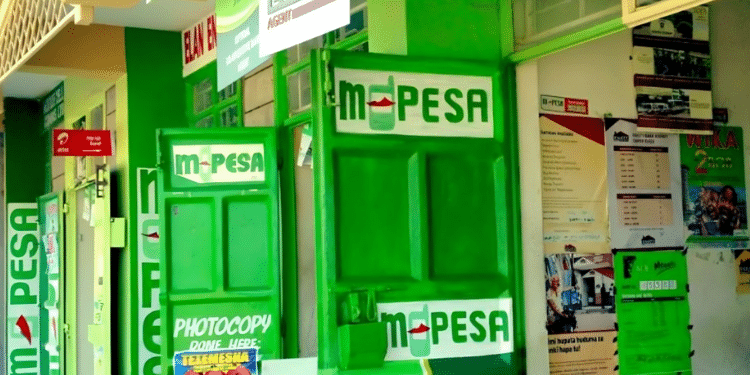
Safaricom dealers have urged the Joint Committee reviewing the government of Kenya’s proposed partial divestiture in Safaricom PLC to include safeguards that protect their businesses and prevent job losses before approving the deal.
The appeal came during the ongoing stakeholder engagements by the Joint Parliamentary Committee on January 16.
The dealers, representing over 400 members, also pushed for a transitional framework that would include a buyout option equivalent to at least 20 years of residual commissions and goodwill for those wishing to exit.
“Safaricom Dealers have urged the Joint-Committee considering the partial divestiture in Safaricom PLC by the government of Kenya to propose safeguards that will protect their businesses and avert job losses, before giving a nod to the proposed deal,” read part of a report from the session.
They argued that such a move is necessary to protect their interests, having invested heavily in the telco over the past two decades.
The committee comprised members of the Departmental Committee on Finance and National Planning and the Committee on Public Debt and Privatization.
On December 4, 2025, Safaricom confirmed a proposed ownership restructuring in which Vodafone Kenya Limited will acquire the Government of Kenya’s 15 percent stake in the telecom giant for Ksh244.5 billion.
Safaricom Dealers Warn of Job Losses
Leading the Safaricom dealers, Kennedy Ondieki told the committee that for most of the past 25 years, dealership arrangements were long-term, allowing dealers to make significant capital investments and create employment.
He added that over the last two years, Safaricom has shifted dealers to fixed-term contracts, undermining business certainty and risking decades of investment.
Also Read: Safaricom Share Sale Raises Concerns Over Market Dominance
They also supported conditional approval of the deal, requiring Safaricom and Vodafone to disclose any subscriber monetization or change-of-control arrangements.
The dealers also voiced concerns that under new Vodacom control, the model that accounts for the lifetime value of acquired customers could be discontinued.
Also Read: CS Mbadi Reveals How Ruto’s Govt Will Use Ksh 204 Billion from Safaricom Sale
LSK Flags Risks in Govt Share Sale
Also appearing before the joint committee, the Law Society of Kenya (LSK) stated that Safaricom is not merely a corporation but a strategic national asset.
The society stressed that since the Government of Kenya holds its shares in trust for the public, any divestiture constitutes a major national decision with significant fiscal, legal, and sovereignty implications.
LSK noted that the proposed divestiture would result in a 55 percent foreign majority ownership of Safaricom PLC, reducing the government to a minority shareholder while allowing Vodacom to retain effective control.
The society said that this could weaken Kenya’s strategic leverage over national data infrastructure, mobile money systems, and competition policy, exposing critical financial and security sectors to foreign influence.
To protect public interest, LSK proposed that 50 percent of the 15 percent divestiture be allocated to retail investors via the Nairobi Securities Exchange, thereby democratizing ownership, boosting market depth, and fulfilling the equity principles under Article 10 of the Constitution.
Follow our WhatsApp Channel and X Account for real-time news updates.