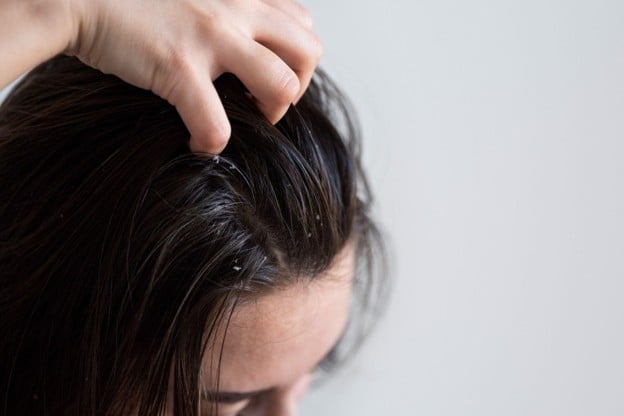
A flaky, itchy scalp is one of those problems that feels minor until it isn’t. You brush your hair, and white flakes settle on your shoulders. You scratch your head in a meeting without thinking. It becomes something you’re quietly managing all the time. Most people try a dandruff shampoo, see some improvement, and then watch the flakes come back within weeks. That cycle happens because the surface problem is being treated rather than the actual cause.
Why Your Scalp Gets Flaky in the First Place
Flaking isn’t random. It’s usually the result of an accelerated skin cell turnover on the scalp. Normally, skin cells shed slowly and invisibly. But when something disrupts the scalp’s environment, those cells shed faster and clump together into visible flakes.
The most common trigger is an overgrowth of a yeast-like fungus called Malassezia. This organism naturally lives on most people’s scalps without causing problems. The issue starts when it multiplies beyond normal levels, feeding on scalp oils and producing byproducts that irritate the skin. That irritation leads to inflammation, itching, and rapid shedding of skin cells.
Other contributing factors include:
- A dry scalp that lacks adequate moisture
- Contact dermatitis from harsh shampoos or styling products
- Seborrheic dermatitis, a more stubborn inflammatory skin condition
- Stress, which can weaken the skin barrier and trigger flare-ups
- Hormonal shifts that alter oil production on the scalp
The Difference Between Dry Scalp and Dandruff
These two are often confused, but they’re not the same thing, and they don’t respond to the same treatments. A dry scalp produces small, fine flakes and is often accompanied by tightness or overall skin dryness elsewhere on the body. It improves with better hydration and gentler products.
Dandruff, on the other hand, tends to produce larger, oilier flakes. The scalp may look a little greasy even while flaking. This type is usually linked to Malassezia overgrowth or seborrheic dermatitis. Treating it with a heavy moisturizing approach can actually make things worse by feeding the fungus further.
Getting this distinction right is the first step in choosing a treatment that actually works.
What Actually Helps — and What Doesn’t
Most over-the-counter dandruff shampoos work by targeting the fungus or slowing down cell turnover. The common active ingredients — zinc pyrithione, ketoconazole, selenium sulfide, and salicylic acid — each work differently. Some are antifungal, some are keratolytic (meaning they help remove buildup), and some do both.
The problem is that people often stop using them as soon as the flaking clears up. Dandruff tends to return if the underlying imbalance isn’t fully corrected or managed. Using an active shampoo regularly, even after symptoms improve, is important for long-term results.
If you’re already deep into researching solutions, understanding how to get rid of dandruff through a root-cause lens can save you from going through product after product without seeing real progress.
How You Wash Your Hair Matters More Than You Think
Technique and frequency play a bigger role than most people realize. Washing too infrequently allows oil and dead skin to build up, creating conditions in which Malassezia thrives. Washing too aggressively or with very hot water strips the scalp and triggers compensatory oil production.
A few habits that make a consistent difference:
- Massage the shampoo into the scalp rather than just the hair
- Let active shampoos sit for two to three minutes before rinsing
- Use lukewarm water, not hot
- Rinse thoroughly — product residue on the scalp worsens irritation
- Avoid scratching aggressively, which can break the skin and worsen inflammation
When to Think About a More Targeted Approach
If your scalp has been flaky and irritated for months despite trying different shampoos, it may be worth looking at a more structured approach. A medicated option like Traya anti-dandruff shampoo is formulated specifically for persistent dandruff, combining antifungal ingredients with scalp-soothing support rather than just temporarily masking symptoms.
Persistent cases sometimes also signal something deeper — a nutritional gap, a hormonal imbalance, or chronic inflammation that keeps triggering the scalp. In those situations, treating only the scalp surface will continue to yield incomplete results.
Final Thoughts
A flaky, itchy scalp is manageable, but it requires understanding what’s driving it. Reaching for the nearest shampoo isn’t always the answer. Start by identifying whether you’re dealing with dryness or a fungal imbalance, choose products with the right active ingredients, and be consistent with your approach. Most scalp issues respond well once you stop treating the symptom and start addressing the source.