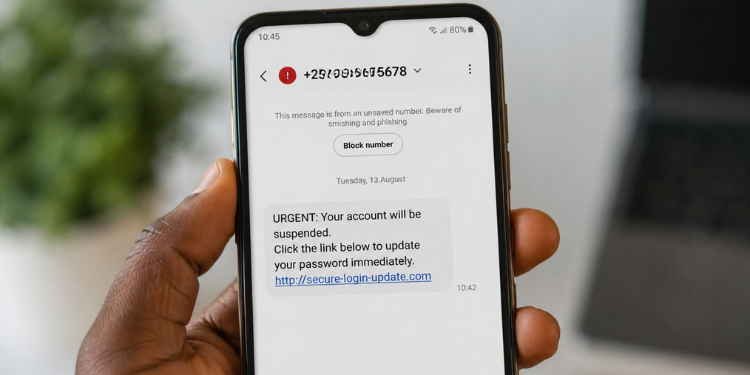
Phone scams have become one of the most common ways fraudsters target bank customers.
Instead of trying to break into banking systems, criminals are increasingly manipulating people through convincing text messages, emails and phone calls. Many impersonate trusted organizations, while others exploit everyday situations such as paying rent, settling school fees, or responding to family emergencies.
The scams may look different, but they all have one thing in common: they pressure victims to act before verifying the information.
Equity Bank has invested in multiple layers of security to safeguard customer accounts, but customers also play a critical role by staying alert and following safe banking practices. Knowing how these scams work is one of the most effective ways to stay safe. Here are eight common tactics fraudsters use and how to avoid them.
1. “Your Account Has Been Suspended”
It usually begins with an alarming text message or email claiming your account has been suspended, blocked or requires urgent verification because of suspicious activity.
The message urges you to click a link immediately. That link leads to a fake banking website that looks almost identical to the real one. Once you enter your username, password, or PIN, fraudsters capture your details and attempt to access your account.
Never click banking links sent through unsolicited messages. You can always access Equity banking services via the Equity Mobile App, your Equitel line, USSD (*247#) or via Equity Online for Individuals(https://equityonline.equitygroupholdings.com/en/access/onboarding ).
2. Fake Reward and Competition Messages
Whether it is “You have won KSh100,000” or “claim your shopping voucher today”, these messages often promise cash prizes, loyalty rewards, or airtime and ask customers to verify their account details or pay a small processing fee.
The prize never exists. Instead, fraudsters either steal your banking credentials or convince you to install malicious software on your phone.
Always ignore unexpected prize notifications, especially if you never entered a competition. Legitimate promotions do not require customers to disclose passwords, PINs or One-Time Passwords (OTPs).
3. “Send Money to This Number“
A message appears to come from a trusted organization and instructs you to send money to a particular phone number to resolve a banking issue or complete a transaction.
The request feels genuine because it creates urgency. By the time customers realize something is wrong, the money has already reached the fraudster.
Equity Bank will never ask customers to transfer money to personal numbers to fix account problems.
4. Fake Landlord Payment Instructions
This scam usually surfaces at the end of the month. Tenants receive a message claiming the landlord has changed their bank account or mobile money number.
The message often warns that rent must be paid immediately to avoid penalties or eviction. Without verification, customers unknowingly send rent to fraudsters.
Always confirm any change in payment details directly with your landlord before making the transfer.
5. Fake School Fees Requests
Parents and guardians are particularly vulnerable during school opening periods.
Fraudsters send messages claiming a school’s payment account has changed or pretend to be students urgently requesting money for transport, pocket money or school fees.
Also Read: Equity Bank Explains How Customer Lost Money from Her Account
The urgency is deliberate. Their goal is to make parents act emotionally rather than verify the information. Always confirm payment instructions directly with the school or your child before sending money.
6. Fake Medical Emergencies
Few scams are as emotionally manipulative. A caller claims your relative has been involved in an accident or urgently requires surgery. They may pretend to be a doctor, police officer, or Good Samaritan.
They insist that money must be sent immediately. Many victims only discover the deception after contacting the family member.
Pause before sending money. Contact your relative or another trusted family member to confirm the situation independently.
7. The OTP Scam
A caller introduces themselves as a bank employee assisting with account verification, a mobile banking update, or a system upgrade.
Also Read: 8 Tricky Text Messages Scammers Are Sending Bank Customers Right Now
During the conversation, you receive a One-Time Password (OTP). The caller asks you to read it aloud. That single code may allow fraudsters to authorize transactions or reset your banking credentials.
Equity Bank will never ask you to submit your OTP or PIN to access banking services. Never share your OTP with anyone. Not even someone claiming to work for your bank.
8. Fake Account Verification Calls
Customers receive messages claiming their account has been blocked because of KRA PIN verification, suspicious transactions, or account updates.
The message provides a phone number to call for assistance. The person who answers sounds professional and gradually persuades customers to disclose confidential information or authorize transactions.
Be wary of calls or messages from unknown numbers. All official calls from Equity Bank will originate from 0763 000 000. Report any suspicious numbers or SMS lines to 333 for FREE.
Above all, no security system can protect customers who voluntarily disclose their credentials to fraudsters posing as trusted individuals. Protect yourself by using only verified Equity Banking channels to stay safe. For tips on secure banking, visit: https://equitygroupholdings.com/ke/secure-banking-tips/