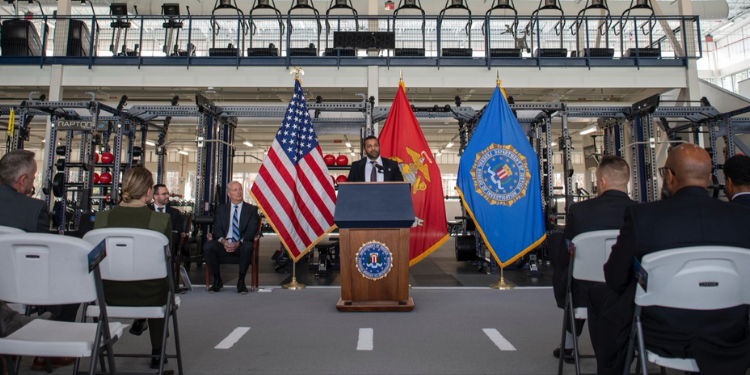
Hackers with ties to Iran broke into the personal email account of FBI Director Kash Patel and dumped a collection of old photos and documents online on Friday, March 27, turning the tables on one of the Trump administration’s top law enforcement figures.
The group, the Handala Hack Team, posted the material on its website, boasting that Patel’s name now sits on their list of successful targets.
Among the images: Patel puffing on cigars, cruising in an old convertible, and pulling a funny face in a mirror selfie while holding a big bottle of rum. The files appear to mix everyday personal stuff with work-related messages stretching back years.
A Justice Department official told reporters the breach was real and the posted items looked genuine. The FBI itself stayed quiet when asked for comment, and the hackers didn’t reply to messages seeking their side.
Western researchers have long linked Handala to Iranian government cyber units, describing it as one of several online fronts used by Tehran’s intelligence apparatus.
The group recently claimed credit for hitting a Michigan medical device company, Stryker, and said it wiped out a large volume of data in apparent retaliation for regional conflicts.
This isn’t Patel’s first brush with Iranian hackers. Back in late 2024, as he was about to take the FBI job, officials warned him that Tehran-linked operators had already poked around his private communications.
That earlier effort was a component of a broader push targeting incoming members of the Trump team.
Also Read: Trump’s Congress Targetted? Hackers Breach Emails of Key Committees
The fresh leak revives uncomfortable questions about email security at the highest levels.
Patel built much of his public profile on tough talk about protecting American secrets and going after leakers.
Now his own inbox, an old Gmail address linked to him in past data dumps, has been cracked open, revealing snippets of life between 2010 and 2019, and perhaps beyond.
Cyber experts who have scanned the samples say it appears to be more of a virtual junk drawer than a trove of classified information – family photos, travel notes, old resumes, and business banter.
One researcher called it “someone’s personal junk drawer” rather than a government system compromise.
Still, the optics sting for the man now running the bureau tasked with stopping exactly this kind of foreign meddling.
Hacking the FBI boss, Patel, amid the Iran war.
U.S. and Israeli strikes on Iran have escalated tensions in recent weeks, and American intelligence has flagged the risk of Iranian payback in cyberspace.
Handala’s earlier Stryker attack came with claims of striking back over a reported missile incident in Iran.
Also Read: $10 Million Reward Offered After US Disrupts Iranian Cyber Network
The Justice Department has hit the group before, seizing some of its websites after the breach at the medical company, yet the operators keep popping up with new claims.
Reuters confirmed the Gmail address matches one previously connected to Patel in dark-web records.
The leak also spotlights broader vulnerabilities. Even senior officials juggle personal and professional lives across private accounts, a habit that has tripped up plenty of people before.
In an era of constant foreign hacking attempts, from Iran, China, Russia, and others, the line between private and public has never been thinner or more dangerous.
So far, no one has pointed to any smoking-gun classified material in the dump. The photos paint a casual, human picture of Patel away from the spotlight: enjoying a cigar, behind the wheel of a vintage car, goofing around with a bottle of rum.
Mundane moments, perhaps, but now broadcast through adversaries keen to embarrass the United States.
The incident is a raw reminder that inside cyber warfare, no one is untouchable, not even the director of the FBI, whom we believe is ahead of the curve.