
The United States Justice Department has announced the seizure of four Iranian state-linked domains, which it said were used to conduct cyber-enabled psychological operations and transnational repression.
Attorney General Pamela Bondi announced the seizure in a statement on Thursday, March 20, part of a growing effort to neutralize Iran’s cyber threat to Americans, Israeli targets, and dissidents abroad.
According to Bondi, the seized websites — Justicehomeland[.]org, Handala-Hack[.]to, Karmabelow80[.]org, and Handala-Redwanted[.]to — were used by Iran’s Ministry of Intelligence and Security (MOIS) to claim credit for hacking operations, post sensitive stolen data, and incite violence against journalists, regime critics, and Israeli citizens.
“Terrorist propaganda online can incite real-world violence — thanks to our National Security Division and the U.S. Attorney’s Office for the District of Maryland, this network of Iranian-backed sites will no longer broadcast anti-American hate,” part of the statement reads.
Iranian cyber network disrupted
Bondi added that the domains, interconnected through shared leak sites and Iranian IP ranges, facilitated both destructive cyberattacks and “faketivist” operations designed to intimidate and manipulate public perception.
Also Read: Trump Targets Iran’s New Leadership With $10 Million Reward After Direct Warning
She further noted that one particularly aggressive site, Handala-Hack[.]to, claimed responsibility for a March malware attack against a U.S.-based multinational medical technologies company, presenting it as retaliation for cyber operations against the “Axis of Resistance.”
The site also published personally identifiable information (PII) of nearly 190 Israeli Defense Force personnel and other Israeli officials, accompanied by explicit threats.
The Federal Bureau of Investigation (FBI) Director Kash Patel reinforced the U.S. stance:
“Iran thought they could hide behind fake websites and keyboard threats to terrorize Americans and silence dissidents. We took down four pillars of their operation, and we’re not done. This FBI will hunt down every actor behind these cowardly death threats and cyberattacks.”
These enforcement actions come amid escalating tensions in the Middle East. Since February 28, 2026, the conflict involving U.S., Israeli, and Iranian forces has significantly impacted global energy markets.
Seizures
The DOJ noted that Iran’s MOIS had previously used its cyber infrastructure to target dissidents and journalists in the U.S., soliciting assistance from the Jalisco New Generation Cartel (CJNG) to carry out violence against identified targets.
In a chilling email, one account associated with the Handala Hack network offered a $250,000 bounty for the execution of specific dissidents.
“Iran, the leading state sponsor of terrorism worldwide, used the seized domains to dox and harass dissidents and journalists, incite violence against Jewish communities, and spread Tehran’s anti-American propaganda. NSD is committed to dismantling Iran’s cyberwarfare infrastructure,” Assistant Attorney General for National Security John Eisenberg stated.
In addition to the immediate domain seizures, the Rewards for Justice program is offering up to $10 million for information leading to the identification of individuals who engage in cyberattacks on U.S. critical infrastructure at the direction of foreign governments.
Also Read: Trump Issues Warning After Iran Retaliates Over South Pars Gas Field Attack
The FBI Baltimore Field Office is investigating the case in coordination with the Cyber Division, the U.S. Attorney’s Office for the District of Maryland, and the National Security Division.
“The Iranian regime exploits cyberspace to advance authoritarian objectives, suppress democratic institutions, and undermine our national and economic security. The FBI will act swiftly, deliberately, and proactively to disable cyber threats to America,” said FBI Baltimore Special Agent in Charge Jimmy Paul.
Iran war
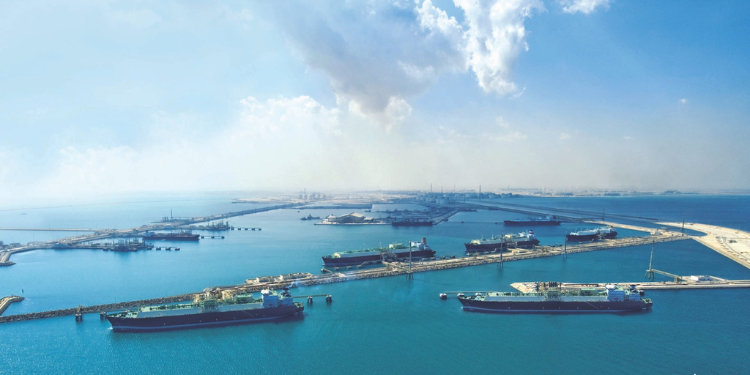
The action comes amid an intensifying conflict in the Middle East that has disrupted energy markets worldwide. Israel’s strikes this week on Iran’s South Pars gas field triggered retaliatory attacks on Qatar’s Ras Laffan LNG hub, leading to production halts and a surge in global oil and gas prices.
President Donald Trump on Thursday warned that the U.S. would “massively blow up” South Pars if Iran continued to target Qatar’s energy infrastructure.
He confirmed the U.S. had no prior knowledge of Israel’s South Pars strike and threatened severe action against Iran if attacks on Qatari energy infrastructure continued.
The resulting energy disruption has led to spikes in global gas prices, and Qatar said that its LNG export recovery could take years.
Saudi Arabia, on its part, warned it reserves the right to act militarily against Tehran if provocations continue, while European and Gulf nations coordinate to ensure safe navigation through the Strait of Hormuz.