
The U.S. Department of State has announced a $10 million reward for information about Iran’s new supreme leader, Mojtaba Khamenei, and several other senior officials accused of directing global terrorist activities.
The reward was issued through the department’s Rewards for Justice Program, which offers financial incentives for intelligence leading to the capture or prosecution of individuals linked to terrorism.
Officials said Mojtaba Khamenei is among a group of Iranian leaders believed to command elements of the Islamic Revolutionary Guard Corps (IRGC).
“These individuals command and direct various elements of Iran’s Islamic Revolutionary Guard Corps (IRGC), which plans, organizes, and executes terrorism around the world,” the State Department said.
“If you have information on these or other key IRGC leaders or their component branches, send it to us via our Tor-based tipline or Signal.”
Several senior Iranian officials also named
In addition to Mojtaba Khamenei, the U.S. listed multiple high-ranking Iranian officials on the reward notice.
Among them are Iran’s interior minister, Eskandar Momeni, and intelligence minister Esmail Khatib. Both officials are accused by Washington of helping to oversee security and intelligence operations tied to the IRGC.
The State Department urged anyone with relevant information to submit tips through secure communication platforms, including encrypted services.
Officials said individuals who provide credible information may qualify not only for financial compensation but also for relocation.
“Your information could make you eligible for relocation and a reward,” the department added.
Also Read: Iranian Ship Sailing Near American Aircraft Carrier Hit by Strikes
The reward announcement follows the death of Mojtaba’s father, Ali Khamenei, who served as Iran’s supreme leader for decades.
Ali Khamenei was killed in a bombing on February 28, at the onset of the conflict involving the United States, Israel, and Iran.
His death triggered a significant leadership transition within Iran’s ruling establishment.
Mojtaba Khamenei, previously regarded as a powerful figure within Iran’s political and security structure, subsequently emerged as the country’s new supreme leader.
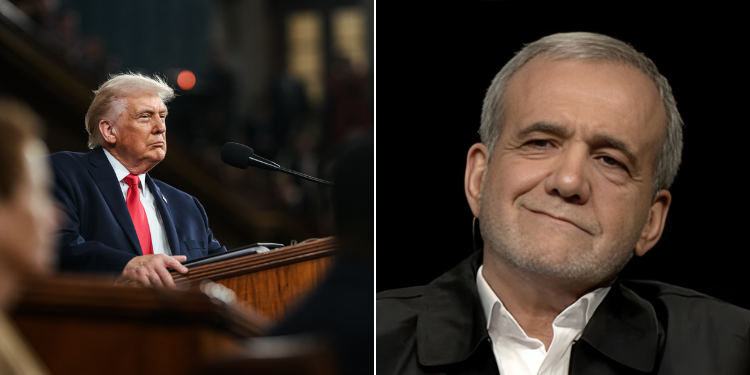
The announcement follows President Donald Trump’s statement that he believes the new Iranian Supreme Leader is alive but “damaged.”
Khamenei has not appeared publicly since his selection by a clerical assembly on Sunday, and his initial comments were delivered by a television presenter on Thursday.
An Iranian official told Reuters on Wednesday that the newly appointed supreme leader was slightly injured but continued to fulfill his duties, after state television described him as war-wounded.
“I think he probably is (alive). I think he is damaged, but I think he’s probably alive in some form, you know,” Trump said in an interview on Fox News‘ “The Brian Kilmeade Show.”
Mojtaba issues statement
Trump spoke after Khamenei issued his first public statement on Thursday, vowing to continue blocking the vital Strait of Hormuz oil trade route and to attack neighbouring countries that host U.S. military bases.
The health and current whereabouts of the new leader, age 56, remain unclear after Iranian state TV reported he was wounded in the U.S. and Israeli strikes that killed his father, Ayatollah Ali Khamenei, age 86, and several relatives.
On Thursday, state TV did not explain Khamenei’s absence, offering only a written statement read by an announcer.
Also Read: Iran’s New Supreme Leader Threatens Trump in First Address After Appointment
In his statement, Khamenei stuck by Iran’s threats to shipping, saying that “the lever of blocking the Strait of Hormuz should still be used.”
Iran has repeatedly targeted vessels attempting to cross the 24-mile strait, through which one-fifth of the world’s oil passes each year. This has created a significant backlog in the global oil supply, driving up crude prices and threatening broader inflation.
The statement added that “if necessary,” Iran would continue to attack Western military bases hosted by its Gulf neighbors, with whom Iran seeks “friendly and sincere relations.” It urged these countries to “close those bases as soon as possible.”
Although Iran maintains it is targeting only U.S. bases across the Gulf, attacks have also struck civilian targets, including residential buildings and oil facilities.
The new leader also vowed vengeance for “the blood of your martyrs” and especially “the blood of our children” following a strike on an elementary school that Iranian officials said killed more than 170 people, mostly children.