Wars in Ukraine and the Middle East have renewed interest in how the world’s militaries compare. The annual Global Firepower ranking for 2026 provides a snapshot of conventional military strength by measuring manpower, equipment, logistics, financial resources, natural resources, and other factors.
The United States retains the top position for another year, although several rivals are close behind in key areas.
Global Firepower evaluates 145 countries using more than 60 indicators. A lower Power Index score represents stronger overall military capability.
Nuclear weapons are not directly factored into the index, but the strategic weight is noted in some of the country profiles.
Global Firepower 2026: Top 20 Military Powers
| 1 | United States (0.0741) | 11 | Brazil (0.2374) |
| 2 | Russia (0.0791) | 12 | Germany (0.2463) |
| 3 | China (0.0919) | 13 | Indonesia (0.2582) |
| 4 | India (0.1346) | 14 | Pakistan (0.2626) |
| 5 | South Korea (0.1642) | 15 | Israel (0.2707) |
| 6 | France (0.1798) | 16 | Iran (0.3199) |
| 7 | Japan (0.1876) | 17 | Australia (0.3208) |
| 8 | United Kingdom (0.1881) | 18 | Spain (0.3247) |
| 9 | Turkiye (0.1975) | 19 | Egypt (0.3651) |
| 10 | Italy (0.2211) | 20 | Ukraine (0.3691) |
The table shows 20 ranked militaries.
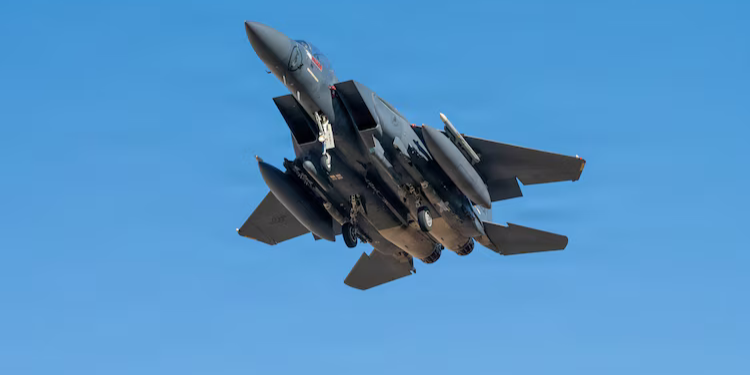
The United States continues to dominate through its air and naval power, advanced military technology, and unmatched defense spending.
Its active-duty force numbers around 1.3 million personnel and is supported by aircraft carriers, stealth fighter jets, and a global network of military bases.
Russia and China Continue to Challenge
Russia is close behind despite the high costs of its war in Ukraine. The country continues to rank highly in land forces, artillery systems, and tank numbers, although sanctions and battlefield losses have affected its military modernization.
China has continued to expand its navy and missile arsenal, helping it take third place in this year’s rankings. China has the world’s largest standing military force, with over two million active-duty personnel, and has a constant focus on strategic competition throughout the Asia-Pacific region.
India ranks fourth, with a large manpower base and a mix of domestically produced and imported military hardware, as it faces security challenges from both China and Pakistan.
Also Read: Trump Reveals Secret Instructions to U.S. Military if Iran Succeeds in Assassinating Him
South Korea is ranked fifth, reflecting decades of investment driven by the continuing security threat presented by North Korea.
France and the United Kingdom remain among the world’s strongest military powers, backed by advanced naval forces, expeditionary capabilities and nuclear deterrence.
Japan has continued climbing the rankings as defense spending increases and new military capabilities are introduced.
Turkiye is also inside the top ten, supported by one of NATO’s largest armies and a growing domestic defense industry.
Israel and Iran for Middle East Military Balance
Israel and Iran are among the world’s top 20 military powers, though they rely on different strengths.
Israel maintains an advantage through advanced air power, intelligence capabilities, and military technology.
Iran continues investing heavily in missile systems, drones, and asymmetric warfare capabilities.
Military Spending Continues to Rise
Defense spending remains one of the biggest factors shaping military capability.
Last year, the defense budgets of the United States, China, and Russia were around $954 billion, $336 billion, and $190 billion, respectively, according to the Stockholm International Peace Research Institute (SIPRI)data.
Military budgets also increased sharply across Europe following the war in Ukraine, while several Asian countries continued expanding defense spending amid growing regional tensions.
Modern Warfare Is Changing
Manpower is still important, but quality, maintenance, logistics, and industrial capacity matter more in extended conflicts.
The United States and many of its allies continue to lead in advanced systems such as stealth aircraft and aircraft carrier groups.
Russia and China have placed greater emphasis on expanding missile capabilities and maintaining large conventional forces.
Also Read: Trump Holds Nearly 90-Minute Call With Putin, Speaks With Zelenskyy on Ending Ukraine’s 5-Year War
Many countries are also investing heavily in drones, cyber warfare, and hypersonic weapons, although Global Firepower continues to place greater weight on conventional military strength.
Global Firepower’s rankings offer a comparison of military resources but do not predict how future conflicts would unfold.
The index cannot fully account for factors such as combat experience, leadership, training quality, geography, morale, or political decision-making.
Military alliances also play an important role, as partnerships like NATO allow member states to combine military resources in ways that individual rankings cannot fully capture.