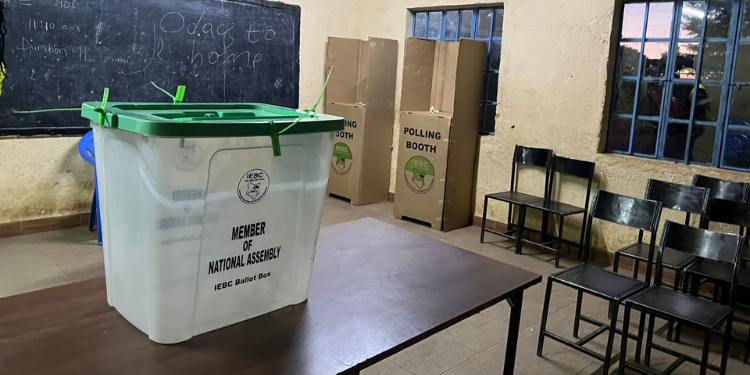
The Judiciary has proposed a KSh50.7 billion budget for the 2027/28 financial year, stating that it needs adequate funding to handle disputes arising from the 2027 General Elections.
The institution says it requires KSh50.7 billion, creating a funding gap of KSh20.4 billion against the proposed budget ceiling of KSh30.4 billion.
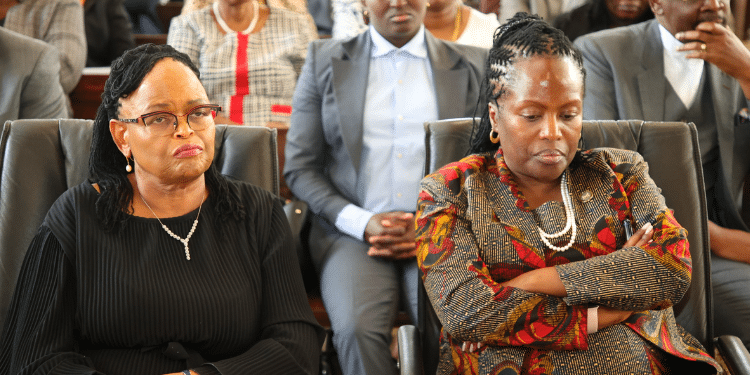
Chief Registrar of the Judiciary Winfrida B Mokaya appealed during joint public hearings on the proposed budgets of the Judiciary and the Judicial Service Commission (JSC) at Kajiado Law Courts on September 29.
She said the upcoming election period places a responsibility on the courts, requiring adequate resources to handle disputes and safeguard constitutional governance.
“We must acknowledge that the demand for judicial services continues to outpace the growth in resources. The people of Kenya continue to demand- and rightly so- that justice must not remain out of the reach of many,” said Mokaya.
Judiciary Warns of Election Resource Pressures
Mokaya said the 2027/28 financial year is a unique budgeting cycle because it coincides with the next General Election, a period marked by judicial activity.
According to the Chief Registrar, the Judiciary will need to handle election petitions and disputes while maintaining its day-to-day constitutional responsibilities.
Also Read: Judiciary Responds After Viral Letter Claims Interference With Gachagua’s Supreme Court Proceedings
She explained that the Judiciary requires KSh46.2 billion for recurrent expenditure and KSh4.5 billion for development expenditure. The proposed budget ceiling of KSh30.4 billion leaves a shortfall of KSh20.4 billion, equivalent to 40.2 percent of the funding needs.
The Judicial Service Commission is also seeking KSh1.833 billion, against an indicative allocation of KSh1.038 billion, leaving a financing gap of roughly KSh795 million.
Expansion of Courts and Recruitment Drive Raise Costs
The Judiciary’s budget request comes amid an ongoing expansion of court infrastructure and personnel to improve access to justice and reduce delays in case determination.
Mokaya said that during the last financial year, the Judiciary operationalized Yala, Khwisero, Nyakach and Chepkemel Law Courts, while nine more courts are scheduled to become operational during the current financial year. These include courts in Maara, Kegonga, Nyatike, Konyao, Tarakwa, Mihang’o, Emuhaya, Lokitaung and Lari.
Two new Court of Appeal stations were operationalized in Kakamega and Meru, while magistrates’ courts increased from 143 to 148 and Small Claims Courts grew from 40 to 55.
On human resources, the Judicial Service Commission recruited 1,182 judicial staff, 124 magistrates and 53 judges. The appointments included one Supreme Court judge, 15 Court of Appeal judges, 24 High Court judges and 13 Environment and Land Court judges.
According to the Judiciary, the number of High Court judges has risen from 78 to 98, though this still represents only 49 percent of the institution’s optimal establishment of 200 judges. The Court of Appeal currently has 42 judges against a required maximum of 70, while the Environment and Land Court has 61 judges out of an optimal 66.
Also Read: Martha Koome Appoints New Members to Six Crucial Tribunals
Technology, Case Backlog Reduction Among Key Priorities
The Judiciary says much of the requested funding will support efforts to improve efficiency and reduce case delays through technology and innovation.
According to Mokaya, the institution resolved 576,162 cases during the last financial year against 561,580 new filings, achieving a 103 percent case clearance rate. The Judiciary has also intensified efforts to address succession matters, including automation of succession filings through the Case Tracking System and the Urithi Portal, which has been integrated with the Government Printer.
Technology-driven initiatives such as Mahakama Popote, which allows judicial officers to handle cases across different courts virtually, resolved 22,516 matters in the last financial year.
The proposed budget will finance efforts to reduce the case backlog, expand Alternative Justice Systems and mediation, strengthen election preparedness and dispute resolution, advance technology and automation, enhance cybersecurity, develop court infrastructure, expand staff training, and support innovations to improve court-user experience.
Follow our WhatsApp Channel and X Account for real-time news updates.