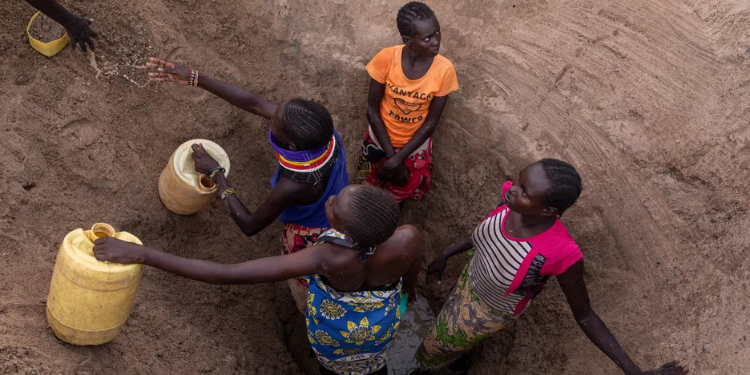

Deputy President Kithure Kindiki has rolled out plans to mitigate severe food shortages in 32 high-risk counties following the October-December short rains failure.
In a bid to cushion locals from the threats posed by the drought, DP Kindiki held a meeting with top government officials to discuss the extent and cost of the interventions required in the affected counties.
The meeting set the stage for the government and partners to provide human and livestock food and non-food support to mitigate the effects of the prevailing drought and ensure no lives are lost.
DP Kindiki Leads Drought Mitigation Plans
Attended by Cabinet and Principal Secretaries, Chief Executive Officers and Heads of relevant Ministries, Departments and Agencies together with the Council of Governors, the meeting resolved to provide food support for 21 million Kenyans living in the high-risk areas.
“The October to December short rains has under-performed, exposing an estimated 2.1 million people across 32 Counties to food and nutritional insufficiency,” the Deputy President said in his speech.
He said locals in the affected counties require food and livestock, as well as nutritional and health interventions, for the next six months, by which time the harvest from the March to May long rains will be almost ready.
Also Read: Cabinet Approves New Smart Licences Introducing Instant Fines
DP Kindiki added that a follow-up meeting will be held today, December 16, 2025, with representatives of development partners, non-governmental humanitarian institutions, and the private sector.
“After which the government will announce a comprehensive roadmap for mitigating the drought situation,” DP Kindiki said.
A recent report by Kenya Meteorological Department (KMD), said the probability of La Nina occurring in December was at 60 percent according to the World Meteorological Organization (WMO).
“The distribution of rainfall is expected to be poor, with prolonged dry spells and isolated storms in some areas,” the report read in part.
“Temperatures are forecasted to be warmer than average over most parts of the country, except in a few areas of the western sector where near to cooler than average temperatures are likely. Higher probabilities for warmer than average temperatures are expected over the central and eastern regions,” it said.
According to the report, the distribution of rainfall is expected to be poor, with prolonged dry spells and isolated storms in some areas.
“Temperatures are forecasted to be warmer than average over most parts of the country, except in a few areas of the western sector where near to cooler than average temperatures are likely,” the KMD said.
Also Read: KNEC Sends Stern Warning After Schools Send Own KJSEA Results Analysis
These forecasts show that the expected deficit in rainfall over the eastern sector of the country is likely to cause a slide into the alert phase of the drought early warning system, which might progress to the alarm worsening phase as the season progresses, it added.
Some of the worst affected counties include Marsabit, Samburu, Turkana, Mandera, Wajir and Garissa as some of the worst affected counties.
Follow our WhatsApp Channel and X Account for real-time news updates.