Tuesday, June 2, 2026
  • News
    • Latest News
    • Breaking News
    • Fact Check
    • Investigations
    • Explainers
  • Politics
    • Global Politics
    • Elections
    • Government & Policy
    • Diplomacy
    • Conflicts & Security
    • Political Analysis
  • Business
    • Global Economy
    • Markets
    • Technology
    • Startups
    • Energy
    • Finance
  • World News
    • Americas
    • Asia
    • Asia Pacific
    • Africa
    • Europe
    • Middle East
  • Africa
    • Central Africa
    • East Africa
    • West Africa
    • Southern Africa
  • Health
    • Global Health
    • Public Health
    • Health Policy
    • Medical Research
    • Diseases & Conditions
    • Mental Health
    • Nutrition
    • Climate & Health
    • Health Explainers
  • Sports
    • Athletics
    • Basketball
    • Boxing
    • Cricket
    • Football
    • Formula 1
    • Golf
    • Rugby
  • Weather
    • Climate Business
    • Climate Change
    • Climate Solutions
    • Living Green
  • Culture
    • Arts
    • Film & TV
    • Food
    • Music
    • Lifestyle
    • Travel
  • Opinion
    • Editorials
    • Letters
  • Behind The Brand
REGISTER
LOGIN
No Result
View All Result
The Kenya Times
  • News
    • Latest News
    • Breaking News
    • Fact Check
    • Investigations
    • Explainers
  • Politics
    • Global Politics
    • Elections
    • Government & Policy
    • Diplomacy
    • Conflicts & Security
    • Political Analysis
  • Business
    • Global Economy
    • Markets
    • Technology
    • Startups
    • Energy
    • Finance
  • World News
    • Americas
    • Asia
    • Asia Pacific
    • Africa
    • Europe
    • Middle East
  • Africa
    • Central Africa
    • East Africa
    • West Africa
    • Southern Africa
  • Health
    • Global Health
    • Public Health
    • Health Policy
    • Medical Research
    • Diseases & Conditions
    • Mental Health
    • Nutrition
    • Climate & Health
    • Health Explainers
  • Sports
    • Athletics
    • Basketball
    • Boxing
    • Cricket
    • Football
    • Formula 1
    • Golf
    • Rugby
  • Weather
    • Climate Business
    • Climate Change
    • Climate Solutions
    • Living Green
  • Culture
    • Arts
    • Film & TV
    • Food
    • Music
    • Lifestyle
    • Travel
  • Opinion
    • Editorials
    • Letters
  • Behind The Brand
  • News
    • Latest News
    • Breaking News
    • Fact Check
    • Investigations
    • Explainers
  • Politics
    • Global Politics
    • Elections
    • Government & Policy
    • Diplomacy
    • Conflicts & Security
    • Political Analysis
  • Business
    • Global Economy
    • Markets
    • Technology
    • Startups
    • Energy
    • Finance
  • World News
    • Americas
    • Asia
    • Asia Pacific
    • Africa
    • Europe
    • Middle East
  • Africa
    • Central Africa
    • East Africa
    • West Africa
    • Southern Africa
  • Health
    • Global Health
    • Public Health
    • Health Policy
    • Medical Research
    • Diseases & Conditions
    • Mental Health
    • Nutrition
    • Climate & Health
    • Health Explainers
  • Sports
    • Athletics
    • Basketball
    • Boxing
    • Cricket
    • Football
    • Formula 1
    • Golf
    • Rugby
  • Weather
    • Climate Business
    • Climate Change
    • Climate Solutions
    • Living Green
  • Culture
    • Arts
    • Film & TV
    • Food
    • Music
    • Lifestyle
    • Travel
  • Opinion
    • Editorials
    • Letters
  • Behind The Brand
No Result
View All Result
The Kenya Times ~ Trending, Breaking News and Videos
No Result
View All Result
ADVERTISEMENT

African Countries Can’t Resolve Their Debt Crisis Under a System Rigged Against Them

Carlos LopesbyCarlos Lopes
May 5, 2024
Reading Time: 9 mins read
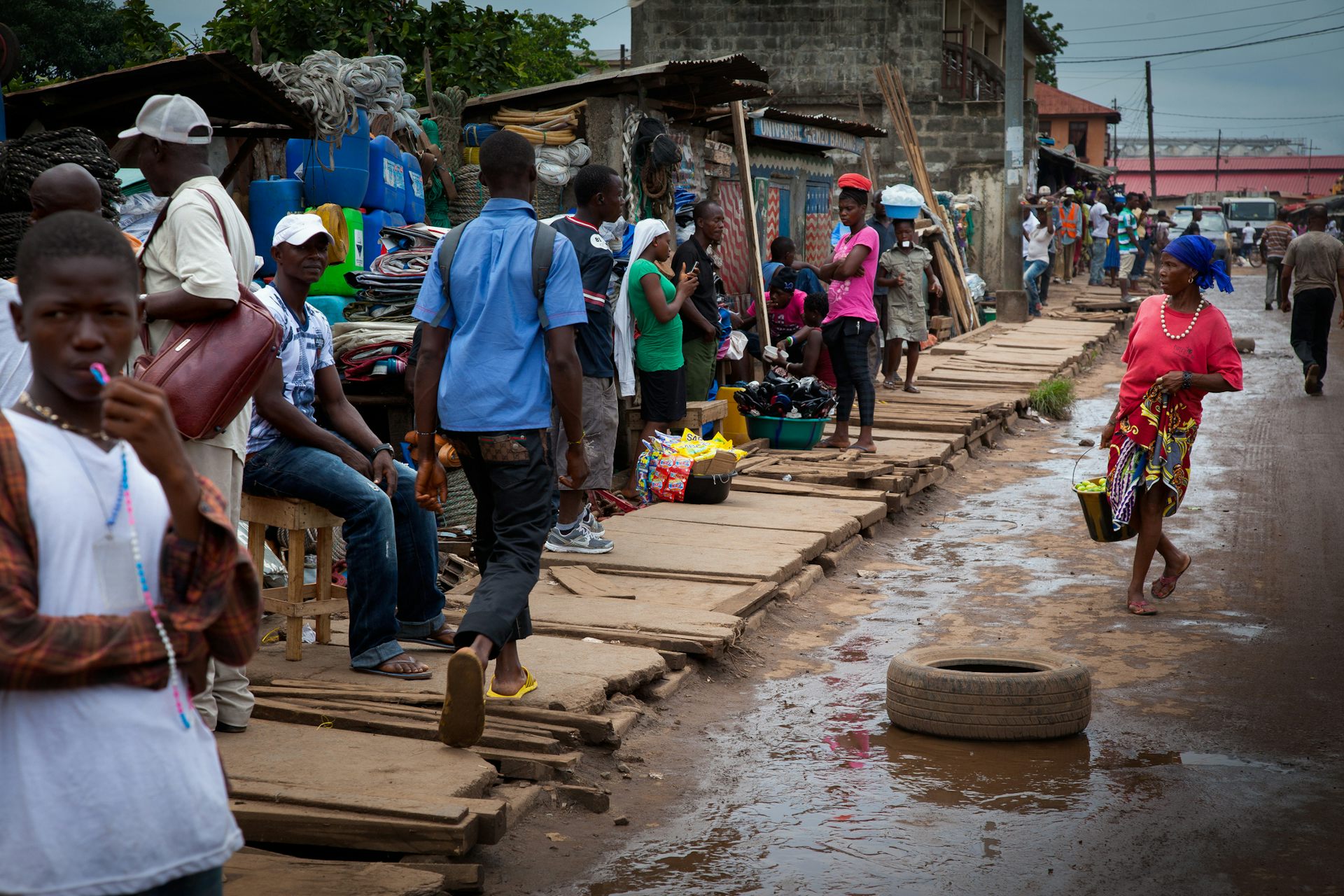
African Man Walking Streets

African Man Walking Streets

FacebookTwitterLinkedInRedditWhatsApp
Advertisement

The debt situation in many African countries has escalated again to a critical juncture. Twenty are in, or at risk of, debt distress. Three pivotal elements significantly contribute to this.

Firstly, the rules governing the international banking system favor developed countries and work against the interests of African countries.

Secondly, multilateral financial institutions such as the International Monetary Fund (IMF) and the World Bank focus on poverty alleviation. This is commendable. But it doesn’t address the liquidity crisis countries face. Many don’t have the necessary readily available funds in their coffers to cover urgent development priorities due to their dependency on volatile commodity exports. As a result governments turn to raising sovereign debt under conditions that are among the most unfavorable on the planet.

This perpetuates a debt dependency cycle rather than fostering sustainable economic growth.

Thirdly, there’s the significant influence of biased credit rating agencies. These unfairly penalize African countries. In turn, this impedes their ability to attract investment on favorable terms.

The convergence of these three factors underscores the imperative to implement effective strategies aimed at mitigating the overwhelming debt burden afflicting African nations. These strategies must address the immediate financial challenges facing countries. They must also lay the groundwork for long-term economic sustainability and equitable development across the continent.

By tackling these issues head-on, a financial environment can be created that fosters growth, empowers local economies, and ensures that African countries have access to the resources they need to thrive.

Rules of the banking game

The Bank for International Settlements is often called the “central bank for central banks”. It sets the regulations and standards for the global banking system.

But its rules disproportionately favor developed economies, leading to unfavorable conditions for African countries. For instance, capital adequacy requirements – the amount of money banks must hold in relation to their assets – and other prudential rules may be disproportionately stringent for African markets. This limits lending to stimulate economic growth in less attractive economies.

The bank’s policies also often overlook developing nations’ unique challenges.


Also Read: Museveni Warns of 2 Things Making African Countries Vulnerable to Western Nations


Following the 2008/2009 financial crisis, the bank introduced a new, tougher set of regulations. Their complexity and stringent requirements have inadvertently accelerated the withdrawal of international banks from Africa.

They have also made it increasingly difficult for global banks to operate profitably in African markets. As a result, many have chosen to scale back their operations, or exit. The withdrawals have reduced competition within the banking sector, limited access to credit for businesses and individuals, and hampered efforts to promote economic growth and development.

The limitations of the new regulations highlight the need for a more nuanced approach to banking regulation. The adverse effects could be mitigated by simplifying the regulations. For example, requirements could be tailored to the specific needs of African economies, and supporting local banks.

Focus on poverty alleviation

Multilateral financial institutions like the IMF and the World Bank play a crucial role in providing financial assistance to many countries on the continent. But their emphasis on poverty alleviation and, more recently, climate finance often overlooks the urgent spending needs.

Additionally, the liquidity squeeze facing countries further limits their capacity to prioritize essential expenditure.

Wealthy nations enjoy the luxury of lenient regulatory frameworks and ample fiscal space. For their part African countries are left to fend for themselves in an environment rife with predatory lending practices and exploitative economic policies.

Among these are sweetheart tax deals which often involving tax exemptions. In addition, illicit financial practices by multinational corporations drain countries of their limited resources.

Research by The ONE Campaign found that financial transfers to developing nations plummeted from a peak of US$225 billion in 2014 to just US$51 billion in 2022, the latest year for which data is available. These flows are projected to diminish further.

Alarmingly, the ONE Campaign report stated that more than one in five emerging markets and developing countries allocated more resources to debt servicing in 2022 than they received in external financing. Aid donors have been touting record global aid figures. But nearly one in five aid dollars was directed towards domestic spending hosting migrants or supporting Ukraine. Aid to Africa has stagnated.

This leaves African countries looking for any opportunities to access liquidity, which makes them a prey of debt scavengers. As noted by Columbia University professor José Antonio Ocampo, the Paris Club, the oldest debt-restructuring mechanism still in operation, exclusively addresses sovereign debt owed to its 22 members, primarily OECD countries.

With these limited attempts to address a significant structural problem of pervasive indebtedness it is unfair to stigmatize Africa as if it contracted debt because of its performance or bad management.

Rating agencies

Rating agencies wield significant influence in the global financial landscape. They shape investor sentiment and determine countries’ borrowing costs.

However, their assessments are often marked by bias. This is particularly evident in their treatment of African countries.

African nations argue that without bias, they should receive higher ratings and lower borrowing costs. In turn this would mean brighter economic prospects as there is a positive correlation between financial development and credit ratings.

However, the subjective nature of the assessment system inflates the perception of investment risk in Africa beyond the actual risk of default. This increases the cost of credit.

Some countries have contested ratings. For instance, Zambia rejected Moody’s downgrade in 2015, Namibia appealed a junk status downgrade in 2017 and Tanzania appealed against inaccurate ratings in 2018. Ghana contested ratings by Fitch and Moody’s in 2022, arguing they did not reflect the country’s risk factors.

Nigeria and Kenya rejected Moody’s rating downgrades. Both cited a lack of understanding of the domestic environment by rating agencies. They asserted that their fiscal situations and debt were less dire than estimated by Moody’s.


Also Read: Job Losses as South African Company Closes Kenyan Branch


Recent arguments from the Economic Commission for Africa and the African Peer Review Mechanism highlight deteriorating sovereign credit ratings in Africa despite some posting growth patterns above 5% for sustained periods. Their joint report identifies challenges during the rating agencies’ reviews. This includes errors in publishing ratings and commentaries and the location of analysts outside Africa to circumvent regulatory compliance, fees and tax obligations.

A recent UNDP report illuminates a staggering reality: African nations would gain a significant boost in sovereign credit financing if credit ratings were grounded more in economic fundamentals and less in subjective assessments.

According to the report’s findings, African countries could access an additional US$31 billion in new financing while saving nearly US$14.2 billion in total interest costs.

These figures might seem modest in the eyes of large investment firms. But they hold immense significance for African economies. If credit ratings accurately reflected economic realities, the 13 countries studied could unlock an extra US$45 billion in funds. This is equivalent to the entire net official development assistance received by sub-Saharan Africa in 2021.

These figures underscore the urgent need to address the systemic biases plaguing credit rating assessments in Africa.

Next steps

Debates about Africa’s debt crisis often lean towards solutions centered on compensation. These advocate for increased official development aid, more generous climate finance measures, or the reduction of borrowing costs through hybrid arrangements backed by international financial systems.

These measures may offer temporary relief. But they need to be more genuine solutions in light of the three structural challenges facing African countries.The Conversation

Carlos Lopes, Professor at the Nelson Mandela School of Public Governance, University of Cape Town

This article is republished from The Conversation under a Creative Commons license. Read the original article.

Tags: Africa DebtKenyaMoodysNigeriaRatings AgenciesTanzaniaZambia
Carlos Lopes

Carlos Lopes

Carlos Lopes is a professor at the Mandela School and current AU high representative to support member states in the negotiation of a new agreement with the European Union post-2020 and a member of the organization's reform team, led by Rwanda's President Paul Kagame. Professor Lopes served as executive secretary of the United Nations Economic Commission for Africa. Prior to this, he was UN representative in Zimbabwe and Brazil, director for development policy at the UN Development Program, executive director of UNITAR, director of the United Nations System Staff College, and former UN secretary-general Kofi Annan’s political director. He is a visiting professor at Sciences Po, Paris and serves in several boards, including Geneva's Graduate Institute and Waterloo University in Canada.

Related Posts

Treasury Invites Applications For Board Recruitment Across 39 State-Owned Enterprises

Opinion | How New Taxes on Bank Card Transactions Charges Will Raise the Costs for Ordinary Kenyans if Adopted by Parliament

June 1, 2026
Artificial Intelligence Esther Muoria Is A Seasoned Manager And Phd Holder Appointed By President William Ruto As The Tvet Principal Secretary.

Opinion | AI Mistakes That Could Destroy Kenya’s Future — Global Lessons Every Leader, Business and Citizen Must See Now

May 31, 2026
Health Cs Aden Duale Denies Claims Sha Will Shut Down. Ebola Storm Rages On

Opinion | Kenya Should Think Before Rejecting the Laikipia Ebola Facility

May 31, 2026
Low Wages Squeeze Kenyans As As Computer Misuse And Cybercrimes Act Establishes Penalties For Unauthorized Access To Computer Systems, As Well The Legal Cybersecurity Practices.

Opinion | Why Wage Increases Won’t Fix What’s Broken in Kenya’s Economy

May 29, 2026
ADVERTISEMENT

The Kenya Times Facebook

LATEST ARTICLES

  • Nairobi Mentioned as Trump Cut Number of Embassies in Africa
  • Why Transgender Troops Can Now Serve in the U.S. Military
  • “I Couldn’t Care Less” Trump Responds After Iran Ends Talks With US
  • Jill Biden Reveals Regret Over Joe Biden’s 2024 Run in New Interview
  • Stars Abroad: Moses Shumah, Kenyan Striker Breaking Records in Zambia
  • Doctors Question Transparency of Trump’s Heart Test Results
  • Corazone Aquino: Kenyan Star Named After Philippines’ Former President
  • KMA Reveals How to Know Licensed Doctors After Deadly Kitale Surgery
  • Iran Ends All Negotiations With US, Vows to “Completely” Block the Strait of Hormuz
  • Wise vs Remitly vs Western Union: Best International Transfer in 2026
  • KDF Soldiers Take Charge as Protests Erupt in Nanyuki Over Ebola Quarantine Facility
  • End of an Era as Paris Lounge & Grill Rebrands, Kentwood Address Undergoes Renovation
  • Benny McCarthy Makes Changes to Harambee Stars Squad Days After Unveiling 24 Players
  • Ruto Delivers Weighty Apology During Madaraka Day Speech [FULL TEXT SPEECH]
  • Njeri Maina Explains Why President Ruto Can’t Be Impeached
ADVERTISEMENT

Company

About Us

Our Authors

Our Experts

Social Media

Policies

Privacy Policy

House Rules

Standards and Policies

Terms and Conditions

Subscription

My Account

Contact Us

Contact Us

Join Our Team

Advertise With Us

© Copyright 2026 | The Kenya Times | All Rights Reserved

Welcome Back!

Sign In with Facebook
Sign In with Google
Sign In with Linked In
OR

Login to your account below

Forgotten Password? Sign Up

Create New Account!

Sign Up with Facebook
Sign Up with Google
Sign Up with Linked In
OR

Fill the forms below to register

All fields are required. Log In

Retrieve your password

Please enter your username or email address to reset your password.

Log In
Your Privacy and Cookies
We use cookies on our website to give you the most relevant experience by remembering your preferences and repeat visits. By clicking “Accept”, you consent to the use of ALL the cookies.
Do not sell my personal information.
Cookie settingsACCEPT
Privacy & Cookies Policy

Privacy Overview

This website uses cookies to improve your experience while you navigate through the website. Out of these cookies, the cookies that are categorized as necessary are stored on your browser as they are essential for the working of basic functionalities of the website. We also use third-party cookies that help us analyze and understand how you use this website. These cookies will be stored in your browser only with your consent. You also have the option to opt-out of these cookies. But opting out of some of these cookies may have an effect on your browsing experience.
Necessary
Always Enabled
Necessary cookies are absolutely essential for the website to function properly. This category only includes cookies that ensures basic functionalities and security features of the website. These cookies do not store any personal information.
Functional
Functional cookies help to perform certain functionalities like sharing the content of the website on social media platforms, collect feedbacks, and other third-party features.
Performance
Performance cookies are used to understand and analyze the key performance indexes of the website which helps in delivering a better user experience for the visitors.
Analytics
Analytical cookies are used to understand how visitors interact with the website. These cookies help provide information on metrics the number of visitors, bounce rate, traffic source, etc.
Advertisement
Advertisement cookies are used to provide visitors with relevant ads and marketing campaigns. These cookies track visitors across websites and collect information to provide customized ads.
Others
Other uncategorized cookies are those that are being analyzed and have not been classified into a category as yet.
SAVE & ACCEPT
LOGIN | REGISTER
  • Login
  • Sign Up
  • Cart
No Result
View All Result
  • News
    • Latest News
    • Breaking News
    • Investigations
    • Explainers
    • Fact Check
  • Politics
    • Global Politics
    • Conflicts & Security
    • Elections
    • Diplomacy
    • Government & Policy
    • Political Analysis
  • Business
    • Global Economy
    • Markets
    • Technology
    • Startups
    • Energy
    • Finance
  • World News
    • Americas
    • Asia
    • Asia Pacific
    • Africa
    • Europe
    • Middle East
  • Africa
    • East Africa
    • West Africa
    • Southern Africa
    • Central Africa
  • Health
    • Global Health
    • Public Health
    • Health Policy
    • Medical Research
    • Diseases & Conditions
    • Mental Health
    • Nutrition
    • Climate & Health
    • Health Explainers
  • Sports
    • Athletics
    • Basketball
    • Boxing
    • Cricket
    • Football
    • Formula 1
    • Golf
    • Rugby
  • Weather
    • Climate Business
    • Climate Change
    • Climate Solutions
    • Living Green
  • Culture
    • Arts
    • Film & TV
    • Food
    • Lifestyle
    • Music
    • Travel
  • Opinion
    • Editorials
    • Letters
  • Behind The Brand
  • Contact Us

Not enough quota to unlock this post
Unlock left : 0
Are you sure want to cancel subscription?