

Elections are ultimately a judgement on leadership, promises and performance. As Kenya approaches the 2027 General Election, the national conversation must move beyond political rhetoric to an evidence-based assessment of President William Ruto’s administration. What was inherited in September 2022, what has changed, what remains unfinished, and what foundations are being laid for Kenya’s future?
The administration inherited an economy grappling with prolonged drought, food insecurity, inflation, foreign exchange pressures, public debt and constrained fiscal space. Four years later, the National Treasury’s 2027 Budget Policy Statement offers important indicators of progress, alongside challenges that require sustained attention.
As I listened to President Ruto deliver his 2-hour State of the Nation address, I began to ponder some of the points. Economic stability and infrastructure have recorded notable developments. GDP grew by 5.1 per cent in both the first and second quarters of 2026. The Kenya Shilling strengthened from KSh 160.8 against the US dollar in January 2024 to approximately KSh 129.7 in October 2026, while foreign exchange reserves reached US$14.9 billion. However, inflation stood at 7.3 per cent in October 2026, underscoring continuing cost-of-living pressures.
Kenya’s Infrastructure and Agricultural Transformation
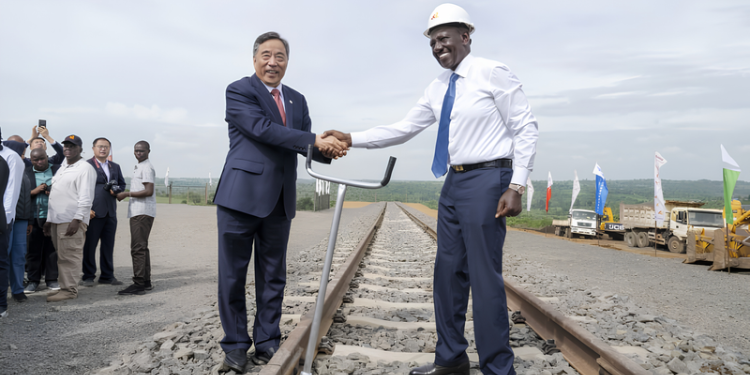
Infrastructure development included 2,089 kilometres of new bitumen-standard roads, 48 bridges and expanded railway operations. Electricity connections exceeded 10.4 million customers, strengthening the foundation for industrialisation, investment and regional integration.
Agriculture and livestock remain central to BETA and national prosperity. Subsidised fertiliser distribution increased from 1.4 million bags in 2022 to 21.3 million in 2025, while maize production rose from 34 million to 45.8 million bags. Milk production reached approximately 5.52 billion litres in 2025. The next transformation must prioritise irrigation, biotechnology, improved seeds, animal genetics, mechanisation, agro-processing and agricultural research. Kenya must progress from food security to food sovereignty, value addition and competitive exports.
Also Read: President Ruto’s 2026 State of the Nation Address [Full Speech]
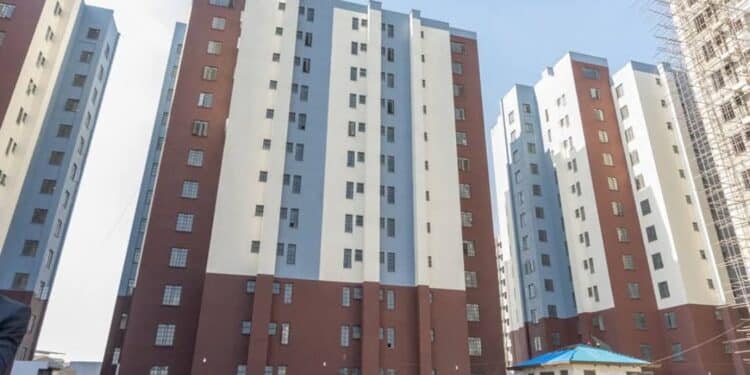
Healthcare, housing and enterprise development have witnessed significant reforms. Approximately 31.6 million Kenyans have registered with the Social Health Authority, while more than 107,000 Community Health Promoters support preventive healthcare. Affordable housing has recorded 277,281 units completed or under implementation, generating opportunities across construction value chains. The Hustler Fund has disbursed KSh 93.4 billion to approximately 28.5 million customers. Nevertheless, success must ultimately be measured through affordable healthcare, sustainable enterprises, decent jobs and improved household incomes.
Human Capital, Science and Innovation
Education, youth and women’s empowerment remain indispensable. Since 2022, more than 100,000 teachers have been recruited, while TVET enrollment increased from approximately 562,000 in 2022 to 825,000 in 2025. Youth enterprise financing, digital employment, skills development and talent programmes provide opportunities, but greater emphasis must be placed on productive employment, entrepreneurship, women’s access to assets and industry-responsive skills.
Science, technology and innovation must become the engine of Kenya’s next economic transformation. An additional 14,367 kilometres of fibre-optic cable have been laid, nearly 12,677 government services digitised, and over 466,000 young people trained in digital skills. The Kenya AI Strategy 2025–2030 provides an important foundation for technological advancement.
However, Kenya must transition from being predominantly a consumer to a producer of technologies. Greater investment in research and development, towards the ambition of 2 per cent of GDP, must strengthen universities, research institutions, innovation clusters, centres of excellence and commercialisation. Science must translate into policy, products, industries, jobs and wealth.
New Economic Frontiers and Governance
Energy, the Blue Economy, sports and culture offer additional frontiers. Renewable energy, fisheries, aquaculture, maritime transport, marine biotechnology, creative industries and sports tourism can diversify exports and create employment. Strategic investments, public-private partnerships and science diplomacy must unlock these opportunities.
Also Read: Why the Coast Region Must Unite Ahead of the 2027 General Election
Governance and equity remain fundamental. The proposed KSh 449.47 billion county equitable share for FY 2027/28 demonstrates the importance of devolution. President Ruto’s Usawa ni Sawa philosophy must translate into opportunities across all 47 counties. Yet corruption, public debt, taxation, accountability and expenditure efficiency require decisive attention. Development must be measured by impact, not announcements.
Looking Ahead: Kenya@100 and the 2027 Verdict
Beyond Vision 2030, Kenya must embrace an ambitious, inclusive and knowledge-driven national transformation agenda. The emerging Kenya@100 vision towards 2063 offers an opportunity to anchor industrialisation, human capital, emerging technologies, food sovereignty and sustainable financing in a long-term national framework.
Ultimately, President Ruto’s scorecard must recognise achievements without overlooking shortcomings. Kenyans must assess what has improved, whose lives have changed and what remains outstanding. I’m confident that President Ruto will pass the test.
The ballot is the democratic verdict; performance is the evidence that informs it. Kenya’s ultimate ambition must be an industrialised, innovative and prosperous nation where opportunity is equitable, wealth is shared, and Usawa ni Sawa becomes a lived reality. President Ruto is taking Kenya to first-world status.
Follow our WhatsApp Channel and X Account for real-time news updates, and subscribe to our YouTube Channel for in-depth interviews.