Thursday, October 15, 2026
  • News
    • Latest News
    • Breaking News
    • Fact Check
    • Investigations
    • Explainers
  • Politics
    • Global Politics
    • Elections
    • Government & Policy
    • Diplomacy
    • Conflicts & Security
    • Political Analysis
  • Business
    • Global Economy
    • Markets
    • Technology
    • Startups
    • Energy
    • Finance
  • World News
    • Americas
    • Asia
    • Asia Pacific
    • Africa
    • Europe
    • Middle East
  • Africa
    • Central Africa
    • East Africa
    • West Africa
    • Southern Africa
  • Health
    • Global Health
    • Public Health
    • Health Policy
    • Medical Research
    • Diseases & Conditions
    • Mental Health
    • Nutrition
    • Climate & Health
    • Health Explainers
  • Sports
    • World Cup 2026
    • Athletics
    • Basketball
    • Boxing
    • Cricket
    • Football
    • Formula 1
    • Golf
    • Rugby
  • Weather
    • Climate Business
    • Climate Change
    • Climate Solutions
    • Living Green
  • Culture
    • Arts
    • Film & TV
    • Food and Recipes
    • Music
    • Lifestyle
    • People
    • Travel
  • Opinion
    • Editorials
    • Letters
  • Behind The Brand
REGISTER
LOGIN
No Result
View All Result
The Kenya Times
  • News
    • Latest News
    • Breaking News
    • Fact Check
    • Investigations
    • Explainers
  • Politics
    • Global Politics
    • Elections
    • Government & Policy
    • Diplomacy
    • Conflicts & Security
    • Political Analysis
  • Business
    • Global Economy
    • Markets
    • Technology
    • Startups
    • Energy
    • Finance
  • World News
    • Americas
    • Asia
    • Asia Pacific
    • Africa
    • Europe
    • Middle East
  • Africa
    • Central Africa
    • East Africa
    • West Africa
    • Southern Africa
  • Health
    • Global Health
    • Public Health
    • Health Policy
    • Medical Research
    • Diseases & Conditions
    • Mental Health
    • Nutrition
    • Climate & Health
    • Health Explainers
  • Sports
    • World Cup 2026
    • Athletics
    • Basketball
    • Boxing
    • Cricket
    • Football
    • Formula 1
    • Golf
    • Rugby
  • Weather
    • Climate Business
    • Climate Change
    • Climate Solutions
    • Living Green
  • Culture
    • Arts
    • Film & TV
    • Food and Recipes
    • Music
    • Lifestyle
    • People
    • Travel
  • Opinion
    • Editorials
    • Letters
  • Behind The Brand
No Result
View All Result
The Kenya Times ~ Trending, Breaking News and Videos
No Result
View All Result
ADVERTISEMENT

Kenya’s Politicians Continue to Use Ethnicity to Divide and Rule – 60 Years After Independence

The ConversationbyThe Conversation
June 2, 2024
Reading Time: 8 mins read
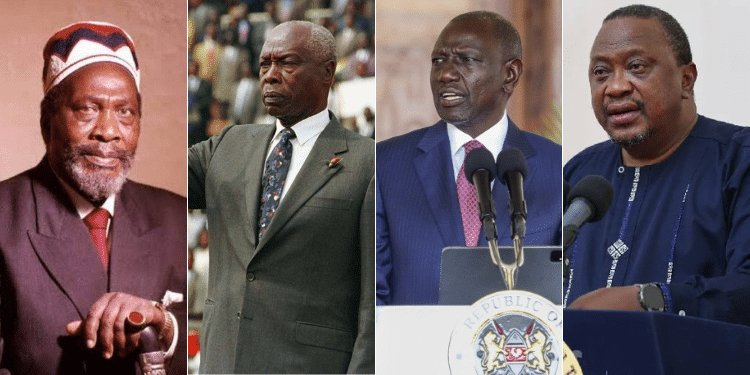
From Left: The Late Jomo Kenyatta, Daniel Moi, President William Ruto And Uhuru Kenyatta. Photo/

From Left: The late Jomo Kenyatta, Daniel Moi, President William Ruto and Uhuru Kenyatta. Photo/Courtesy

FacebookTwitterLinkedInRedditWhatsApp
Advertisement

Since independence in 1963, Kenya’s politicians have fed and manipulated ethnicity to win elections.

With some 40-odd ethnic groups, Kenya is a country of ethnic minorities – it has no single dominant community. During elections, political parties and candidates do raise policy issues, but ethnicity, or tribalism as it’s popularly called in Kenya, is the default vote-hunting strategy.

With few deviations, voting is akin to an ethnic census. Leading presidential candidates are usually from the populous ethnic groups. Of Kenya’s five presidents – three have been Kikuyu and two Kalenjin – come from two of the country’s biggest communities. This has raised issues of exclusion and fanned ethnic animosity.

My research into ethnicity in Kenya has found that it is central to political power. The two have a symbiotic relationship. In my view, ethnicity is not an expression of cultural identity or a reservoir of talent for nation building. It has been politicized and is linked to social status. It determines people’s fortunes, making it integral to social mobility, stagnation or regression.

Since no single ethnic group is populous enough to politically impose its will on others, winning presidential candidates have had to build alliances with other ethnic groups. Political elites have built ethnicity into the system of governance and administration.

For self-preservation, successive governments have arbitrarily created more ethnic groups. They have cemented ethnically based administrative units and emphasized ethnic differences.

This has normalized the exploitation of ethnicity for political and economic gain. The populace buys into ethnic politics under the false hope that their respective ethnic leaders will help them better their lives.
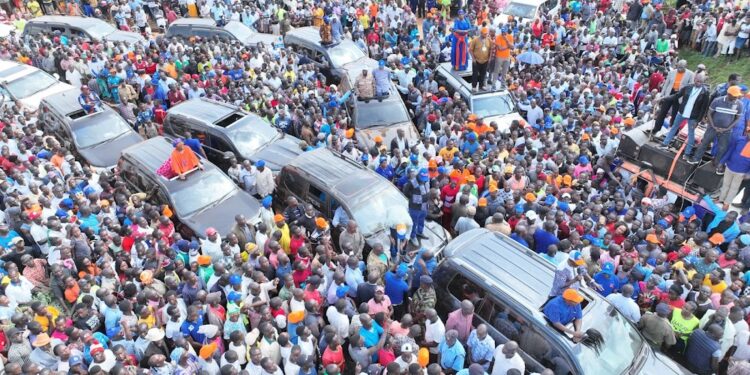
Politicians, Ethnicity
A past campaign rally. Photo/Courtesy

How ethnicity plays out

Throughout 60 years of independence, Kenya has held inconclusive elections marred by rigging and executive interference. The transitional elections held in 2002 and 2022, however, were exceptions. Electoral disputes are often protracted. They can degenerate into inter-ethnic violence.

Ethnic politics in Kenya manifests itself in four major ways.

First, the Kenyan state is colonial in orientation. It is extractive, discriminatory and oppressive. It is also insidiously ethicized, elitist and classist. Successive Kenyan presidents, starting with the first, Jomo Kenyatta, anchored the state to ethnicity.

Second, historical land injustices in which communities and individuals have been dispossessed of their ancestral land – first by colonialists and then the post-colonial elite – manifests in ethnic politics and electoral violence. A lack of justice across the board, and especially for victims of state-instigated ethnic violence, has also contributed to ethnic consciousness.

Third, institutional disregard for the rule of law makes ethnic politics attractive, with the political elite evoking it to evade accountability. Their deliberate effort to erase memory and distort Kenya’s contested history fuels ethnicity, too. So does a lack of trust among the people, and between the people and the government.

Fourth, ethno-regional political figures – essentially, personality cults – have an outsized influence on Kenyans’ psyche and political choices. This comes at the expense of civic identity, personal agency and a pursuit of collective aspirations.

Ethnicity often determines party loyalty. Individuals form political parties under the assumption that members of their ethnic group will rally behind them. Further, since independence, the president’s co-ethnics have disproportionately held state positions.

Ethnicity has been on the upsurge with urbanization in Kenya. Contrary to popular belief, the Kenyan elite are fixated on ethnicity – not the masses – since it determines access to the benefits of modernity. The elite tend to advance their political and economic interests through ethnicity. This has made it pervasive in the media, academy, politics, religious formations, civil society and state apparatus.

There is a link between ethnicity, elite ambitions and the impact of modernization. Missionary education and the spread of infrastructure affected Kenyan communities differently. So did nature, which gave some communities arable land and others harsh environments. Disparities in development provide a basis for ethnicity.
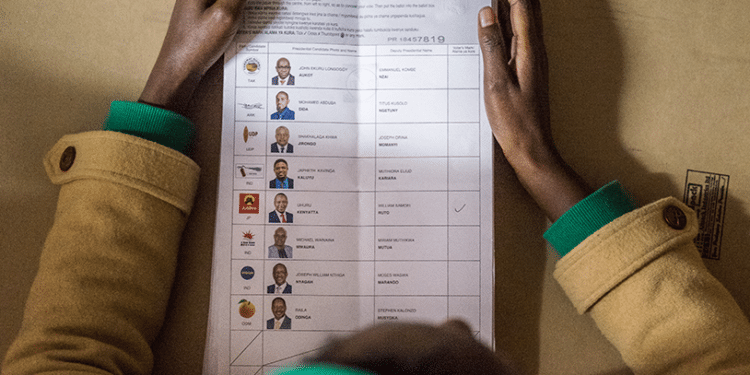
Politicians, Ethnicity
Ballot paper of a previous election in Kenya. Photo/Courtesy

False starts

Kenya’s 2010 constitution sought to neutralize ethnicity. It requires that state appointments reflect Kenya’s diversity and enhance inclusivity. It also seeks to streamline political parties to enhance national cohesion and harmony.

The constitution also provides for the devolution of power and resources through county governments. This aims to cure winner-take-all politics, which has fueled resentment and animosity.

The constitution, however, is only as good as society’s political culture and norms. It cannot transform Kenyan society by itself. Governance shortfalls and excesses that have undermined the state for decades persist.

Ethnicity hasn’t always been Kenya’s bugbear. In elections held before independence in 1962, for instance, candidates won elections on the strength of vision and national appeal. Tom Mboya, a Luo, defeated Munyua Waiyaki, a Kikuyu, in a Kikuyu-dominated constituency.

However, ethnic consciousness heightened after a fallout among the post-colonial elite. The quest to monopolize political power and control national resources raised the stakes. This resulted in political assassinations, authoritarianism and a constriction of the political space. Some politicians abandoned policy-oriented programmatic politics and resorted to ethnic mobilization to claw back receding influence.

Kenya’s inability to transcend the ethnic ideology has made it hard to devise alternative bases for political organization.

Class vs tribe

Kinship ties and ethnic bigotry have trumped class-based national identities. In the lead-up to Kenya’s 2022 elections, opponents of class politics equated it to ethnic politics. They claimed it sought to incite the poor against the rich.

Unlike ethnic politics, however, class politics is programmatic. It is not based on primordial identities and differences. It affords people an opportunity to resolve social, economic and political concerns through the ballot.

William Ruto, as a presidential candidate in 2022, shifted the discourse from ethnicity to the economy through a “hustlers vs dynasties” ideology. He prevailed. Had Ruto designed his strategy solely around ethnicity, he would likely have been defeated – the opposition lived true to tradition and crafted a broader ethnic alliance.

While Ruto’s margin of victory was thin – just over 230,000 votes – it illustrates that Kenya is not impervious to class politics as an alternative form of political organization.

Next steps

Moving away from ethnic politics requires an overhaul of the Kenyan state to ensure social justice, the rule of law and access to opportunities for all. This would begin to dismantle ethnicity as an operative ideology.

It requires decolonizing the state to rid it of oppressive, extractive and predatory inclinations. This has to start with an overhaul of the education system to make it relevant to Kenyan society. There is need to empower the minds of citizens by instilling in them a sense of national pride and consciousness.

The trouble is that the political elite have no incentive for such reform – it would render them vulnerable to a conscious citizenry. The Conversation

Westen K Shilaho, Senior Research Fellow, Institute for PanAfrican Thought and Conversation (IPATC), University of Johannesburg

This article is republished from The Conversation under a Creative Commons license. Read the original article.
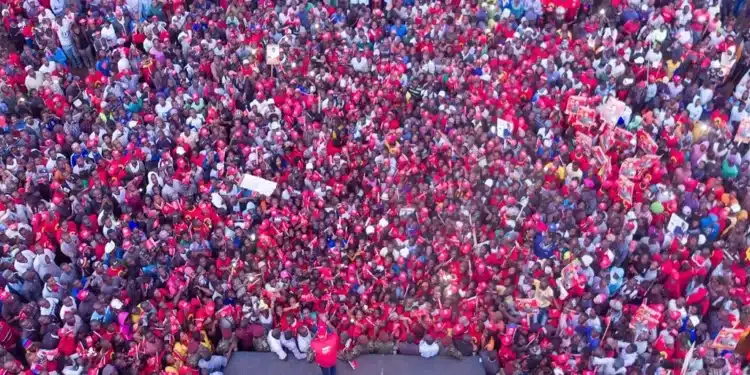
Politicians, Ethnicity
A past campaign rally in Kenya. Photo/Courtesy
Tags: ElectionsEthnic PoliticsKenya Ethnic Groups
The Conversation

The Conversation

The Conversation is an independent news organization that publishes evidence-based articles written by experts to help readers understand diverse topics. We cover a wide range of areas including arts, culture, education, health, politics, science, and more¹. Their content is characterized by in-depth analysis, research, news, and ideas from leading academics and researchers. The Conversation aims to provide academic rigor with journalistic flair.

Related Posts

Charles Ng'Ang'A Mamlaka Hill Chapel

How Mamlaka Hill Chapel Grew From 80 Worshippers Under Bishop Ng’ang’a Before His Dismissal

October 14, 2026
Binge-Eating Among College Students With Abundant Junk Food, A Common Setting Linked To Binge-Eating Risks.

How Globalization and Food Insecurity Fuel Disordered Eating Behavior in Young Adults

October 14, 2026
Inside Pastor Wilfred Lai’s Church Network, Schools, Tv Station And Other Ventures

Pastor Wilfred Lai’s Church Network, Schools, TV Station and Other Ventures

October 10, 2026
From Knowledge To Impact: A New Era Of Kenya–Uk Science Diplomacy

From Knowledge Sharing to Innovation: A New Chapter in Kenya–UK Science Diplomacy

October 10, 2026
ADVERTISEMENT

The Kenya Times Facebook

LATEST NEWS

  • Trans Nzoia Power Projects Target Nearly 11,000 Homes
  • Court Clears Path for Dangote’s Lamu Oil Refinery
  • EPRA Announces New Fuel Prices for October-November Cycle
  • Kenya Confirms Second Ebola Case
  • How to Import Milk Buffaloes from India to Kenya: Costs, Licenses and Process
  • KCSE 2026 Timetable: Date and Time Each Paper Will Be Examined
  • Bobby Ogolla: How Gor Mahia’s ‘Six Million Dollar Man’ Made His Name
  • Motorist Jumps Out of Car, Recovers iPhone 15 Pro Max After Police Chase
  • Fastest Routes to Get From JKIA to Nairobi CBD
  • UDA Secretary General Hassan Omar Summoned
  • Kenyan MP Wins Global Award
  • Profile of Esther Arunga, Former KTN Anchor Who Dropped Husband’s Surname After 16 Years
  • How Mamlaka Hill Chapel Grew From 80 Worshippers Under Bishop Ng’ang’a Before His Dismissal
  • Why SRC Asked 2 Senior Judges to Step Aside From High-Profile Car Allowance Case
  • India Issues Kenya Travel Advisory Over New Entry Requirement
ADVERTISEMENT

Company

About Us

Our Authors

Our Experts

Social Media

Policies

Privacy Policy

House Rules

Standards and Policies

Terms and Conditions

Subscription

My Account

Contact Us

Contact Us

Join Our Team

Advertise With Us

© Copyright 2026 | The Kenya Times | All Rights Reserved

Welcome Back!

Sign In with Facebook
Sign In with Google
Sign In with Linked In
OR

Login to your account below

Forgotten Password? Sign Up

Create New Account!

Sign Up with Facebook
Sign Up with Google
Sign Up with Linked In
OR

Fill the forms below to register

All fields are required. Log In

Retrieve your password

Please enter your username or email address to reset your password.

Log In
Your Privacy and Cookies
We use cookies on our website to give you the most relevant experience by remembering your preferences and repeat visits. By clicking “Accept”, you consent to the use of ALL the cookies.
Do not sell my personal information.
Cookie settingsACCEPT
Privacy & Cookies Policy

Privacy Overview

This website uses cookies to improve your experience while you navigate through the website. Out of these cookies, the cookies that are categorized as necessary are stored on your browser as they are essential for the working of basic functionalities of the website. We also use third-party cookies that help us analyze and understand how you use this website. These cookies will be stored in your browser only with your consent. You also have the option to opt-out of these cookies. But opting out of some of these cookies may have an effect on your browsing experience.
Necessary
Always Enabled
Necessary cookies are absolutely essential for the website to function properly. This category only includes cookies that ensures basic functionalities and security features of the website. These cookies do not store any personal information.
Functional
Functional cookies help to perform certain functionalities like sharing the content of the website on social media platforms, collect feedbacks, and other third-party features.
Performance
Performance cookies are used to understand and analyze the key performance indexes of the website which helps in delivering a better user experience for the visitors.
Analytics
Analytical cookies are used to understand how visitors interact with the website. These cookies help provide information on metrics the number of visitors, bounce rate, traffic source, etc.
Advertisement
Advertisement cookies are used to provide visitors with relevant ads and marketing campaigns. These cookies track visitors across websites and collect information to provide customized ads.
Others
Other uncategorized cookies are those that are being analyzed and have not been classified into a category as yet.
SAVE & ACCEPT
LOGIN | REGISTER
  • Login
  • Sign Up
  • Cart
No Result
View All Result
  • News
    • Latest News
    • Breaking News
    • Investigations
    • Explainers
    • Fact Check
  • Politics
    • Global Politics
    • Conflicts & Security
    • Elections
    • Diplomacy
    • Government & Policy
    • Political Analysis
  • Business
    • Global Economy
    • Markets
    • Technology
    • Startups
    • Energy
    • Finance
  • World News
    • Americas
    • Asia
    • Asia Pacific
    • Africa
    • Europe
    • Middle East
  • Africa
    • East Africa
    • West Africa
    • Southern Africa
    • Central Africa
  • Health
    • Global Health
    • Public Health
    • Health Policy
    • Medical Research
    • Diseases & Conditions
    • Mental Health
    • Nutrition
    • Climate & Health
    • Health Explainers
  • Sports
    • World Cup 2026
    • Athletics
    • Basketball
    • Boxing
    • Cricket
    • Football
    • Formula 1
    • Golf
    • Rugby
  • Weather
    • Climate Business
    • Climate Change
    • Climate Solutions
    • Living Green
  • Culture
    • Arts
    • Film & TV
    • Food and Recipes
    • Lifestyle
    • Music
    • People
    • Travel
  • Opinion
    • Editorials
    • Letters
  • Behind The Brand
  • Contact Us

Not enough quota to unlock this post
Unlock left : 0
Are you sure want to cancel subscription?