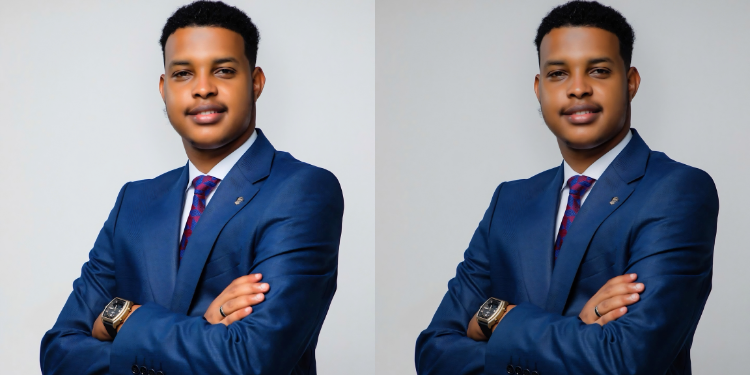
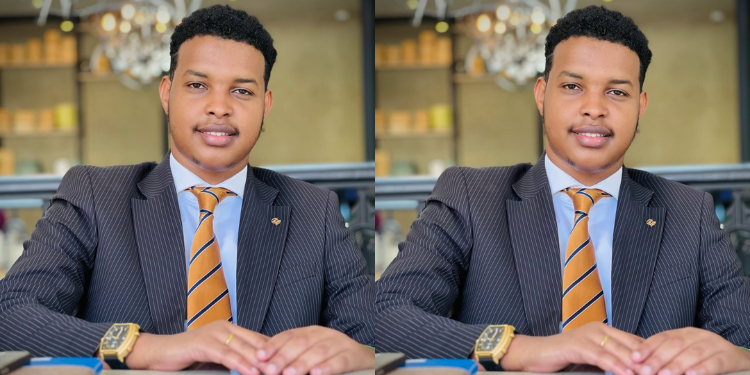
When Ahmed Rashid Burrow Hajji was sworn in as President of the University of Nairobi Students Association in May 2026, he not only took charge of the country’s largest student body but also became the first Muslim to hold the position in the university’s history.
Early Life and Education
Born and raised in Garissa County, Ahmed Rashid Burrow Hajji began his education at Magallada Masalani Primary School before proceeding to secondary school and later earning admission to the University of Nairobi.
At the University of Nairobi, Burrow enrolled for a Bachelor of Laws (LLB) degree and was in his third year of study when he was elected President of the University of Nairobi Students Association (UNSA) in May 2026.
Also Read: Meet Mercy Makini, the Witty Businesswoman Married to Morara Kebaso
According to Burrow, his decision to study law was driven by a belief in justice and the need to defend the rights of vulnerable people.
During a past interview, he cited issues such as gender-based violence among the social challenges that influenced his choice of career.
His years at the university also exposed him to the day-to-day realities facing students.
Burrow has spoken about challenges in student hostels, including inadequate water supply and poor living conditions, experiences that shaped his understanding of student welfare issues.
Those experiences would later feature prominently in his leadership agenda.
As UNSA president, he has consistently raised concerns about accommodation shortages, student welfare, infrastructure challenges, and the cost of university life, positioning himself as a vocal advocate for students at Kenya’s largest institution of higher learning.
Breaking Barriers at UoN
Burrow entered the national spotlight in May 2026 when he was elected President of the University of Nairobi Students Association (UNSA), the body representing students across the institution’s campuses.
He defeated candidates from Team Favour and Team Sawa to clinch the coveted position.
His victory was historic. Burrow became the first Muslim student elected UNSA President in the University of Nairobi’s 56-year history, a milestone that drew attention within and beyond the university.
He was elected under the banner of Team Ahmed Rashid Synergy, a coalition that brought together students from different faculties and academic programs.
The team campaigned on a platform centered on student welfare, accountability, inclusivity and responsive leadership.
Rashid Burrow’s Leadership Philosophy and Vision
Since assuming office, Burrow has sought to position himself as a leader focused on inclusivity, accountability and issue-based politics.
In his public statements, he has consistently argued that student leaders should be elected based on their ideas and ability to address student concerns rather than ethnic, religious, or regional affiliations.
One of his most notable positions has been opposing tribal politics within institutions of higher learning.
Burrow has revealed that during his campaign he was advised to seek support from ethnic-based student groupings, but chose instead to focus on issues affecting learners across the university.
He has maintained that universities should promote national unity and serve as spaces where students engage beyond ethnic identities.
His leadership philosophy is also rooted in what he describes as collective leadership.
During his inaugural address, Burrow said leadership should not revolve around one individual but around shared responsibility, consultation, and accountability.
He pledged to build an administration that listens to students and works collaboratively to address their concerns.
Student welfare is central to his agenda.
Burrow has repeatedly highlighted challenges facing learners, including accommodation shortages, financial difficulties, mental health concerns and inadequate infrastructure.
He has argued that addressing these issues should remain a priority for both student leaders and university management.
He has also advocated constructive engagement between students and university administrators, favoring dialogue and institutional solutions to problems affecting campus life.
Follow our WhatsApp Channel and X Account for real-time news updates.