World football governing body FIFA introduced a set of new rules for the FIFA World Cup 2026, which has already seen 3 red cards in the opening match.
The world governing body said that these changes have been introduced to curb time-wasting by players, improve officials’ decision-making through the Video Assistant Referee (VAR), promote fairness, and enforce strict discipline among players.
Football fans, players, and coaches have received these changes differently, and attention is now turning to the execution on the field.
Whether they will improve the game or add a new wave of controversy remains to be seen.
But how frequently will they be applied, and how quickly will they be executed?
FIFA New Rules
10-Second Substitutions
Football players fond of time-wasting during substitutions risk leaving their teams a man down under this new rule.
During substitutions, players will be given 10 seconds to walk off the field; if they do not, play will continue without the 11th player.
FIFA has introduced this specific rule to reduce time-wasting, especially in the closing stages of the match when the team ahead is making changes.
Corner Decisions and VAR
Corner kicks can easily lead to goal-scoring opportunities, and incorrectly awarded corners in football matches have decided the outcomes of games before.
Under the new rules, teams can now contest for corner kick decisions that they feel should not have been awarded.
The VAR will now be able to intervene in corner kicks to improve accuracy.
Goal Kicks
FIFA has introduced a 5-second goal kick rule to address time-wasting by goalkeepers.
Referees will give goalkeepers only 5 seconds to take the goal kick; if they fail, the opposing team will be awarded a corner kick.
This rule is expected to speed up restarts and increase the pace of games.
Throw-Ins
To curb delayed throw-ins by players, referees will give a count of only 5 seconds for throw-ins to be taken.
If a player surpasses the allocated time, the opposing team will be awarded possession.
However, it is worth noting that players have mastered the art of time-wasting during throw-ins and could still circumvent this rule.
Player Conduct, Mouth Covering
This is the most debated rule, which has led to player bans and much confusion over its interpretation, including time-wasting and abandoned matches.
During a Champions League playoff match against Benfica, Real Madrid’s Vinícius Júnior alleged he was abused racially by Gianluca Prestianni, which made the game stop for 10 minutes.
Players, especially those of black race, have complained before of racial abuse from opposing players covering their mouths.
Players who cover their mouths during confrontations risk being shown a straight red card by the referee.
This rule is expected to encourage discipline among players and to promote transparency.
Injury Treatment
Several players have been found guilty of exaggerating injuries to waste time or get a booking for their opponents.
If a medical officer enters the field under the new rule, the injured player must stay off the pitch for not less than one minute before rejoining the game.
This new rule is expected to discourage players from the habit of faking injuries and save time.
Penalty Double Touch
A player who is taking a penalty is not allowed to touch the ball twice with the same foot, deliberately or accidentally.
There has been debate about such situations in the past; for instance, Julian Alvarez’s disallowed penalty against Real Madrid during a Champions League match.
Under the new rules, such penalties will be retaken.
Second Yellow Cards
Traditionally, when the referee issues a second yellow card, it was not debatable, and the player had to go off.
Under the new rule, VAR will intervene in second-yellow-card situations to enhance fairness and improve accuracy.
FIFA aims to reduce errors and to provide an extra layer of fairness to players through this new rule.
Last-Man Fouls
Under this new rule, advantage will apply to last-man fouls, and the play will continue.
If a goal is scored from the advantage given, referees will be allowed to withdraw the red card.
The offending player will avoid leaving the pitch to ensure that a team does not receive double punishment.
Also Read: Before The Whistle Blows: Everything You Need to Know Ahead of FIFA Club World Cup 2025
The Federation Internationale de Football Association (FIFA)
FIFA is a global body that governs football and organizes major tournaments, including the FIFA World Cup.
It was founded in 1964 and has its headquarters in Zurich, Switzerland.
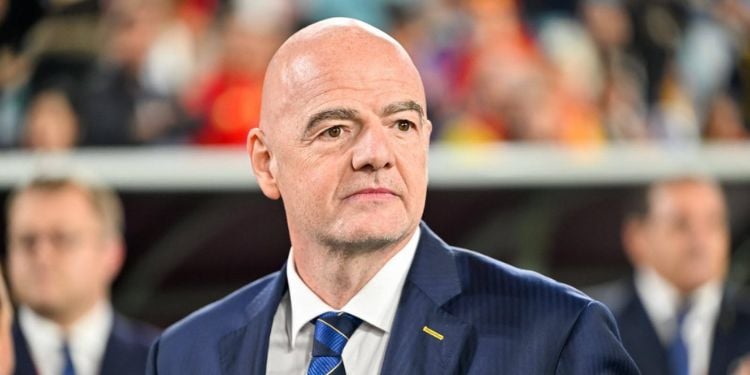
FIFA’s current president is Gianni Infantino, and it works together with continental bodies to control and monitor world football.
These bodies are:
- Confederation of African Football (CAF)
- Asian Football Confederation (AFC)
- Union of European Football Associations (UEFA)
- The Confederation of North, Central America and Caribbean Association Football (CONCACAF)
- The South American Football Confederation (CONMEBOL)
Also Read: FIFA Confirms Kenya as Host for Women’s Series 2026
FIFA Regulations and Rule Changes
FIFA is governed by globally recognized rules developed in collaboration with the International Football Association Board (IFAB).
These laws govern match duration, players’ conduct, and officiating standards to make sure that there is consistency across football competitions around the world.
FIFA introduced VAR in 2018 to improve decision-making and allow referees to review situations such as goals, penalties, and disciplinary actions.
FIFA has also campaigned for fair play and introduced enforcement in areas such as fouls and on-field conduct to ensure fairness while at the same time maintaining control.
These rules are regularly reviewed to improve efficiency, transparency, and fairness.
Follow our WhatsApp Channel and X Account for real-time news updates.
PHOTO | FIFA | X