Tuesday, June 2, 2026
  • News
    • Latest News
    • Breaking News
    • Fact Check
    • Investigations
    • Explainers
  • Politics
    • Global Politics
    • Elections
    • Government & Policy
    • Diplomacy
    • Conflicts & Security
    • Political Analysis
  • Business
    • Global Economy
    • Markets
    • Technology
    • Startups
    • Energy
    • Finance
  • World News
    • Americas
    • Asia
    • Asia Pacific
    • Africa
    • Europe
    • Middle East
  • Africa
    • Central Africa
    • East Africa
    • West Africa
    • Southern Africa
  • Health
    • Global Health
    • Public Health
    • Health Policy
    • Medical Research
    • Diseases & Conditions
    • Mental Health
    • Nutrition
    • Climate & Health
    • Health Explainers
  • Sports
    • Athletics
    • Basketball
    • Boxing
    • Cricket
    • Football
    • Formula 1
    • Golf
    • Rugby
  • Weather
    • Climate Business
    • Climate Change
    • Climate Solutions
    • Living Green
  • Culture
    • Arts
    • Film & TV
    • Food
    • Music
    • Lifestyle
    • Travel
  • Opinion
    • Editorials
    • Letters
  • Behind The Brand
REGISTER
LOGIN
No Result
View All Result
The Kenya Times
  • News
    • Latest News
    • Breaking News
    • Fact Check
    • Investigations
    • Explainers
  • Politics
    • Global Politics
    • Elections
    • Government & Policy
    • Diplomacy
    • Conflicts & Security
    • Political Analysis
  • Business
    • Global Economy
    • Markets
    • Technology
    • Startups
    • Energy
    • Finance
  • World News
    • Americas
    • Asia
    • Asia Pacific
    • Africa
    • Europe
    • Middle East
  • Africa
    • Central Africa
    • East Africa
    • West Africa
    • Southern Africa
  • Health
    • Global Health
    • Public Health
    • Health Policy
    • Medical Research
    • Diseases & Conditions
    • Mental Health
    • Nutrition
    • Climate & Health
    • Health Explainers
  • Sports
    • Athletics
    • Basketball
    • Boxing
    • Cricket
    • Football
    • Formula 1
    • Golf
    • Rugby
  • Weather
    • Climate Business
    • Climate Change
    • Climate Solutions
    • Living Green
  • Culture
    • Arts
    • Film & TV
    • Food
    • Music
    • Lifestyle
    • Travel
  • Opinion
    • Editorials
    • Letters
  • Behind The Brand
  • News
    • Latest News
    • Breaking News
    • Fact Check
    • Investigations
    • Explainers
  • Politics
    • Global Politics
    • Elections
    • Government & Policy
    • Diplomacy
    • Conflicts & Security
    • Political Analysis
  • Business
    • Global Economy
    • Markets
    • Technology
    • Startups
    • Energy
    • Finance
  • World News
    • Americas
    • Asia
    • Asia Pacific
    • Africa
    • Europe
    • Middle East
  • Africa
    • Central Africa
    • East Africa
    • West Africa
    • Southern Africa
  • Health
    • Global Health
    • Public Health
    • Health Policy
    • Medical Research
    • Diseases & Conditions
    • Mental Health
    • Nutrition
    • Climate & Health
    • Health Explainers
  • Sports
    • Athletics
    • Basketball
    • Boxing
    • Cricket
    • Football
    • Formula 1
    • Golf
    • Rugby
  • Weather
    • Climate Business
    • Climate Change
    • Climate Solutions
    • Living Green
  • Culture
    • Arts
    • Film & TV
    • Food
    • Music
    • Lifestyle
    • Travel
  • Opinion
    • Editorials
    • Letters
  • Behind The Brand
No Result
View All Result
The Kenya Times ~ Trending, Breaking News and Videos
No Result
View All Result
ADVERTISEMENT

Nearly a Third of Nigerians Don’t Have Access to a Basic Supply of Water

This is Partly Because of Loopholes in a Law

Aloysius Michaels OkoliebyAloysius Michaels Okolie
July 12, 2023
Reading Time: 6 mins read
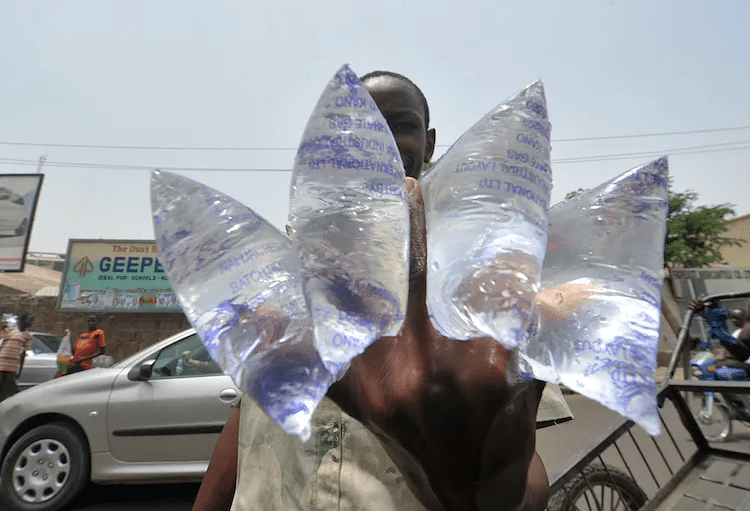
Access To Clean Water Is A Major Issue In Nigeria | Getty Images

Access to clean water is a major issue in Nigeria | Getty Images

FacebookTwitterLinkedInRedditWhatsApp
Advertisement

Water, sanitation and hygiene facilities are essential for health and welfare. Providing them is one of the core duties of the state.

In Nigeria, funding for these projects comes from the government’s budget and from development partners. UNICEF, the UK’s Foreign Commonwealth and Development Office, the European Union, and the US Agency for International Development all provide aid.

A UNICEF report shows that between 2014 and 2017, international development partners and the government invested a total of US$188.3 million in sanitation projects in Nigeria.

But the report shows that Nigeria is still one of the top three countries globally in terms of the number of people living without safe water and sanitation. It adds that only 68% of the Nigerian population have access to a basic water supply, 19% use safely managed sanitation facilities and 24% practice open defecation.

Unsafe water and poor sanitation and hygiene are some of the major causes of Nigeria’s high rates of mortality and morbidity among children under five. They increase vulnerability to water-related diseases such as cholera, typhoid, and diarrhea.


Also Read: Mozambican Terror Group, Ansar al-Sunna, is Strikingly Similar to Nigeria’s Deadly Boko Haram

ADVERTISEMENT

There have been public procurement reforms that seek to regulate abuse of rules, processes and standards in the awarding and delivery of public-sector contracts. But despite the reforms, eliminating the massive deficits in the water and sanitation sector through competitive, transparent, accountable and cost-effective procurement processes has become increasingly difficult.

In a recent paper we analyzed data from selected local government areas where there were UNICEF-funded sanitation projects. Based on this, we argue that procurement regulation has been subverted to make money in the service delivery sector.

Our findings provide an explanation of the deplorable state of sanitation facilities in Nigeria. The problem is not just a lack of funding or capacity, as has been argued before, but a legal choice.

Procurement in Nigeria

Nigeria enacted a procurement law in 2007. The Public Procurement Act 2007 brought a sense of regulation to the procurement process in the country. Before this, there was no law either at the state or federal level guiding public procurement. It was intended to check abuse in the awarding and delivery of public-sector contracts.

Section 24 (3) of the Public Procurement Act sets out that contracts must be awarded to the bidder with the lowest bid that meets the contract’s terms and conditions.

ADVERTISEMENT

Our study focused on how this practice undermined the delivery of sanitation projects in Nigeria.

We drew on field data from sanitation projects in states across the country: Akwa Ibom, Anambra, Bauchi, Bayelsa, Benue, Jigawa, Katsina, Rivers and Yobe. The procuring entities were ministries, extra-ministerial offices, government agencies, parastatal organizations and corporations. They awarded UNICEF-funded projects to the lowest responsive bidders (contractors) between 2013 and 2019. The projects were meant to provide water and sanitation facilities.

We observed that four firms were accused of committing a procurement offence. They subcontracted their commitments to other firms at prices lower than the sums in the contract.

We saw that influential individuals under-quoted contract sums, apparently to keep a hold on procurement processes. They then won contracts and diverted contract sums or subcontracted to third parties who either failed to do the work or delivered substandard work. The poor standard could be seen from the reports of the procuring entities.

Contrary to the expectation that the procurement legislation would promote broader participation in contract management, this study found that accepting the lowest bid limited the involvement of credible, trusted and tested firms known for the delivery of quality work, goods and services. Quality work would necessarily cost more than the lowest bid.


Also Read: Nigeria’s Security Situation has got Worse: What Tinubu’s Administration Needs to do about it


The procurement law could have provided, instead, for bidding that emphasized quality, experience, and reputation. It appears lawmakers made sure that the law left loopholes.

Reputable firms are seemingly incapable of getting contracts because they lack access to powerful state actors. Highly placed individuals use the bidding mechanism to engage in sharp practices.

The result is low quality service delivery.

How Nigeria got here

For decades, poor sanitation and hygiene facilities in Nigeria were connected to weak project execution, paucity of funds and limited government capacity. Corruption, overvaluation of projects and favoritism in contract awards added to the problems. Attempts to prevent these challenges provided the basis for public procurement reforms.

The reforms were supposed to improve accountability on the part of government and others in public procurement. Fairness, value for money and cost effectiveness were also expected.

But the lowest evaluated bid system is more susceptible to manipulation than a qualifications-based bidding mechanism.

The reforms have not had the desired impact in the water and sanitation sector.

Appropriate reform

An appropriate reform of the service delivery sector should enhance participation in procurement processes by civil society organizations, the media, beneficiary communities and relevant professional bodies.

Contract sums must also be in line with market realities. Tested and trusted contractors must be engaged to manage procurement of works and services.The Conversation

Aloysius-Michaels Okolie, Professor of Political Science, University of Nigeria; Chikodiri Nwangwu, Ph.D, Senior Lecturer, Department of Political Science, University of Nigeria, and Kelechi Elijah Nnamani, Lecturer and Researcher, Department of Political Science, University of Nigeria

This article is republished from The Conversation under a Creative Commons license. Read the original article.
Tags: Clean WaterNigeriaprocurementPublic ProcurementSanitationUNICEF
Aloysius Michaels Okolie

Aloysius Michaels Okolie

Aloysius-Michaels Okolie is a professor of Political Science and the current Vice Chancellor of the Enugu State University of Science and Technology. He is a Fulbright scholar, a member of the African Union Campus Continental Steering Group, and immediate past Dean of the Faculty of Social Sciences, University of Nigeria, Nsukka, as well as the national president of Nigerian Political Science Association. His research and teaching interests include international political economy, electoral studies, peace and conflict, international law, and development studies.

Related Posts

Morocco And Niger Have Reaffirmed Their Shared Commitment To Making Their Partnership A Model Of Inter-African Cooperation And Bolster Bilateral Relations.

Morocco and Niger Strengthen Bilateral Ties as an Inter-African Cooperation Model

April 9, 2026
Morocco Has Reaffirmed Its Unwavering Commitment To Renewed South-South Cooperation, Based On Partnership And Concrete Solidarity, In Line With The Vision Of His Majesty King Mohammed Vi.

Morocco Reaffirms South-South Cooperation at 11th OACPS Summit

April 1, 2026
A Photo Of Supreme Court Judge Isaac Lenaola. Photo/Judiciary

Supreme Court Judge Isaack Lenaola Elected as President of Sierra Leone Court

February 28, 2026
Outrage As Nigeria Changes National Anthem

Nigeria Changes National Anthem Sparking Outrage

May 30, 2024
ADVERTISEMENT

The Kenya Times Facebook

LATEST ARTICLES

  • Nairobi Mentioned as Trump Cut Number of Embassies in Africa
  • Why Transgender Troops Can Now Serve in the U.S. Military
  • “I Couldn’t Care Less” Trump Responds After Iran Ends Talks With US
  • Jill Biden Reveals Regret Over Joe Biden’s 2024 Run in New Interview
  • Stars Abroad: Moses Shumah, Kenyan Striker Breaking Records in Zambia
  • Doctors Question Transparency of Trump’s Heart Test Results
  • Corazone Aquino: Kenyan Star Named After Philippines’ Former President
  • KMA Reveals How to Know Licensed Doctors After Deadly Kitale Surgery
  • Iran Ends All Negotiations With US, Vows to “Completely” Block the Strait of Hormuz
  • Wise vs Remitly vs Western Union: Best International Transfer in 2026
  • KDF Soldiers Take Charge as Protests Erupt in Nanyuki Over Ebola Quarantine Facility
  • End of an Era as Paris Lounge & Grill Rebrands, Kentwood Address Undergoes Renovation
  • Benny McCarthy Makes Changes to Harambee Stars Squad Days After Unveiling 24 Players
  • Ruto Delivers Weighty Apology During Madaraka Day Speech [FULL TEXT SPEECH]
  • Njeri Maina Explains Why President Ruto Can’t Be Impeached
ADVERTISEMENT

Company

About Us

Our Authors

Our Experts

Social Media

Policies

Privacy Policy

House Rules

Standards and Policies

Terms and Conditions

Subscription

My Account

Contact Us

Contact Us

Join Our Team

Advertise With Us

© Copyright 2026 | The Kenya Times | All Rights Reserved

Welcome Back!

Sign In with Facebook
Sign In with Google
Sign In with Linked In
OR

Login to your account below

Forgotten Password? Sign Up

Create New Account!

Sign Up with Facebook
Sign Up with Google
Sign Up with Linked In
OR

Fill the forms below to register

All fields are required. Log In

Retrieve your password

Please enter your username or email address to reset your password.

Log In
Your Privacy and Cookies
We use cookies on our website to give you the most relevant experience by remembering your preferences and repeat visits. By clicking “Accept”, you consent to the use of ALL the cookies.
Do not sell my personal information.
Cookie settingsACCEPT
Privacy & Cookies Policy

Privacy Overview

This website uses cookies to improve your experience while you navigate through the website. Out of these cookies, the cookies that are categorized as necessary are stored on your browser as they are essential for the working of basic functionalities of the website. We also use third-party cookies that help us analyze and understand how you use this website. These cookies will be stored in your browser only with your consent. You also have the option to opt-out of these cookies. But opting out of some of these cookies may have an effect on your browsing experience.
Necessary
Always Enabled
Necessary cookies are absolutely essential for the website to function properly. This category only includes cookies that ensures basic functionalities and security features of the website. These cookies do not store any personal information.
Functional
Functional cookies help to perform certain functionalities like sharing the content of the website on social media platforms, collect feedbacks, and other third-party features.
Performance
Performance cookies are used to understand and analyze the key performance indexes of the website which helps in delivering a better user experience for the visitors.
Analytics
Analytical cookies are used to understand how visitors interact with the website. These cookies help provide information on metrics the number of visitors, bounce rate, traffic source, etc.
Advertisement
Advertisement cookies are used to provide visitors with relevant ads and marketing campaigns. These cookies track visitors across websites and collect information to provide customized ads.
Others
Other uncategorized cookies are those that are being analyzed and have not been classified into a category as yet.
SAVE & ACCEPT
LOGIN | REGISTER
  • Login
  • Sign Up
  • Cart
No Result
View All Result
  • News
    • Latest News
    • Breaking News
    • Investigations
    • Explainers
    • Fact Check
  • Politics
    • Global Politics
    • Conflicts & Security
    • Elections
    • Diplomacy
    • Government & Policy
    • Political Analysis
  • Business
    • Global Economy
    • Markets
    • Technology
    • Startups
    • Energy
    • Finance
  • World News
    • Americas
    • Asia
    • Asia Pacific
    • Africa
    • Europe
    • Middle East
  • Africa
    • East Africa
    • West Africa
    • Southern Africa
    • Central Africa
  • Health
    • Global Health
    • Public Health
    • Health Policy
    • Medical Research
    • Diseases & Conditions
    • Mental Health
    • Nutrition
    • Climate & Health
    • Health Explainers
  • Sports
    • Athletics
    • Basketball
    • Boxing
    • Cricket
    • Football
    • Formula 1
    • Golf
    • Rugby
  • Weather
    • Climate Business
    • Climate Change
    • Climate Solutions
    • Living Green
  • Culture
    • Arts
    • Film & TV
    • Food
    • Lifestyle
    • Music
    • Travel
  • Opinion
    • Editorials
    • Letters
  • Behind The Brand
  • Contact Us

Not enough quota to unlock this post
Unlock left : 0
Are you sure want to cancel subscription?