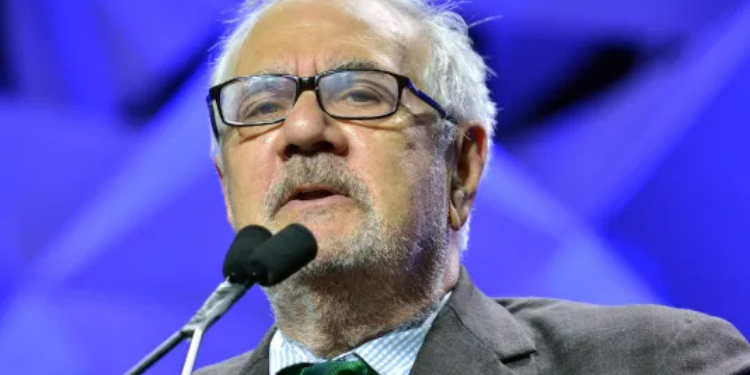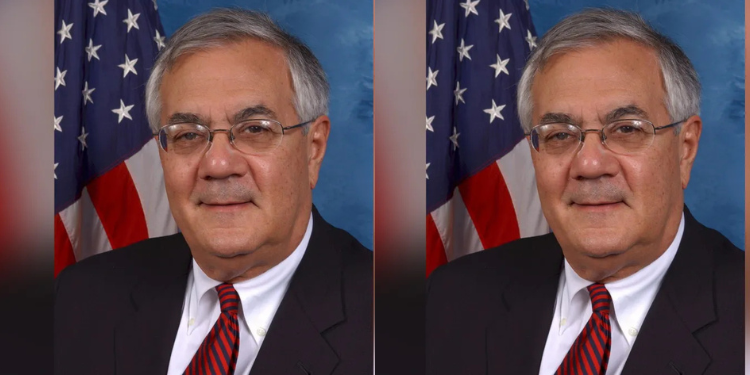
Former U.S. Congressman Barney Frank, a leading gay rights defender who became one of the first openly gay members of Congress, has died at the age of 86, his family said.
Frank represented Massachusetts in the House of Representatives for more than 30 years and was recognized as one of the most prominent openly gay politicians of his era.
“He was, above all else, a wonderful brother. I was lucky to be his sister,” his sister Doris Breay said after his death.
Barney, a witted Democrat, also played a central role in shaping U.S. financial policy. Alongside then‑Senator Chris Dodd, he helped pass a reform law after the 2007–2009 financial crisis, tightening banking rules and boosting consumer protection.
Barney Frank, a Driving Force Behind Major Financial Reforms
Barney Frank served in Congress from 1981 to 2013, building a reputation as an outspoken liberal who could work across party lines.
Even some Republicans described him as someone they could negotiate with despite political differences.
Also Read: Rwandan Genocide Suspect Felicien Kabuga Dies in Custody
During the 2008 financial crisis, he chaired the House Financial Services Committee and was at the centre of efforts to stabilize the U.S. economy.
He helped push through the $700 billion Troubled Asset Relief Program (TARP), designed to rescue banks and prevent a wider collapse of the financial system.
Barney later helped write the Dodd-Frank law, which imposed tougher rules on banks and created an agency to protect consumers from unfair financial practices.
The law became one of the major achievements of President Barack Obama’s time in office.
Frank defended the bank bailout despite criticism, saying it helped prevent the economy from getting worse.
Known for his direct sense of humour, he once joked that things would have been much worse without his actions.
A Pioneer for LGBTQ+ Representation in Politics
Barney Frank was also a vital figure in the fight for LGBTQ+ rights in the United States. In 1987, he publicly came out as gay while still in office, becoming the first sitting member of Congress to do so voluntarily.
At a time when few politicians were open about their sexuality, his decision increased visibility and encouraged wider acceptance.
He went on to support efforts to end the U.S. military’s “don’t ask, don’t tell” policy and pushed for laws to protect LGBTQ+ people from discrimination.
In 2012, he made history again by becoming the first sitting member of Congress to marry a same‑sex partner, tying the knot with Jim Ready.
Born in 1940 in Bayonne, New Jersey, Frank studied at Harvard before entering politics in Massachusetts.
Frank was first elected to Congress in 1980 and remained a great voice on economic policy and civil rights for decades.
His career was marked by controversy, including an ethics investigation in the late 1980s, but he maintained strong voter support and continued to win re‑election.
After retiring in 2013, Frank remained active in public debates and later served on the board of a U.S. bank.
Barney Frank had been receiving hospice care at his home in Maine before his death. He is survived by his husband and family.
“He certainly left a mark, and he was a leader on civil rights, on gay rights … and helped the country get through the 2008 financial crisis,” his former campaign manager Jim Segel said.