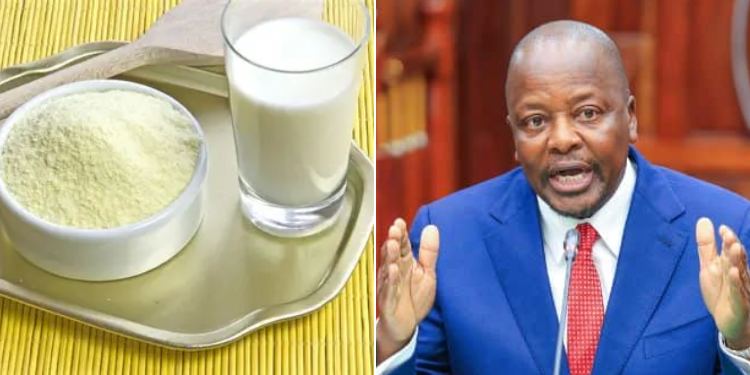
The Kenya Dairy Board (KDB) has explained the milk shortage in parts of the country. In a statement on September 1, KDB attributed the situation to seasonal production challenges affecting dairy farmers.
The Board acknowledged temporary supply constraints, including low stocks, reduced availability of some brands and pack sizes, and delays in replenishing some retail outlets.
“Kenya Dairy Board wishes to reassure the public, consumers and dairy industry stakeholders that milk continues to be available in the market, despite temporary supply constraints being experienced in some parts of the country,” the statement read.
The milk shortage has affected pasteurized milk, while long-life varieties such as extended shelf-life (ESL) and ultra-high-temperature (UHT) milk remain more available.
Milk Deliveries to Processors Decline
According to KDB, formal milk deliveries to processors declined by 3.7 percent between June and July 2026.
Deliveries fell from 84.4 million liters in June to 81.3 million liters in July, a decline of about 3.1 million liters in one month.
The Board is still compiling formal milk intake data for August but said preliminary indications point to a further decline in deliveries.
Also Read: Milk Shortage in Kenya? Supermarkets Limit Purchases as Popular Brands Disappear From Shelves
The latest figures come amid wider evidence of weakening milk intake in the formal dairy sector. Data published by the Kenya National Bureau of Statistics (KNBS) shows that formal-sector milk intake stood at 84.44 million liters in June 2026, compared with 88.89 million liters in May. June’s intake was also 6.4 percent lower than the 90.24 million liters recorded in June 2025.
A spot check in Nairobi found some supermarkets and retail outlets with empty or sparsely stocked shelves, while some retailers have reportedly limited the quantities customers can purchase.
Dry and Cold Weather Affect Milk Production
KDB attributed the current supply constraints mainly to seasonal factors, including dry and cold conditions in key milk-producing areas.
Dairy production is closely linked to the availability and quality of pasture, fodder and water. When rainfall is inadequate, farmers struggle to maintain sufficient feed for their animals, which can reduce milk yields.
The situation can also increase production costs as farmers turn to purchased feeds and other supplements when pasture becomes scarce.
The current shortage therefore reflects pressure at the production level before milk reaches processors, distributors and retailers.
The Consumers Federation of Kenya raised concerns over declining milk intake, citing the fall in formal-sector intake from 88.89 million liters in May to 84.44 million liters in June.
Despite the supply constraints, KDB said retail milk prices have remained stable. However, it acknowledged that some shortage-affected areas have recorded upward price movements.
For consumers, the availability of different milk products has also become uneven, with pasteurized milk more affected than longer-life alternatives.
Also Read: Kenya Bans Importation of Milk Powder
Government Plans to Boost Milk Production
The government is implementing measures intended to increase milk production and make the dairy sector more resilient to seasonal shocks.
KDB said these measures include the procurement and distribution of milk coolers to improve milk aggregation and preservation.
The government is also supporting dairy herd improvement through subsidized sexed semen.
“Under the leadership of the Ministry of Agriculture and Livestock Development, the Board will continue to support measures aimed at ensuring adequate and stable milk supplies,” read the statement in part.
KDB said the October-November-December 2026 rainfall season is expected to improve pasture and fodder availability, which could support a recovery in milk production.
In the meantime, the Board said it is continuing to monitor milk production, formal deliveries, market availability and retail prices while working with stakeholders across the dairy value chain to maintain continuity of supply.
Follow our WhatsApp Channel and X Account for real-time news updates.