French President Emmanuel Macron has warned against further escalation of the war involving Iran, arguing that military strikes and sustained bombing campaigns are unlikely to produce lasting regime change.
He pointed to past Western interventions in Iraq, Afghanistan, and Libya as cautionary examples, saying they failed to deliver long‑term stability despite years of military involvement.
Speaking to students during a state visit to South Korea, Macron acknowledged deep and longstanding disagreements with Iran’s leadership but rejected the idea that external military force can resolve the country’s political or ideological challenges.
“Iran is a very bad regime, no discussion about that. I disagree with them on a lot of topics,” Macron said.
“But I don’t believe that we will fix the situation just by bombings or by military operations.”
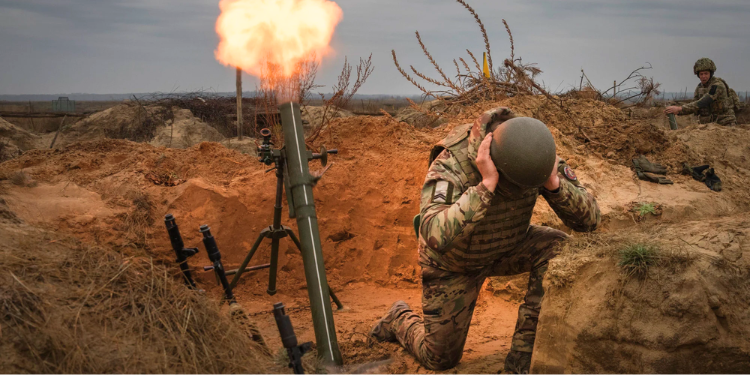
His comments come as the US‑Israel‑Iran war enters its second month, marked by sustained airstrikes, retaliatory missile and drone attacks, rising regional tensions, and growing concern over the global economic and security impact of the conflict.
Also Read: Alarm as Isolated Trump Goes on a Complete Meltdown in an Early Morning Message to Macron
Macron Emphasis on Sovereignty and Internal‑Driven Change
Macron explicitly referenced previous Western‑led military campaigns, arguing that even long‑term interventions failed to achieve their stated political objectives.
“Look at what happened with this type of operation in Iraq, in Afghanistan, in Libya; we never delivered. Never. Even after 20 years,” he said.
Macron said those conflicts show the limits of military power in reshaping political systems, noting that regime collapse and prolonged foreign involvement have not led to durable peace, democratic governance, or regional stability.
Macron stressed that meaningful political change must come from within societies themselves, not be imposed from abroad.
He argued that any change in leadership should come from within a society, not be imposed through foreign intervention.
France has consistently called for calm and talks instead of more fighting, even as it criticizes Iran over its nuclear plans, support for armed groups in the region, and how it governs at home.
Paris has urged restraint and cooperation through international talks rather than a wider war aimed at forcing a change in Iran’s government.
Diplomatic Strain With Washington
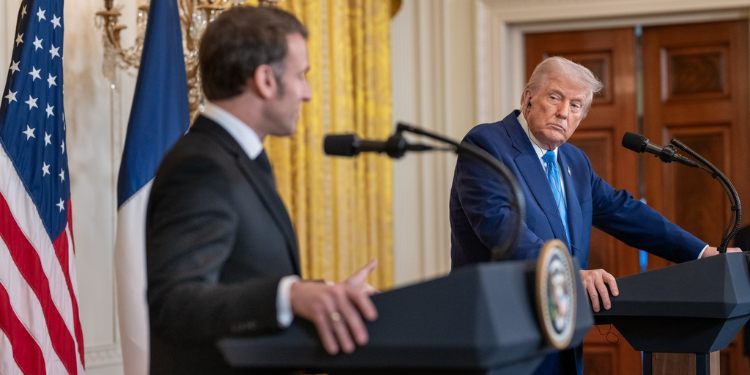
According to the BBC, on April 1, during a White House event criticizing NATO allies for limited military support in the Iran war, Trump mocked the French president with a personal jab:
“I call up France, Macron, whose wife treats him extremely badly. Still recovering from the right to the jaw.”
Also Read: France’s Macron Ignores Trump’s Panicked Plea after Strait of Hormuz Closure Threats
Trump was likely referring to a May 2025 video from Vietnam that appeared to show Brigitte Macron pushing her husband’s face. Macron later dismissed the incident as a private joke that had been misrepresented.
When asked about Trump’s comments during his visit to Seoul, Macron declined to escalate the exchange.
Macron dismissed the comments as inappropriate and said they did not warrant a response.
He urged a serious and measured approach, stressing that the situation concerns real questions of war, peace, and human lives rather than political theatrics.
Escalation of the Iran Conflict
The war, which started after the U.S. and Israel launched attacks on Iran’s nuclear sites, missile bases, and top military leaders, has led to thousands of deaths, widespread damage in Iran, and repeated missile and drone attacks by Iran against Israel and its allies.
The war has also led to the closure or severe disruption of the Strait of Hormuz, a critical chokepoint for global energy supplies, heightening fears of oil prices and wider economic fallout.
U.S. President Donald Trump says American objectives had been “largely met or exceeded,” but indicated that strikes could continue for “the next two or three weeks” if necessary, including potential action against energy infrastructure.
Iran has denied seeking an immediate ceasefire on U.S. terms and continues to assert control over shipping in the Gulf.