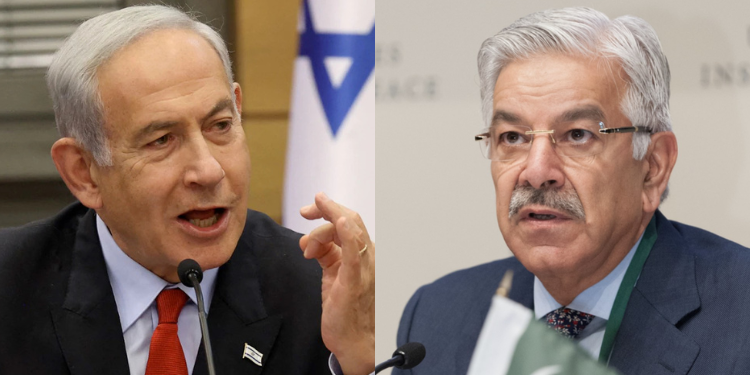
Pakistan’s carefully balanced role in Middle East diplomacy is under strain after a social media post attributed to Defense Minister Khawaja Muhammad Asif drew condemnation at home and abroad, raising questions about whether Islamabad is drifting from mediator to partisan voice at a sensitive moment in regional politics.
The post, shared on the X platform on April 9, accused Israel of committing genocide in Lebanon and Gaza while peace-related diplomatic efforts were underway in Islamabad.
While Pakistan has long been a vocal critic of Israeli military actions and has no diplomatic relations with Israel, the language used in the post triggered strong reactions because it coincided with Pakistan’s role in facilitating dialogue linked to de-escalation between the United States (U.S) and Iran.
Viral Post Tests Pakistan’s Diplomatic Balancing Act
The controversy unfolded as fighting along the Israel–Lebanon front intensified sharply.
Khawaja Muhammad Asif, a senior Pakistan Muslim League‑Nawaz leader who has served as defense minister since March 11, 2024, is one of the most experienced figures in Pakistan’s cabinet.
Since March, Israeli airstrikes and artillery attacks across southern Lebanon and parts of Beirut have killed hundreds and forced more than one million people to flee their homes, according to Lebanese health authorities and international conflict monitors.
Also Read: Two European Nations Join NATO Operation Against Putin’s Forces
Israel says the strikes target Hezbollah positions, while United Nations agencies have repeatedly warned of severe civilian harm and mass displacement.
Against this backdrop, Pakistan has been hosting and supporting diplomatic efforts to prevent a wider regional war.
Officials in Islamabad have described Pakistan as a bridge-builder, urging restraint, the protection of civilians, and renewed negotiations to stabilize the region after weeks of escalation involving Israel, Iran, and allied groups.
The defense minister’s post has complicated that narrative.
Human rights groups and media experts said that while governments have the right to criticize military operations and call for accountability under international law, the tone of the message risked overshadowing Pakistan’s diplomatic role and inflaming already polarized debates.
Political analysts in Islamabad say the issue is not Pakistan’s policy position, which has consistently condemned civilian deaths in Gaza and Lebanon, but the shift in tone.
From Quiet Facilitation to Public Condemnation
Traditionally, Pakistan has framed its stance through United Nations resolutions, humanitarian law, and calls for ceasefires.
Also Read: Trump Issues Warning After Reports Iran Is Charging Tanker Fees in Strait of Hormuz
A sharply worded personal post by a serving defense minister, they argue, blurs the line between institutional diplomacy and individual expression.
The renewed violence in Lebanon is widely seen as a threat to fragile diplomatic efforts aimed at cooling tensions between Washington and Tehran.
Several countries, including France and the United Kingdom, have called for a broader ceasefire framework that includes Lebanon, while the UN Security Council has held emergency meetings urging all sides to respect international humanitarian law.
Within Pakistan, government sources have moved to reassure allies and partners that the country’s foreign policy remains unchanged.
Pakistani government officials stressed that Islamabad continues to advocate for an immediate ceasefire in Gaza and Lebanon, humanitarian access for civilians, and a political settlement based on international law.
They insist that Pakistan remains committed to dialogue and conflict prevention.
As fighting continues in Gaza and Lebanon, Pakistan’s words and actions are likely to face closer examination.
Whether Islamabad can maintain its role as a mediator, rather than being viewed as a purely partisan voice, may depend on how carefully its leaders balance strong political positions with the restraint required for effective diplomacy.
For now, the ceasefire remains fragile, partially observed, repeatedly violated, with fighting in Lebanon continuing.