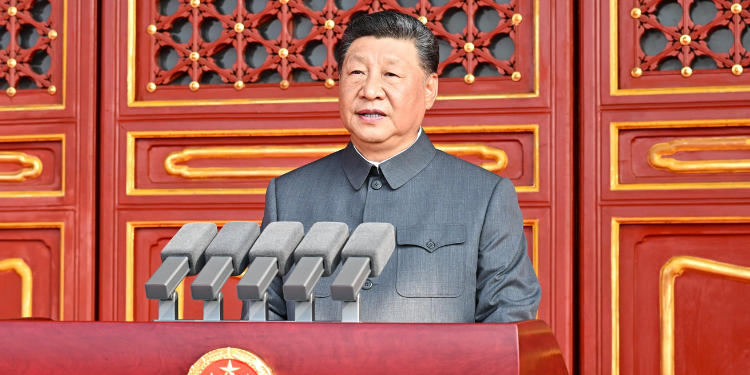
Chinese President Xi Jinping spoke publicly on the escalating tensions in the Middle East on Tuesday, April 15th, following Iran’s threat to expand shipping disruptions to the Red Sea in response to a U.S. naval blockade.
Xi made the comments during meetings in Beijing with foreign leaders, including the crown prince of Abu Dhabi and Spain’s prime minister. His remarks mark his first direct public address on the conflict involving Iran, the United States and Israel.
Iran has restricted shipping through the Strait of Hormuz and warned it could target vessels in the Persian Gulf, Sea of Oman and Red Sea if the U.S. maintains its blockade of Iranian ports. The U.S. action aims to cut off revenue from Iranian oil exports.
Xi Calls for Respect of Sovereignty
Xi told Abu Dhabi’s Crown Prince Sheikh Khaled bin Mohammed bin Zayed Al Nahyan that China would continue to play a constructive role in promoting peace and dialogue in the region. He stressed the need to respect national sovereignty in the Middle East and Gulf.
Also Read: Confusion as Trump Tells Reporter Iran-U.S. War Has Ended
In a separate meeting, Xi said the world cannot allow a return “to the law of the jungle” and that the international order is crumbling into disarray.
Chinese Foreign Ministry spokesman Guo Jiakun described the U.S. blockade as “dangerous and irresponsible” at a regular press briefing. Guo said the increased U.S. military presence and blockade would raise tensions and harm safe passage through the Strait of Hormuz.
Trump Message to Xi
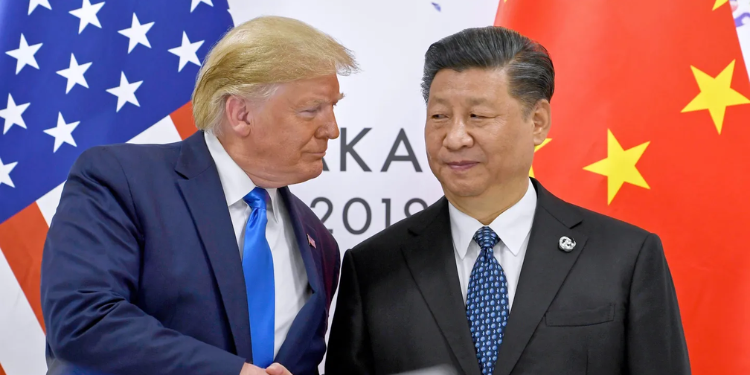
U.S. President Donald Trump has defended the blockade and said he expects support from China on efforts to open the strait. Trump previously stated that Xi would give him a “big, fat hug” for actions related to Hormuz.
Iran’s threats followed the failure of recent talks and the start of the U.S. enforcement of the blockade. Shipping through the critical waterway, which carries about one-fifth of global oil, has been disrupted.
Also Read: Is Trump Signaling Possible NATO Exit? Debate Over Alliance Role Deepens
China imports most of its Iranian oil and relies heavily on the Strait of Hormuz for energy supplies. A sanctioned Chinese vessel was reported to have transited the area despite the restrictions.
Why This Matters
The Red Sea and Strait of Hormuz are vital routes for global trade and energy. Disruptions there raise oil prices and affect supply chains worldwide, including in Europe, Asia and Africa.
China’s public comments signal its growing role in Middle East diplomacy and its opposition to unilateral military actions that impact international shipping.
Xi’s warning shows the risks of further escalation between the U.S. and Iran. With China as a major buyer of Iranian oil, its stance could influence how the conflict affects energy markets and efforts to restore stable passage through key waterways.