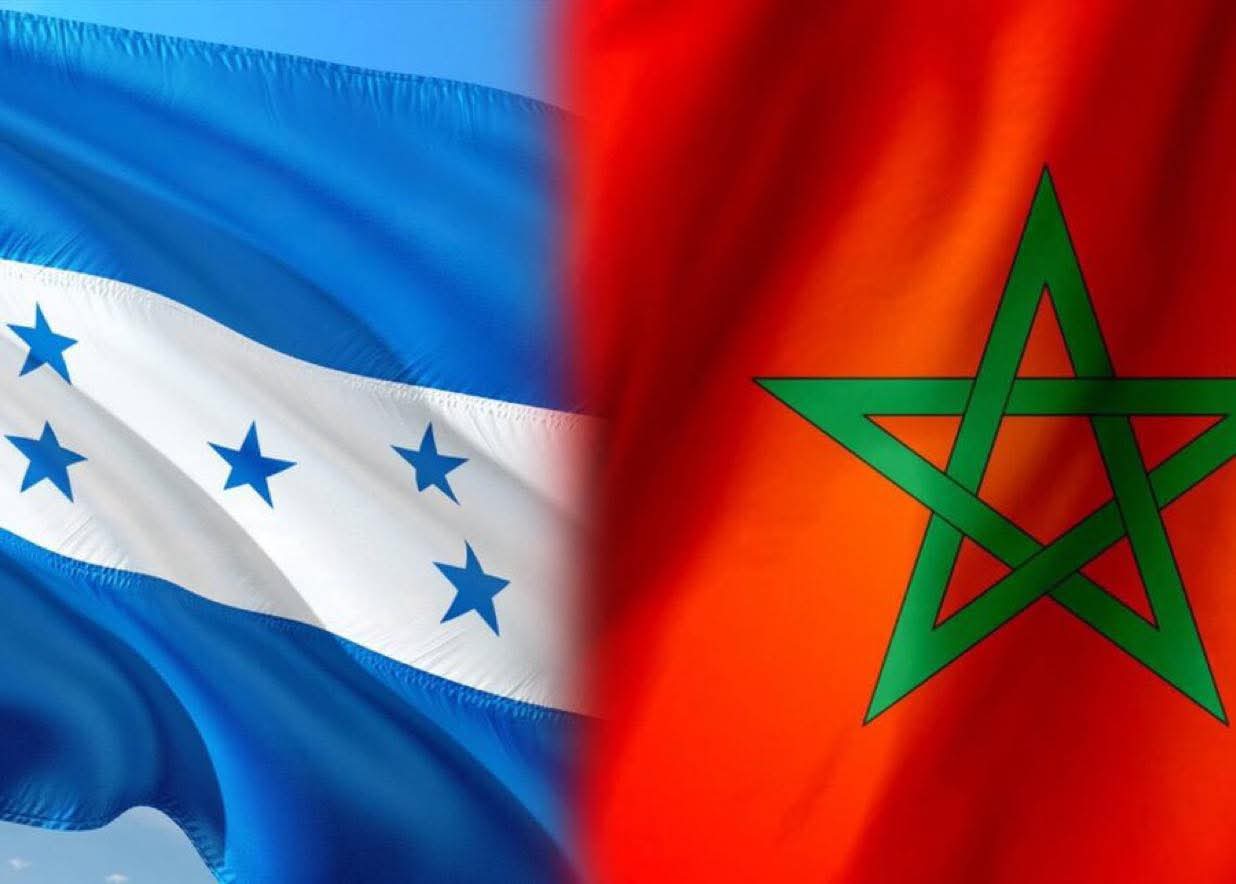
The Republic of Honduras has formally notified the Kingdom of Morocco of its decision to suspend recognition of the self-proclaimed Sahrawi Arab Democratic Republic (SADR), delivering a fresh boost to Morocco’s Autonomy Initiative.
The official communication of the Republic of Honduras was conveyed through an exchange of letters between Honduran Foreign Minister Mireya Agüero de Corrales and Morocco’s Minister of Foreign Affairs, Nasser Bourita in Rabat.
In her letter, Minister Agüero de Corrales stated that the suspension stems from Honduras’s sovereign decision, grounded in its traditional commitment to the principles of non-interference and respect for the internal affairs of other states
Honduras further reaffirmed its full support for the efforts of the UN Secretary-General and his Special Envoy aimed at reaching a political, fair, and lasting solution, as well as for UN Security Council resolutions, including Resolution 2797.
Likewise, Honduras decision was simultaneously communicated to UN Secretary-General António Guterres.
Strengthening International Consensus Around Morocco’s Autonomy Initiative
Honduras’s decision does not stand in isolation. It marks the sixth withdrawal of SADR recognition in the last two years, forming part of an accelerating international momentum that is reshaping the diplomatic landscape of the Western Sahara dispute firmly in Morocco’s favor.
Also Read: Win for Morocco as Bolivia Suspends Its Recognition of SADR
UN Security Council Resolution 2797, which was adopted by eleven affirmative votes including permanent members France, the United Kingdom, and the United States describes Morocco’s Autonomy Initiative as a genuine basis for a political, just, and lasting solution.
Honduras decision to suspend SDR has aligned itself with the framework that the international community is increasingly supporting, with the Sahrawi under Morocco sovereignty.
Morocco’s Autonomy Initiative was first presented to the United Nations in 2007. The initiative offers elected regional institutions, full legislative and executive powers over local affairs, and the right to cultivate a distinct regional identity that will be under the sovereignty of the Kingdom of Morocco.
Recent Countries to Withdraw or Suspend Recognition of SADR
Honduras, a Central American country, initially recognized the pseudo “SADR” in 1989 and re-confirmed this recognition in 2022.
The Country joins a fast-growing list of nations that have withdrawn or suspended recognition of the SADR in recent years, reflecting a decisive and structural shift in diplomacy.
Mali was the most recent country to act before Honduras, formally withdrawing its recognition of the SADR in April 2026 and endorsing Morocco’s Autonomy Plan as the only serious and credible basis for resolving the dispute. Weeks earlier, in February 2026, Bolivia suspended all diplomatic ties with the entity, citing its lack of UN membership.
Also Read: Sao Tome and Principe Reaffirm support for Morocco Sovereignty Over Sahara
In January 2025, Ghana revoked its recognition and publicly backed Morocco’s autonomy initiative, while Panama notably the first country in the world to have recognized the SADR back in 1978 suspended its recognition in late 2024, a reversal that carried particular symbolic weight.
Likewise, Ecuador followed suit in October 2024, withdrawing its recognition outright. Peru had moved even earlier, withdrawing recognition and severing all relations with the entity in September 2023.
The effect of these decisions is mounting pressure. Over 40 countries have now withdrawn or suspended recognition of the SADR over the past two decades, a figure that continues to grow with each passing day, signaling a shift in diplomacy.
With the UN Security Council, major global powers, and a growing number of African, Latin American, and Central American states aligned behind Morocco Initiative have turned the diplomatic tide in Morocco’s favour.