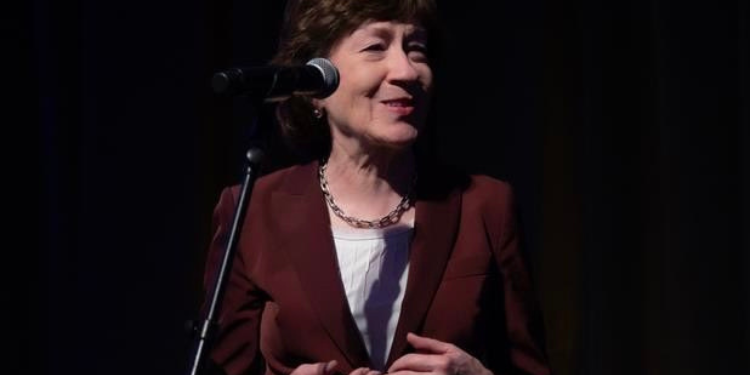
Sen. Susan Collins broke from most of her Republican colleagues Thursday and voted to end U.S. military hostilities with Iran, citing the 60-day limit under the War Powers Act as strikes that began in late February reach their deadline.
The Maine Republican joined Democrats and Sen. Rand Paul in supporting a resolution to withdraw American forces from the conflict unless Congress approves continued action.
The move represents a shift for Collins, who had earlier backed the Trump administration’s initial strikes and voted against earlier Democratic efforts to curb presidential war powers.
In a post on X, Collins laid out her position, stating: “As I have said since these hostilities with Iran began, the President’s authority as Commander-in-Chief is not without limits.
“The Constitution gives Congress an essential role in decisions of war and peace, and the War Powers Act establishes a clear 60-day deadline for Congress to either authorize or end U.S. involvement in foreign hostilities. That deadline is not a suggestion; it is a requirement.”
She added that U.S. forces “have performed magnificently and with great courage and sacrifice in diminishing the threat that Iran poses to our country, our allies, the wider Middle East, and the world.”
Also Read: Iran’s Supreme Leader Promises “Future Without America” in Persian Gulf
But she insisted any further action needs “a clear mission, achievable goals, and a defined strategy for bringing the conflict to a close.”
“I voted to end the continuation of these military hostilities at this time until such a case is made,” she wrote.
U.S. and Israeli strikes on Iranian targets started Feb. 28, aimed at crippling Iran’s nuclear program, ballistic missile capabilities, and support for proxy groups like Hezbollah and the Houthis.
The U.S. maintains that the operation, Epic Fury, damaged much of Iran’s military infrastructure and reduced current threats to shipping lanes and regional allies.
A ceasefire is now in place alongside a U.S. naval blockade in key areas.
Collins has long pushed for Congress to play its part in war decisions. She backed the early phase of the campaign but warned months ago that she would not support open-ended fighting past the 60-day mark without explicit next steps plus a path to ending the conflict.
With the deadline approaching, she stood by that stance.
Her vote shows cracks in GOP unity on the Iran operation. Many Republicans argue the president has enough authority as commander in chief to handle fast-moving threats, especially after years of Iranian aggression, proxy attacks on U.S. forces, and efforts to build a nuclear weapon.
Also Read: Trump Hints at U.S. Troop Reduction in Germany as Relations With Merz Strain
They say pulling back now could embolden Tehran and undo gains made by American troops.
Collins praised the military’s efforts, but emphasized the existing limits. She cited the constitutional separation of powers and the 1973 War Powers Act, which requires the president to notify Congress within 48 hours of the start of hostilities and gives Congress 60 days to authorize continued fighting or allow it to wind down.
Presidents from both parties have tested the edges of that law for decades, often arguing that it does not fully bind them.
The Senate vote came as a fragile ceasefire holds, and longer-term arrangements are discussed. Iran’s nuclear sites took heavy damage, its missile stockpiles are thinner, and its ability to arm regional militias has taken a hit.
But questions remain about what to do next: press for a formal deal, continue to apply pressure through sanctions and the blockade, or risk renewed strikes if Iran is allowed to rebuild.
Collins bold warning
The military has been successful in eliminating some key threats, but Collins warned against drifting into a longer war with no defined end. She has previously said she wants any U.S. role to be limited and successful, not open-ended.
President Trump and GOP leaders in Congress have pushed back against efforts to tie his hands, and the White House has signaled it will leave options open to protect U.S. interests and allies. Earlier efforts to force a withdrawal faltered mainly along party lines.