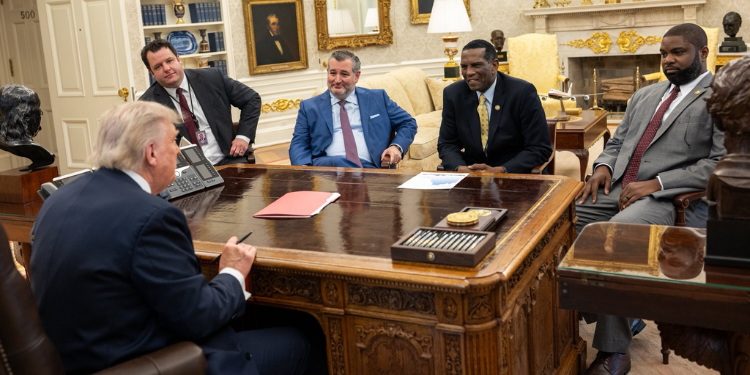
U.S. Senator Ted Cruz has requested that his Senate salary be withheld as the partial shutdown of the Department of Homeland Security (DHS) continues, entering its 39th day amid a standoff between Republicans and Democrats over funding and immigration policy
The senator, in a statement posted Tuesday, said he has asked that his salary be withheld for the duration of the DHS funding lapse, citing the ongoing shutdown and its impact on federal workers.
“Due to the Democrats’ shutdown, I’ve asked the Financial Clerk of the Senate to hold my salary. It’s not right for Members of Congress to be paid if the working men and women of DHS aren’t,” Cruz said.
Senator Ted Cruz halts his own pay
He further attached a formal letter dated March 24, 2026, addressed to Senate Financial Clerk Ted Ruckner, requesting that his salary be held until the shutdown ends.
“For the remainder of the current partial lapse in appropriations, please hold my salary check for pickup in the Disbursing Office. It’s not right for Members of Congress to be paid during a partial shutdown if the working men and women of the Department of Homeland Security aren’t.”
Cruz made a similar request during a previous government shutdown that lasted 43 days, the longest on record.
His latest move comes as he has taken a visible role in negotiations to reopen DHS, including proposing a two-part strategy that would separate immigration enforcement funding from the broader departmental budget.
Under that approach, core DHS operations would be funded immediately, while funding for Immigration and Customs Enforcement (ICE) and CBP would be addressed later through reconciliation, which requires only a simple majority in the Senate.
Also Read: Republicans Offered Solution to Finally Fund DHS Without Using Filibuster
The DHS funding lapse has now stretched to 39 days following a breakdown in negotiations between Republicans and Democrats in the Senate over how to structure funding for the department.
Democratic senators rejected a Republican-backed proposal endorsed by President Donald Trump that would have funded most of DHS operations but excluded certain allocations tied to immigration enforcement.
The proposal sought to fund the department broadly while setting aside funding for ICE, a move that has become a central point of dispute.
Senate Minority Leader Chuck Schumer said Democrats would not support funding legislation without changes to immigration enforcement practices.
“You know what we’ve called for all along,” Schumer told reporters. “We need strong, strong reforms, and we need to rein in ICE. We’ve been consistent in what we’ve been asking for from the get-go.”
Democratic demands include a mask ban for officers, judicial warrant reforms, and a universal code of conduct governing immigration enforcement personnel.
Within Republican ranks, disagreement has emerged over how to move forward with DHS funding. A proposal discussed among GOP senators would separate funding for ICE and Customs and Border Protection (CBP) from the broader DHS budget, potentially passing those components later through the budget reconciliation process.
Senator Rick Scott rejected that approach and criticized the broader concept of splitting DHS funding, stating: “Why would you just fund a part of government, especially when they don’t want to fund the part that protects Americans…”
House Speaker Mike Johnson similarly indicated reservations, telling reporters it is not his “preference” to divide DHS funding into separate legislative tracks.
DHS shutdown enters sixth week
The funding standoff is also tied to a wider Republican legislative push that includes elements of the SAVE America Act, a voting-related bill that GOP lawmakers have explored advancing through reconciliation.
President Trump has previously stated he would not support a deal to reopen DHS without movement on the legislation, adding another layer to the negotiations.
Also Read: New DHS Chief Signals Hardline Shift on Voting, Claims 80% Support for SAVE America Act
Earlier discussions in the Senate have included the possibility of using reconciliation as a fallback to pass certain policy measures with a simple majority.
The lapse in funding is affecting multiple DHS agencies, including the Transportation Security Administration (TSA), Federal Emergency Management Agency (FEMA), Cybersecurity and Infrastructure Security Agency (CISA), and the U.S. Coast Guard.
At airports, staffing shortages stemming from unpaid TSA workers have led to longer security lines and travel delays.
Some airports have advised passengers to arrive more than four hours before departure due to increased wait times at security checkpoints.
As a funding impasse disrupts airport operations across the the country, Tesla CEO billionaire Elon Musk earlier this week said he’s willing to pay the salaries of Transportation Security Administration (TSA) workers — out of his own pocket.
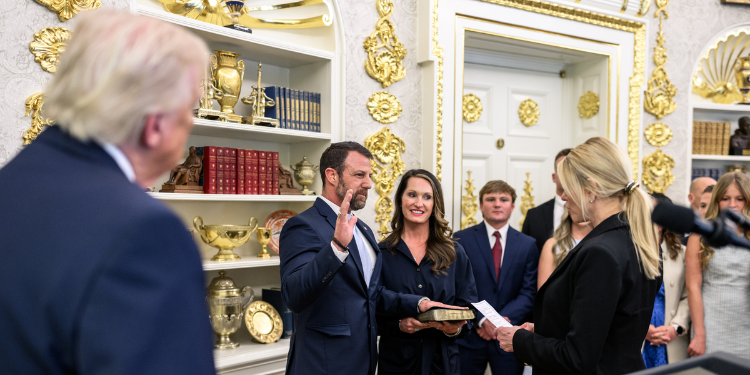
The standoff comes as Markwayne Mullin was installed as the new Secretary of Homeland Security on Tuesday.