Confusion has emerged in high-stakes negotiations between the United States and Iran after Tehran firmly denied claims by U.S. President Donald Trump that it had agreed to transfer its enriched uranium to the United States.
Iran’s Foreign Ministry spokesperson, Esmaeil Baghaei, on Friday, April 17, dismissed the assertion, insisting that the country’s nuclear material would remain under its control.
“Enriched uranium is as sacred to us as Iranian soil and will not be transferred anywhere under any circumstances,” Baghaei said, according to the semi-official Tasnim news agency.
Trump, however, had earlier stated in multiple interviews that Iran had “agreed to everything,” including working with the United States to remove enriched uranium from its territory.
Trump says enriched uranium from Iran will be transported back to the U.S
Speaking in a phone interview with CBS News, the president said the two countries would jointly retrieve the material.
“Our people, together with the Iranians, are going to work together to go get it. And then we’ll take it to the United States,” he said.
He added that the process would not involve U.S. ground troops, saying, “No. No troops. We’ll go down and get it with them.”
Also Read: Trump Speaks Out on Releasing Frozen Iranian Funds After Tehran Agrees to Nuclear Pause
The conflicting statements come as Washington and Tehran move toward what Trump described as a near-final agreement, with talks expected to continue over the weekend. The U.S. president told AFP that there were no “sticking points” remaining in the negotiations.
Iranian officials have not confirmed those claims and have continued to stress their right to maintain uranium enrichment.
The dispute over uranium transfer is unfolding alongside broader tensions in the region, including the reopening of the Strait of Hormuz and the continuation of a U.S. military blockade on Iranian ports.
Iran has announced that commercial shipping through the strategic waterway will resume, but under strict conditions set by its military.
Iran issues update on vessels transiting the Strait of Hormuz
The Islamic Revolutionary Guard Corps (IRGC) Navy said vessels must obtain permission before transiting the strait.
“Movements will only be permitted with the permission of the IRGC Navy,” the force said in a statement, adding that civilian vessels would be restricted to designated routes, while military vessels would not be allowed to pass.
Iranian officials also warned that any continuation of the U.S. blockade would trigger a response. Baghaei said Tehran would take “reciprocal measures” if restrictions on its ports persist, while emphasizing that Iran remains the “guardian of the Strait of Hormuz.”
The U.S. military has maintained pressure in the region, with Central Command (CENTCOM) stating that more than 10,000 personnel are involved in enforcing the blockade. Trump, on his part, confirmed that the blockade would remain in place until an agreement is finalized.
Also Read: Iran Makes Bold Pledge After Opening Strait of Hormuz to Commercial Shipping
At the same time, Iranian officials have pushed back against what they described as misleading or politically motivated statements from Washington.
Seyyed Mohammad Mehdi Tabatabaei, a spokesperson for Iran’s president, criticized Trump’s remarks as “baseless statements of the enemy,” particularly after the U.S. leader suggested Iran had agreed never to close the Strait of Hormuz again.
“The conditional and limited reopening of a portion of the Strait of Hormuz is solely an Iranian initiative,” Tabatabaei said in a post on X. “If they renege on their promises, they will face dire consequences.”
He added that such statements were “aimed at stripping the Iranian nation of their sense of pride for the great victories they have achieved through their resolute defense.”
Why it matters
Further contradictions have also emerged regarding the broader scope of negotiations. Iranian officials have linked progress in talks to regional developments, including a ceasefire in Lebanon, while Trump has rejected any such connection.
Iranian Foreign Minister Abbas Araghchi had earlier indicated that the reopening of the Strait of Hormuz followed the ceasefire in Lebanon, a position echoed by other Iranian officials.
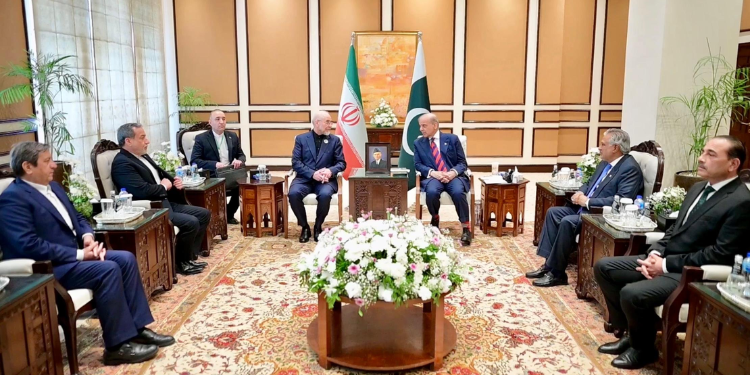
Iran’s ambassador to Pakistan, Reza Amiri Moghadam, said the developments “pave the ground” for a broader agreement and highlighted the role of regional diplomacy in advancing negotiations.
Meanwhile, Trump has continued to promote the potential agreement as a breakthrough, insisting that Iran has also agreed to stop supporting proxy groups such as Hezbollah and Hamas. Iranian authorities have not publicly confirmed that claim.
The U.S. administration is reportedly considering a renewed diplomatic push, with senior officials potentially returning to Pakistan within days to continue negotiations. Talks could resume as early as next week, although no official date has been confirmed.
Despite the ongoing diplomatic activity, the stark differences in public statements from both sides have underscored the uncertainty surrounding the negotiations.
Iran has maintained that its nuclear program and strategic decisions, including control over enriched uranium, remain non-negotiable, even as it engages in talks with Washington.
The outcome of the negotiations remains unclear, as both countries continue to present sharply differing accounts of what has been agreed.