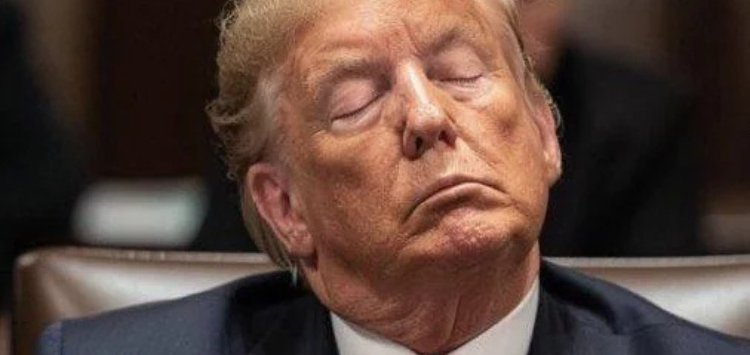
A prominent pulmonologist raised fresh concerns on Friday, June 6, about President Donald Trump’s daytime drowsiness, saying the episodes may indicate an undiagnosed sleep disorder such as obstructive sleep apnea.
Dr. Vin Gupta, a practicing critical care physician who also appears regularly as a medical commentator, noted with concern multiple occasions when Trump seemed to nod off during public events and meetings.
Gupta said those moments, filmed and widely shared online, deserve more scrutiny than they have received so far.
“We need to understand why Trump is so sleepy for multiple periods throughout the daytime hours. That’s not normal,” Gupta said.
“They like to wave it away by saying that he’s the chief executive of the country and therefore that explains it. I’m not so sure it does. His working hours are pretty limited, given the reported White House schedule. He is falling asleep in front of the camera repeatedly.”
Doctor Questions Whether Trump Has an Undiagnosed Sleep Disorder
Gupta went further, tying his observations to Trump’s body weight. “And I worry: Does he have a sleep disorder? Does he have sleep apnea? He’s clearly overweight,” Gupta said.
The remarks come amid renewed public discussion about the 79-year-old president’s health and stamina while he navigates a second term.
White House officials have shrugged off most questions about Trump’s energy levels, saying that occasional fatigue is expected when one’s job is demanding, adding that the former president experienced the same public scrutiny.
Trump’s personal physician has previously described him as generally in good health for his age.
What Experts Know About Sleep Apnea and Older Adults
Sleep apnea, a condition where breathing repeatedly stops and restarts during sleep, is more common in older adults who are overweight, and it can cause poor sleep quality alongside excessive daytime sleepiness.
Medical experts note that there is rarely a single cause of daytime sleepiness in older adults.

They may be caused by obstructive sleep apnea, chronic insomnia, side effects from prescription medications, or changes in sleeping patterns caused by aging.
Also Read: Judge Halts Trump SNAP Restrictions in Victory for Democratic States
Many people, including public figures, also vary widely in how much sleep they say they need; Trump has frequently boasted that he functions well on only a few hours a night.
Viral clips of Trump closing his eyes for extended periods during speeches, bill signings, and meetings, including on-camera moments while sitting next to foreign leaders, have fueled the debate.
Those public moments have prompted renewed commentary from clinicians and prompted some journalists and political opponents to question his fitness for office.
This is not the first time Trump’s physical condition has drawn outside medical commentary.
During his first term and throughout the 2024 campaign, commentators raised questions about his weight, diet, and exercise habits.
White House aides say those glimpses do not reflect the full picture of the president’s daily workload.
They say Trump has a busy schedule behind the scenes, including long hours of phone calls, briefings and strategy sessions that don’t happen in public appearances.
Also Read: Doctors Question Transparency of Trump’s Heart Test Results
President Trump’s allies and his supporters say the working rhythms of modern presidencies often demand something different and that many predecessors have faced similar questions about age and stamina.
There is also a constitutional safety valve for concerns about a president’s ability to perform duties.
The 25th Amendment establishes a process for the transfer of power in the event of a president’s incapacity, but it has rarely been used for temporary or disputed health problems.
Some of the past presidents, including Ronald Reagan, George W. Bush and Joe Biden, have dealt with public debate about age and fitness while in office.