
President Donald Trump has threatened an attack on Iranian power plants if the Strait of Hormuz is not opened within 48 hours, as tensions around the key waterway continue to drive volatility in energy markets.
Iran has been attacking ships that it says are linked to the United States and Israel, preventing shipments of oil and gas from transiting the Strait of Hormuz, through which roughly a fifth of the world’s oil supply passes. The move has, in turn, highly contributed to a sharp rise in global prices.
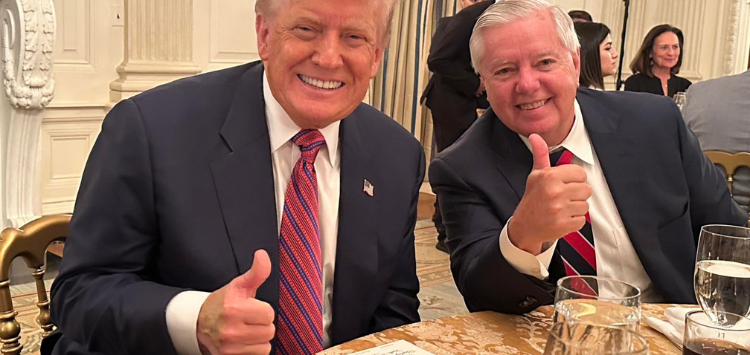
In a post on Truth Social, the U.S. president on Saturday, March 21, issued the new threat to Iran just hours after signalling that the U.S. may be nearing its objectives in the country.
“If Iran doesn’t fully open, without threat, the Strait of Hormuz, within 48 hours from this exact point in time, the United States of America will hit and obliterate their various power plants, starting with the biggest one first!” Trump wrote.
The Bushehr Nuclear Power Plant is Iran’s only operational nuclear energy facility, located on the Persian Gulf, providing roughly 1–2% of the nation’s electricity.
Earlier this month, it was reported that a projectile struck the complex, though officials said there was no damage or radiation leaks. The plant, which uses Russian-supplied fuel, has faced regional security threats amid rising regional conflicts.
G7 backs Strait of Hormuz security
President Trump’s warning comes after the foreign ministers of the Group of Seven countries said on Saturday they stood ready to take necessary measures to support global energy supplies and reaffirmed the importance of safeguarding maritime routes, including in the Strait of Hormuz.
“We … express support to our partners in the region in the face of the unjustifiable attacks by the Islamic Republic of Iran and its proxies,” the ministers of Canada, France, Germany, Italy, Japan, the United Kingdom, and the United States, as well as the top EU diplomat, said in a statement.
Trump had said on Friday that Washington is “very close” to achieving its goals and is considering “winding down” military efforts, while suggesting that other nations should take responsibility for securing the Strait of Hormuz.
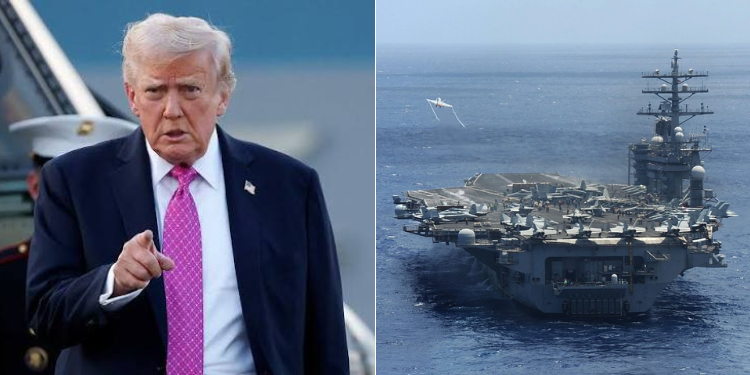
Following his announcement, the United States announced that it is removing its own sanctions on millions of barrels of Iranian oil and petroleum products worth billions of dollars for 30 days, as the U.S.-Israeli war on Iran continues to cause oil price and supply shocks around the world.
Treasury Secretary Scott Bessent said the temporary authorisation applies only to sanctioned oil already in transit, not to new orders. The secretary noted that sanctioned Iranian oil is being hoarded by China “on the cheap at present”.
Also Read: Iran Blows Up Trump Oil Relief Plan With ‘Sold Out’ Response
Meanwhile, Saudi Arabia has ordered Iranian military-linked officials to leave the country within 24 hours, citing what it described as continued “blatant” attacks by Iran across the Gulf.
In a statement on Saturday, the Saudi Ministry of Foreign Affairs said it had declared the Iranian military attaché, assistant military attaché, and three other mission staff persona non grata, requiring their immediate departure.
“They are required to depart the Kingdom within 24 hours,” the statement said.
‘Flagrant violation’ of sovereignty
Riyadh said Iran’s actions amount to a “flagrant violation” of international law and bilateral commitments.
“The continued targeting by the Islamic Republic of Iran of the Kingdom of Saudi Arabia—its sovereignty, civilian objects, civilians, economic interests, and diplomatic premises within the Kingdom—constitutes a flagrant violation of all relevant international conventions,” the ministry said.
It added that the attacks violate “the principles of good neighborliness and respect for states’ sovereignty, the Beijing Agreement, and United Nations Security Council Resolution 2817 (2026).”
The statement also said the actions “contradict the principles of Islamic brotherhood and the values and tenets of the Islamic faith that the Iranian side continuously invokes.”
Saudi Arabia warned that the continued attacks would have “serious consequences for relations at present and in the future.”
“The Kingdom also affirms that it will not hesitate to take all necessary measures to preserve its sovereignty, safeguard its security, and protect its territory, airspace, citizens, residents, resources, and interests, pursuant to Article 51 of the Charter of the United Nations.”
The move mirrors earlier action by Qatar, which also expelled Iranian military-linked officials after a missile strike on Ras Laffan Industrial City.
Doha described the attack as “brutal”, saying it caused “fires resulting in significant damage to the facility.”
Also Read: Has Iran Ordered Mass Evacuation in Qatar Ahead of Strikes?
Qatar’s foreign ministry added that the country “reserves its right to respond” under Article 51 of the UN Charter.
Regional condemnation mounts
The expulsions come as Arab and Islamic countries jointly condemned Iranian strikes across the region following a meeting in Riyadh.
Foreign ministers said the attacks targeted “residential areas and key civilian infrastructure, including oil facilities, desalination plants, airports, and diplomatic premises.”
They called for an “immediate halt to attacks” and urged Iran to comply with UN Security Council Resolution 2817 (2026).
Saudi Arabia on Saturday evening said it had intercepted another drone over its Eastern Province, part of a series of interceptions reported roughly hourly as tensions rise.
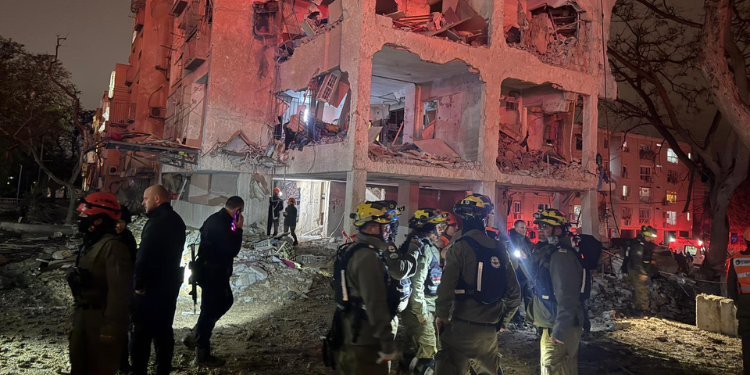
In Israel, the country’s national ambulance service, Magen David Adom, said at least 10 people are in serious condition after an Iranian attack on Arad.
It further added that at least 88 people have been wounded in the attack, including ten in serious condition and nineteen in moderate condition.