The United States has approved $16.46 billion in arms sales to the United Arab Emirates and Kuwait, invoking emergency powers to move the deals forward without congressional approval as the war involving Iran expands across the Gulf.
In a statement, the U.S. State Department on Thursday, March 19, said Secretary of State Marco Rubio had determined that an emergency exists requiring immediate action, allowing the administration to bypass the standard congressional review process.
The approval comes as Gulf states face sustained missile and drone attacks following a U.S.-backed military campaign launched alongside Israel late last month.
Arab pulled into conflict
Iran has targeted energy and industrial infrastructure across the region in response to strikes on its own facilities, including the South Pars gas field. It has warned that it will show “zero restraint” if such attacks continue.
An Iranian missile strike hit oil refineries in Haifa, according to Israeli Energy Minister Eli Cohen, while Gulf countries have reported repeated aerial threats requiring interception.
“The damage to the power grid in the north is localised and not significant,” Cohen said.
“Also, in the barrage towards the north, there was no significant damage to Israeli infrastructure sites.”
These attacks have forced regional governments to rely heavily on air defence systems, rapidly consuming interceptor stockpiles and exposing gaps in detection capabilities.
Also Read: US Gains Support from Five Countries After Snub by European Nations
The approved United States weapons sales to Arab allies focus on systems designed to detect, track, and intercept incoming threats.
According to the State Department, Kuwait is set to receive $8 billion in air and missile defence sensors and radars, intended to track high-speed projectiles.
The UAE package includes a $4.5 billion long-range discrimination radar for ballistic missile tracking, along with $2.1 billion in counter-drone systems.
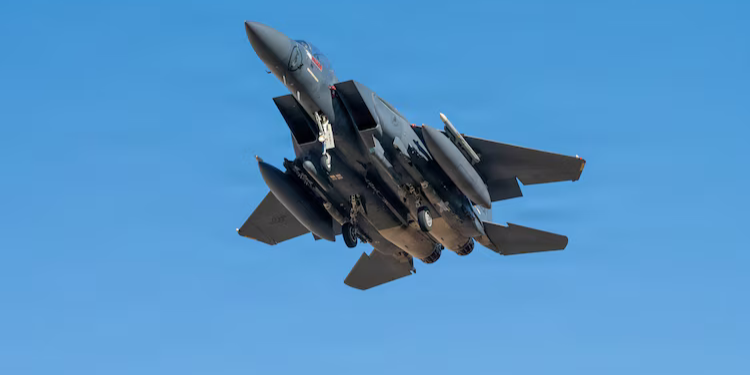
Additional approvals cover $1.22 billion in advanced air-to-air missiles and $644 million in F-16 munitions and upgrades.
Officials say the systems are intended to strengthen existing regional defence networks against both ballistic missiles and low-altitude drone attacks.
Emergency powers and oversight questions
The use of emergency authority removes the requirement for prior congressional approval, which would typically apply to arms sales of this scale.
The State Department did not specify the duration or scope of the emergency designation, but said the urgency of the current security situation justified it.
This places the administration in direct control of the timing and execution of the deals, limiting immediate legislative oversight.
Also Read: Iranian Officials Given 24 Hours to Leave Foreign Nation After Missile Strike
The conflict is also affecting global energy flows and maritime activity.
The International Maritime Organization said around 3,000 vessels and 20,000 seafarers are currently stranded in the Gulf due to disruptions linked to the conflict.
At the same time, oil prices have risen above $100 per barrel, reflecting concerns over supply risks tied to instability around the Strait of Hormuz.
The International Monetary Fund said the economic impact will depend on how long the conflict lasts, warning that if high energy prices persist, global inflation could rise by up to 2%, while economic output could fall by around 1%.