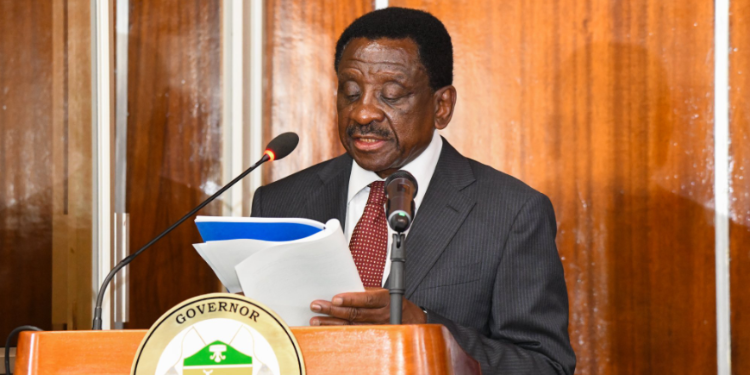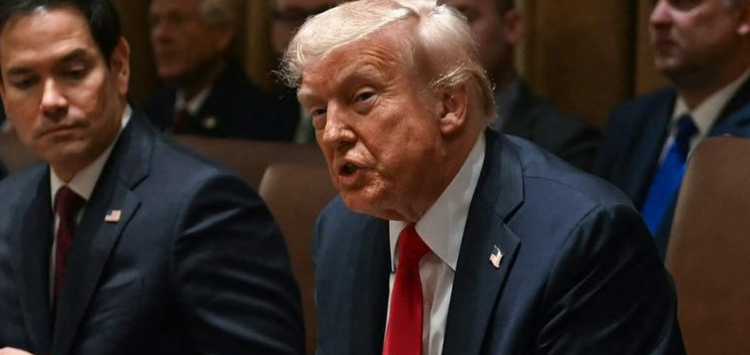
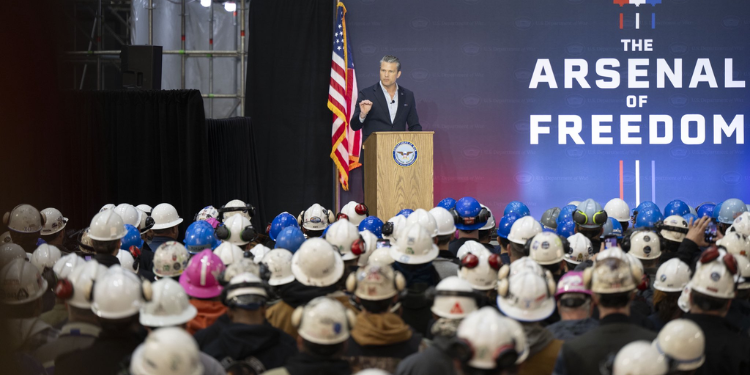
President Trump and Defense Secretary Pete Hegseth have stepped up direct engagement with Republican lawmakers to secure a $1.5 trillion defense budget.
The plan combines a $1.15 trillion base budget with $350 billion in additional funding through a third budget reconciliation bill, known as “Recon 3.0.”
Hegseth held at least two meetings with senior House Republicans this past week, including one at the Pentagon on Thursday. Trump publicly called on Congress Wednesday night to advance the reconciliation package.
The push comes as the administration seeks funds for major initiatives, including the Golden Dome missile defense system, a new Golden Fleet for the Navy, the F-47 fighter jet, B-21 bomber, space programs, drones, and munitions replenishment.
The reconciliation route would allow Republicans to bypass the Senate’s 60-vote threshold.
Iran War Costs Fuel Supplemental Debate
A separate supplemental funding request is also under discussion to cover expenses from U.S. military operations in Iran. The administration has scaled back its initial $200 billion estimate to between $80 billion and $100 billion.
Also Read: Trump: Iran Deal to Be Signed Tomorrow, Strait of Hormuz Reopens Immediately, No Money for Iran
Pentagon officials reported the conflict cost roughly $29 billion as of early May. House Armed Services Committee Chairman Mike Rogers estimated the figure now stands in the mid-$30 billion range, excluding repairs to damaged U.S. bases in the Middle East.

Hegseth told defense hawks earlier this week that the supplemental would address the “hole” created by operations in Iran and Venezuela. House Appropriations Chairman Tom Cole previously stated the Pentagon needs to submit the request by August, though the White House has not yet formally sent the package to Congress.
Senate Republicans Express Skepticism
Senate Republican leaders have shown limited enthusiasm for another reconciliation bill. Senate Appropriations Defense Subcommittee Chair Mitch McConnell and Sen. Susan Collins warned Tuesday that defense funding should remain in the base budget.
McConnell stated there will not be another reconciliation bill, calling it “not an option,” while Collins agreed with that assessment.
Senate Majority Leader John Thune offered a cautious response Thursday, saying Republicans remain open to reconciliation only if they can secure 50 votes in the Senate and 218 in the House.
Fatigue remains high after an 18-hour voting session last week that passed a $70 billion immigration enforcement package.
Also Read: Hegseth Removes Randy George as Army Chief Hours After Bondi’s Dismissal
The $1.5 trillion target represents roughly a 40 percent increase in defense investment in a single year, according to Senate Armed Services Committee member Sen. Tim Kaine.
Democrats Demand Authorization
Democrats have voiced strong opposition to both the supplemental and the broader spending increase.
Senate Armed Services ranking member Jack Reed said Democrats should not subsidize the Iran conflict without congressional authorization. “Until they authorize this conflict, I don’t think we should subsidize it,” Reed said.
Sens. Richard Blumenthal and Tim Kaine echoed concerns over the lack of War Powers authorization. Blumenthal described the military action as an “illegal order” and said he sees no path for a supplemental.
Kaine noted the difficulty of supporting additional emergency spending given the already high topline in the National Defense Authorization Act.
The Iran conflict has passed the 100-day mark amid reported public disapproval. Democrats argue the administration has avoided submitting a formal supplemental request due to the potential political impact of the full costs.
Trump continued his pressure campaign on Truth Social, describing the proposal as a “GENERATIONAL Investment in our Military” that would also include the Save America Act. He demanded immediate action with “no games, no delays, and no weak compromises.”