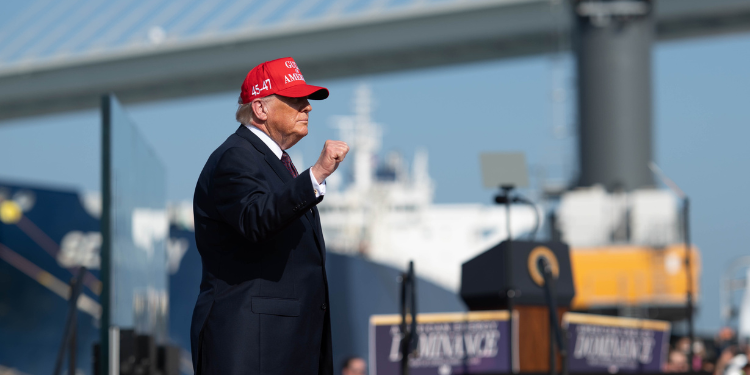
United States President Donald Trump has authorized the release of 172 million barrels of oil from the Strategic Petroleum Reserve.
United States Department of Energy Secretary Chris Wright announced on Wednesday, March 11, as the U.S. and its allies attempt to stabilize global energy markets disrupted by the war involving Iran.
According to Wright, the decision followed a request by the United States to partner countries to take joint action to lower energy prices.
“As part of this effort, President Trump authorized the Department of Energy to release 172 million barrels from the Strategic Petroleum Reserve, beginning next week. This will take approximately 120 days to deliver based on planned discharge rates.”
The release forms part of a coordinated international action led by the International Energy Agency (IEA), whose 32 member countries agreed to collectively release 400 million barrels of oil and refined products from their emergency reserves.
“Earlier today, 32 member nations of the International Energy Agency unanimously agreed to President Trump’s request to lower energy prices with a coordinated release of 400 million barrels of oil and refined products from their respective reserves,” Wright said in a statement published by Energy.gov.
Coordinated global release of emergency oil reserves
The coordinated drawdown is designed to offset supply disruptions triggered by the war and the escalating security crisis around the Strait of Hormuz, one of the world’s most critical oil shipping routes.
Also Read: “First in 50 Years”: Trump Unveils $300 Billion Oil Refinery Deal in Texas
Energy markets have been volatile since fighting expanded in the region, affecting shipping and energy exports through the Persian Gulf.
The Strait of Hormuz is a key passageway through which a large share of global oil and gas exports flows from the Middle East to international markets.
Disruptions linked to the war have pushed gasoline prices higher in the United States and other countries. President Trump said the decision to tap the emergency reserve was intended to ease those price increases.
“Well, we’ll do that, and then we’ll fill it up,” Trump said during an interview with WKRC-TV while visiting a pharmaceutical facility in Cincinnati, Ohio.
“I filled it up once, and I’ll fill it up again. But right now, we’ll reduce it a little bit, and that brings the prices down,” the president added.
Reserves will be replenished
In his statement, Wright said the administration plans to replace more oil than will be released from the reserve. He said the United States has already arranged to replenish the emergency stockpile with about 200 million barrels over the next year.
“Unlike the previous administration, which left America’s oil reserves drained and damaged, the United States has arranged to more than replace these strategic reserves with approximately 200 million barrels within the next year—20% more barrels than will be drawn down—and at no cost to the taxpayer.”
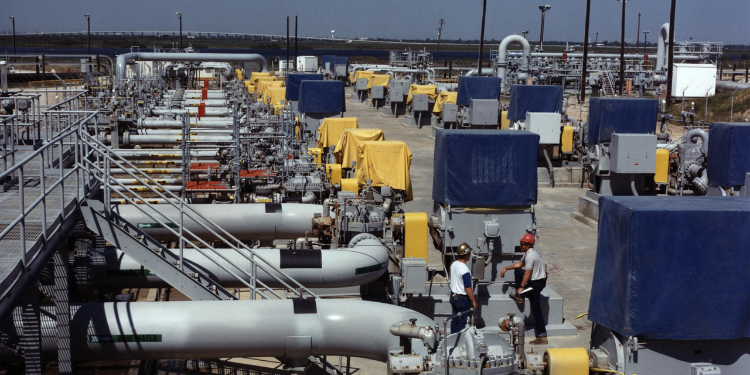
The Strategic Petroleum Reserve is the world’s largest emergency supply of crude oil located in salt caverns in Texas and Louisiana Gulf Coasts, maintained to cushion major supply shocks affecting the United States.
Also Read: Food Prices to Rise as Trump Spends Over $891 Million a Day on Iran War
U.S. crude prices briefly fell following the IEA’s decision to release reserves but later rebounded during trading. By midday, prices had climbed back above $88 per barrel.
Trump urges oil companies to keep using the Strait of Hormuz
Speaking to reporters outside the White House earlier Wednesday, Trump said oil companies should continue using the Strait of Hormuz despite security concerns in the region.
“I think they should use it,” the president said when asked whether he was encouraging major energy companies to continue shipping through the waterway.
“Look, we took out just about all of their mine ships in one night,” Trump added, referring to Iranian naval vessels he said had been targeted by U.S. forces.
“Just about all of their navy is gone, at the bottom of the sea,” he said.
Uncertainty about the conflict and disruptions to shipping lanes has continued to put upward pressure on prices despite the reserve release.
The price of oil remained high on Wednesday with Brent futures rising just under 5 per cent to $91.98 per barrel. West Texas Intermediate increased 4.6 per cent to $87.25 per barrel, according to Reuters.