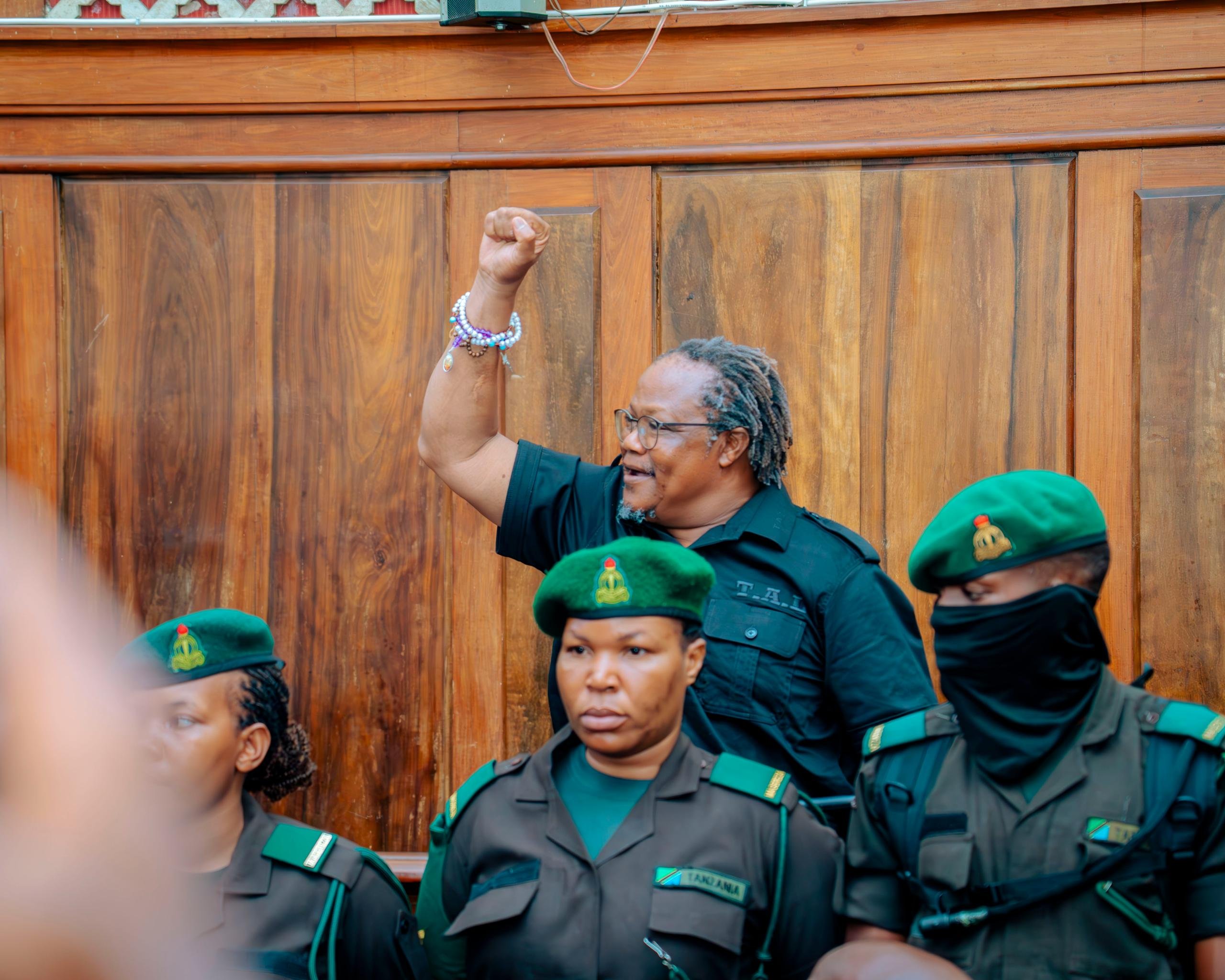
Tanzanian opposition leader Tundu Lissu has been found guilty of incitement, despite facing treason charges over remarks calling for electoral reforms ahead of the country’s 2025 General Election.
A three-judge panel delivered the judgment on Friday, November 6, 2026, ruling that prosecutors had failed to prove that Lissu intended to intimidate the government, a key element required to establish the treason charge.
However, the court found that his statements calling on Tanzanians to prevent or disrupt the 2025 General Election amounted to incitement. The judges said the prosecution had established the elements of the lesser offence under Section 390 of Tanzania’s Penal Code.
Presiding Judge Dunstan Ndunguru said the court was satisfied that it could convict Lissu of the lesser offence under Section 319 of the Criminal Procedure Act, even though it was not separately included in the original charge sheet.
“The court is satisfied that, under Section 319 of the CPA, the accused committed the lesser offence of incitement under Section 390 of the Penal Code,” Ndunguru said while reading the judgment.
The judges also linked the incitement case to Lissu’s campaign against the 2025 elections, which he had opposed under CHADEMA’s slogan, “No Reforms, No Election.”
The court ruled that his public remarks were intended to reach a wider audience and encourage people to disrupt the election. It stated: “By uttering those words with the intention of disseminating them to the public, the accused incited the public to disrupt the 2025 elections.”
Lissu, the chairman of CHADEMA, Tanzania’s main opposition party, was arrested on April 9, 2025, and accused of attempting to mobilise citizens to prevent the election from taking place.
The case has kept him in detention for more than a year and attracted attention from political leaders and human rights organisations across East Africa.
Why Tundu Lissu was Arrested
The treason charge arose from remarks Lissu made during a CHADEMA meeting at the party’s headquarters in Dar es Salaam on April 3, 2025.
At the time, the opposition party was campaigning under the slogan ‘No Reforms, No Elections’, demanding changes to Tanzania’s electoral system before the October 2025 polls.
Also Read: New Report Indicates Tundu Lissu’s Life at Serious Risk
The prosecution alleged that Lissu called on Tanzanians to block the election, mobilise rebellion and disrupt the voting process to force political change.
He was charged under Section 39(2)(d) of Tanzania’s Penal Code with allegedly intending to intimidate the government.
Lissu acknowledged making the remarks but denied committing an offence, arguing that his statements did not amount to treason.
During his final submissions on September 23, 2026, he told the three judges that the case would have implications beyond his personal circumstances.
“You will not judge one person; you will set a precedent that will be followed for years to come,” Lissu told the court.
The case proceeded to trial at the High Court, with the prosecution presenting 17 witnesses and the defence calling five.
What Could Happen to Lissu?
The treason charge carries the death penalty under Section 39(2)(d) of Tanzania’s Penal Code.
During the final submissions on September 29, State Attorney Nassoro Katuga maintained that the prosecution had proved its case and asked the court to convict Lissu.
“We submit that the Republic has proved the charge beyond reasonable doubt and ask the court to find that the accused committed the offence,” Katuga told the judges.
Lissu’s defence disputed the prosecution’s evidence and argued that the government had not shown it was threatened by his remarks.
He questioned why senior government officials, including President Samia Suluhu Hassan, had not testified about whether his statements had threatened the government.
In his submissions on September 25, Lissu told the court:
“There is not a single piece of evidence showing that the government was threatened.”
He argued that the prosecution had failed to establish an essential element of the offence and asked the judges to acquit him.
The judgment was particularly significant because the case was the first trial under the specific treason provision being used against him.
Who is Tundu Lissu?
Tundu Lissu was born on January 20, 1968, in Ikungi District, Singida Region, Tanzania.
He is a lawyer and politician known for his work in human rights, environmental protection, and opposition politics.
Lissu studied law at the University of Dar es Salaam, graduating in 1994, before obtaining a Master of Laws degree from the University of Warwick in the United Kingdom.
Before entering Parliament, he worked with the Lawyers’ Environmental Action Team, advocating for communities affected by land disputes, mining and environmental issues.
Also Read: Profile of Tundu Lissu: Shot 16 Times During Magufuli’s Time, Jailed Under Samia Suluhu Rule
He was elected Member of Parliament for Singida East in 2010 and served until 2020. He also served as president of the Tanganyika Law Society, Tanzania’s mainland bar association.
In January 2025, he was elected national chairman of CHADEMA, succeeding Freeman Mbowe.
The 2017 Shooting That Forced Him into Exile
Lissu survived an assassination attempt on September 7, 2017, when gunmen shot him several times outside his residence in Dodoma.
He was rushed to hospital, then transferred to Nairobi for treatment. He later travelled to Belgium for further medical care and rehabilitation.
The attack left him with serious injuries and forced him to spend several years outside Tanzania.
He returned to the country in 2023 and resumed his political activities.
In 2020, he contested the presidential election against then-President John Magufuli but lost.
Kenyan Leaders Follow Lissu’s Case
Lissu’s treason case has attracted attention from Kenyan political and legal figures, including former Chief Justice Emeritus David Maraga and former Justice Minister Martha Karua.
In a statement issued on November 6, Maraga criticised the prosecution of Lissu, calling the treason trial legally bankrupt and urging his acquittal.
Maraga, through the United Green Movement (UGM) Party, also sent condolences to Lissu following the death of his elder brother, while expressing solidarity with him, his family and CHADEMA.
He argued that calls for electoral reforms, peaceful assembly and political dissent should not be treated as treason.
Maraga further questioned the direction taken by Tanzania’s ruling Chama Cha Mapinduzi (CCM) party under President Samia Suluhu Hassan, arguing that it had departed from the democratic principles associated with the country’s founding president, Julius Nyerere.
He also criticised the handling of protests in Tanzania and Kenya, raising concerns about alleged killings, abductions and torture of protesters.
Former Justice Minister Martha Karua has also followed Lissu’s case. She travelled to Tanzania with other Kenyan lawyers seeking to observe the proceedings but was denied entry and deported.
Former Chief Justice Willy Mutunga was among the other Kenyans who faced restrictions at Julius Nyerere International Airport during the same period.
Follow our WhatsApp Channel and X Account for real-time news updates, and subscribe to our YouTube Channel for in-depth interviews.