
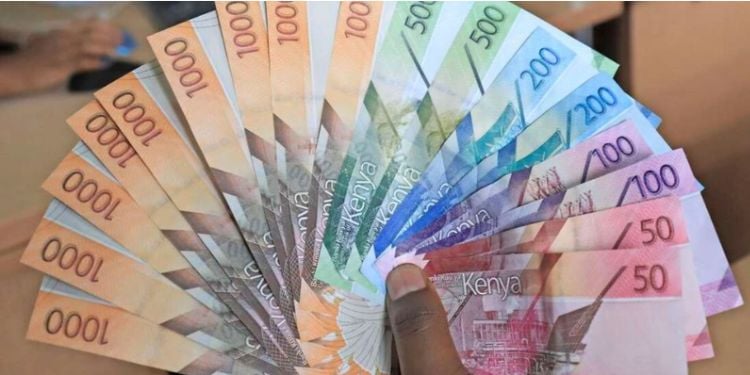
The Kenyan shilling weakened against the US Dollar on Thursday, April 2, caused by geopolitical tensions, including the US-Iran war. The Kenyan shilling weakened against the US dollar on Thursday, April 2, driven by geopolitical tensions, including the ongoing US-Iran conflict.
Analysis of market data from the Central Bank of Kenya (CBK) shows the shilling has weakened marginally since the war broke out on February 28.
“The effects of current geopolitical tensions are wide-reaching and seem to have permeated almost every single aspect of the global economy. Unfortunately, the Keynan Shilliing was not immune to this trend. In combination with endogenous factors, like the Keynan economy’s debt obligations and rate differentials, the Shilling continued its slide, from 129.99 per 1 USD to 129.93. A knock-on effect saw importers scramble to acquire dollars, afraid of a supply squeeze due to the war. During this period, Kenyan traders will have to remain hypervigilant, shore up their risk management measures, and watch current events like a hawk,” says Van Ha Trinh, Financial Markets Strategist at Exness
The regulator quoted the shilling at 129.99 on Thursday, April 2, up from 129.93 recorded on Wednesday, April 1.
This is the first time the local unit has touched the 130 unit level for the first time since August 2024, on the back of a consistent depreciation that has been greatly contributed to by the Middle East war.
Why the Kenyan Shilling Has Weakened Further, Hitting 130 Against the Dollar
The depreciation is linked to a combination of global investor behavior, interest rate differentials, and Kenya’s external debt obligations.
Importers have in recent days been rushing to secure dollars amid fears of a limited supply in international markets due to the ongoing war in the Middle East.
A high demand for the US currency has put pressure on the exchange rates, thus causing the local unit to weaken.
Analysts note that while the depreciation remains mild, the gradual shift reflects mounting external pressures, particularly as investors reassess risk in emerging markets following the escalation in the Middle East.
Also Read: Measures President Ruto Took to Stabilise Kenyan Shilling
The Institute of Economic Affairs (IEA) has warned that the Kenyan shilling could lose between eight and 30 percent of its value against the US dollar if the war involving the United States, Israel, and Iran persists.
The Institute explains that wars in the Middle East typically trigger a flight-to-safety effect, investors shift capital into safe-haven assets such as the US dollar during periods of global uncertainty.
Consequently, this strengthens the dollar and places downward pressure on riskier currencies such as the Kenyan shilling.
“US-Kenya interest differential combined with elevated risk premiums on Kenyan assets will drive bilateral Shilling depreciation of (8–30%+) depending on conflict severity,” IEA said.
Additionally, IEA notes that the weakening of the shilling would immediately raise the real debt-service burden on Kenya’s external debt.
A 20 percent depreciation, for instance, would inflate the cost of servicing foreign debt by a commensurate margin, worsening the fiscal deficit and creating tighter constraints on monetary policy.
Nevertheless, it highlights that Kenya’s exports, including tea, horticulture, and coffee, are largely price-inelastic in the short term.
This means that export volumes will not rise immediately even if the shilling weakens, while import costs for essentials like oil, machinery, and fertilizer will increase instantly.
Also Read: CBK Raises Alarm Over New Trend Involving Kenya Shillings
Risks of a Weakening Shilling
According to the Central Bank of Kenya, a weakening Kenyan shilling carries both risks and benefits for the economy.
The CBK notes that depreciation raises the cost of imports, meaning the country must spend more shillings to pay for essential goods such as fuel, thereby increasing pressure on businesses and households.
However, a weaker currency can also boost exports by making Kenyan goods cheaper in international markets, improving competitiveness, and helping to narrow the trade deficit.
The bank added that a soft shilling can encourage domestic investment and job creation, while discouraging the consumption of luxury imports—factors that support the current account balance and overall economic growth.
It cited 2011, when a widening current account deficit of about 11 percent of GDP led to a sharp depreciation of the currency to help correct the imbalance.
Even so, the CBK cautions that for a small, import-dependent economy like Kenya—particularly due to its large oil import bill—prolonged depreciation could fuel inflation, as higher energy costs ripple through production and consumption.
A strong Kenyan shilling can signal economic resilience, as it reduces the cost of imports such as fuel, food, and machinery and eases the burden of external debt repayments. This, in turn, helps preserve foreign reserves, since fewer shillings are needed to purchase dollars to meet international obligations.
For households, a stronger shilling translates into lower inflationary pressures, and for the government, it stabilizes debt-servicing costs. In this sense, the strength of the shilling and the health of reserves are positively linked.
Stability in the exchange rate reassures investors, reduces uncertainty for businesses, and simplifies government debt management.
Why the Shilling was Stable at 129
Kenya’s shilling has traded in a narrow band against the US dollar for at least 19 months, emerging as one of the world’s most stable currencies after the sharp depreciation seen in 2023.
The currency’s stability has been attributed to a relatively well-performing current account, supported by increased foreign direct investment and overseas purchases of local-currency bonds, which have boosted dollar liquidity, according to central bank Governor Kamau Thugge.
Traders, however, note that while global events such as the month-long Iran conflict have affected markets, the shilling has faced pressure from rising demand for the dollar among importers and manufacturers.
The Parliamentary Budget Committee warned that unusual stability, relative to normal emerging-market volatility, suggests tight exchange-rate management or active liquidity smoothing by the central bank.
“The lack of natural volatility may hide foreign exchange imbalances, particularly since the shilling has been weakening against other major currencies,” the committee said in a report.
Data on reserves and exchange rates between 2019 and 2025 show a gradual inverse relationship, with improvements in reserves supporting greater exchange rate stability.
Reserves rose steadily from 2019 to 2024, fueled by export earnings, remittances, and receipts from external borrowing, contributing to the appreciation of the shilling.
In the first half of 2025, the shilling averaged KSh 129.3 against the dollar, an improvement from KSh 139.9 in 2023, reflecting the impact of growing reserves on the currency’s performance.