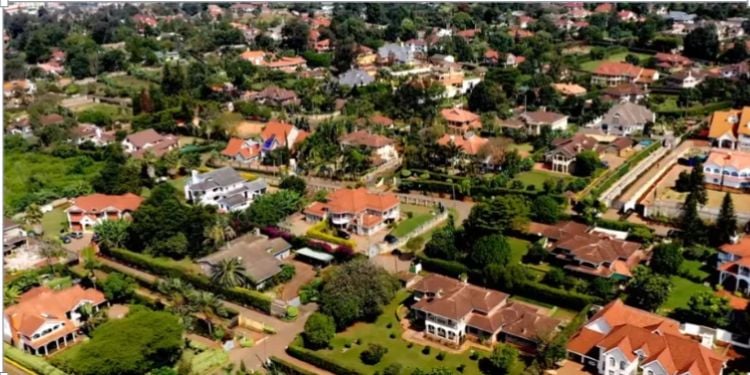

Hass Property has unveiled its land index for the first quarter of 2026, showing that land prices in Nairobi’s suburbs and satellite towns grew more slowly than in the previous quarter, due to falling demand, tighter economic conditions, and uncertainty around building approvals at the Nairobi County offices.
According to the Hass Property Land Index Q1 2026 report, land prices in the city’s suburbs rose by 0.8 percent to Ksh228.8 million, compared with a 1.3 percent increase in the fourth quarter of 2025, attributing to the fact that land price growth in Nairobi and surrounding areas slowed during the first quarter of 2026.
“Land prices in Nairobi’s suburb grew minimally at 0.8 percent in the first quarter of 2026, and by 5.0 percent over a one-year period,” the report stated.
The decline was attributed to weaker demand, tighter economic conditions, and uncertainty over county planning approvals.
Top Nairobi Estates and Satellite Towns Where Land Prices Fell in 2026
From the report, several Nairobi suburbs recorded a contraction in land prices over the period, including:
- Muthangari (-2.8%)
- Loresho (-2.0%)
- Kitisuru (-1.5%)
- Muthaiga (-0.7%)
- Westlands (-0.2%)
“Five suburbs, including Muthangari (-2.8 percent), Loresho (-2.0 percent), and Kitisuru (-1.5 percent), reported lower land prices, while Nyari and Langata stood out with respective price growth of 3.1 percent and 2.4 percent,” the Hass Property report cited.
In the satellite towns, seven of the 14 surveyed areas recorded negative price movements, marking the slowest expansion in the segment in five years.
Also Read: Ruiru, Ngong Among Nairobi Estates Where Land Rates Increased in 2023
The affected satellite towns include:
- Athi River (-2.5%)
- Ngong (-1.7%)
- Mlolongo (-0.9%)
- Syokimau (-0.7%)
- Kiserian (-0.7%)
- Limuru (-0.1%)
- Tigoni (-0.1%)
Key Factors for the Price Drops-Hass Property
According to the Hass Property Index Report, declines in land prices in selected Nairobi suburbs were linked to increased planning uncertainty.
Developers faced reduced clarity on buildable parameters due to questions about the validity and consistency of Nairobi County planning approvals, thereby slowing development activity.
The report also highlights tighter economic conditions as a contributing factor. Reduced household affordability, particularly among “self-build” buyers in satellite towns, limited demand for residential land, putting downward pressure on prices.
Also Read: Govt to Counter Illegal Connections in Nairobi Estates After Signing Deal with Sakaja
“The infrastructure-led uplift across many of Nairobi’s satellite towns that underpinned earlier growth is now largely priced into land values. Against a tighter economic backdrop, this has reduced affordability for self-build buyers, narrowing the addressable market,” said Sakina Hassanali, the HassConsult Co-CEO & Creative Director.
Hass Property further notes that earlier infrastructure-driven appreciation in satellite towns has largely been absorbed into current valuations.
This “priced-in” growth reduced speculative upside, contributing to softer price movements in recent periods.
In addition, the report observes a shift in investor behavior, with capital increasingly moving away from land and into passive investment assets such as government securities and unit trusts.