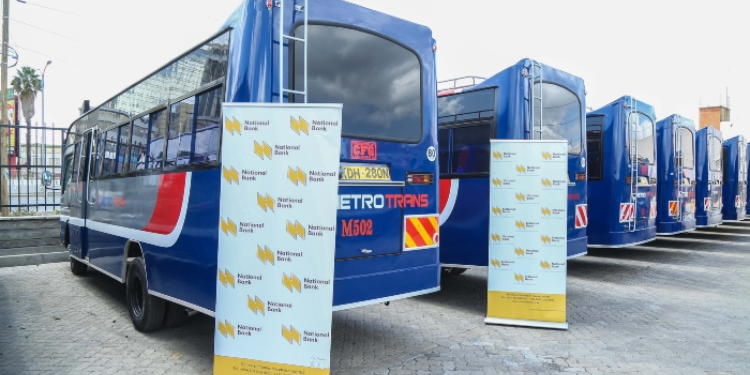
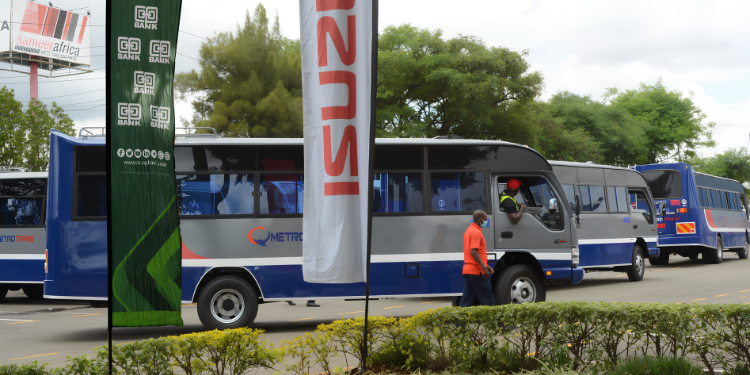
Metro Trans SACCO is one of Nairobi’s major transport cooperatives operating a large fleet of public service vehicles across the city, with a strong concentration in Eastlands and Embakasi corridors.
Formed in the early 2010s after transport reforms that required matatus to operate under SACCOs, the sacco brought together vehicle owners under a single structure to manage routes, raise capital, and comply with regulations.
The SACCO operates under a cooperative model, in which members jointly own the business and contribute vehicles, which are managed centrally.
This structure allows it to pool resources, access financing, and coordinate operations while meeting requirements set by the National Transport and Safety Authority, which mandates matatus to operate within organized groups.
Metro Trans is linked to Metro Trans East Africa, a broader transport and logistics operator, positioning it as more than a typical matatu SACCO.
According to its official corporate profile, the company operates a multi-service model encompassing public transport, staff transport, student transport, and cargo logistics.
Metro Trans Structure, Fleet, and Growth
Metro Trans has grown through continuous fleet expansion supported by structured financing and partnerships.
Also Read: Govt Issues Notice To Creditors As It Moves To Wind Up Collapsed Ari Bank After 28 Years
The company operates a fleet of about 200 buses within Nairobi and surrounding areas, combining both company-owned units and franchise vehicles contributed by members.
Fleet growth has been driven by significant investments to meet rising commuter demand in Nairobi.
In 2022, the company invested about Ksh389 million in 80 buses, followed by additional expansion backed by financial institutions through leasing and asset financing arrangements.
These partnerships allow the SACCO to scale operations while enabling members to access vehicles without full upfront costs.
The SACCO has also moved into new technology and service models.
In 2023, it introduced five electric buses supplied by Kenyan e-mobility firm BasiGo, marking one of the early shifts toward clean energy transport in Nairobi.
The buses operated on routes linking Utawala, Community–Upperhill and Kiambu, expanding Metro Trans’ footprint beyond its traditional corridors while introducing cashless and lower-emission operations.
Nairobi Routes and Commuter Network
Metro Trans’s strength lies in high-density commuter routes connecting Nairobi’s Central Business District to eastern residential estates.
Also Read: Kenyan Billionaire Behind Five-Star Sankara Hotel in Westlands, Nairobi
Its core operations run along Mombasa Road and Embakasi, serving areas such as Imara Daima, Pipeline, and Embakasi Village, which attract large volumes of daily commuters.
One of the key corridors within this network is Route 33B, which links the CBD to Embakasi through major stops including Nyayo Stadium, Capital Center, Cabanas, and Imara Daima before terminating in the Embakasi area.
The route operates with high frequency, with buses departing at short intervals, especially during peak hours.
Commuters using these routes typically spend about 35 minutes traveling between the CBD and Embakasi under normal conditions, reflecting the short-haul, high-turnover nature of the services.
In addition to the Mombasa Road corridor, Metro Trans operates in other parts of Nairobi, including connections to Upperhill, Utawala, and Kiambu via its expanded electric bus routes.
These routes complement its core Eastlands operations by linking residential areas to major economic zones such as the CBD and Upperhill.
The SACCO’s route strategy focuses on volume and frequency rather than long-distance travel.
Vehicles are deployed continuously during peak hours to maximize passenger turnover, a model suited to densely populated estates such as Pipeline, where demand for affordable public transport remains consistently high.
Within the CBD, Metro Trans vehicles operate from established public transport stages, connecting passengers to multiple routes across the city.
This network is part of Nairobi’s wider matatu system, which handles the majority of daily urban commuting and remains the backbone of public transport.