
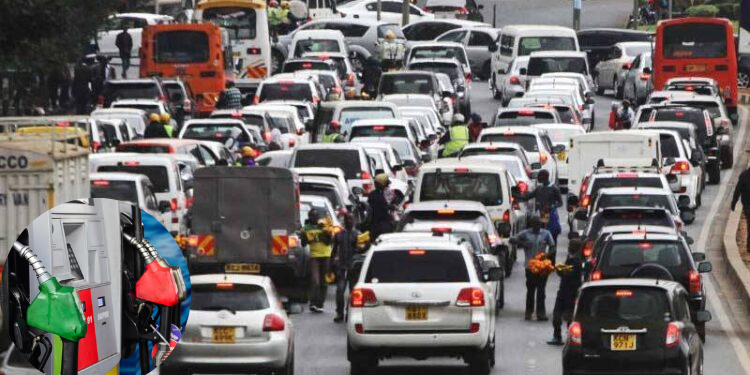
The Motorists Association of Kenya (MAK) has called for a review of the country’s fuel pricing framework, arguing that the current system has failed to reflect changes in global crude oil prices.
The call comes after the Energy and Petroleum Regulatory Authority (EPRA) retained fuel prices for the July-August pricing cycle, a decision MAK says has denied Kenyans the benefit of declining international oil prices.
In a statement issued on Wednesday, July 15, the MAK asked Parliament to review the Energy Act and subsequent amendments governing fuel price determination, saying the framework requires reforms to guarantee transparency, accountability and consumer protection.
EPRA Asked to Review Fuel Pricing System
MAK wants political influence removed from fuel price decisions and adoption of an independent, market-responsive system that reflects changes in global oil prices.
“We call for comprehensive reforms to Kenya’s fuel pricing framework, including the removal of political influence from fuel price determination and the restoration of a transparent, independent and market-responsive system,” MAK said.
The association argued that consumers should benefit from falling international prices in the same way they feel the impact when global oil costs increase.
MAK said this was the second consecutive fuel pricing review where Kenyan consumers had not received relief despite favourable global market conditions.
The association challenged EPRA’s previous explanation that fuel prices had remained unchanged due to a pricing lag of more than 45 days, arguing that the justification was no longer applicable.
“When fuel prices were previously left unchanged, EPRA justified its decision by citing a pricing lag of over 45 days. That explanation has now collapsed under its own weight,” MAK said.
According to the association, global crude oil prices have remained favourable for an extended period, but the savings have not been reflected at petrol stations.
MAK accused government agencies of failing to prioritize consumer interests, arguing that high fuel prices continue to increase financial pressure on households, transport operators and businesses.
Also Read: Govt Extends 8.0% VAT Rate on Fuel Ahead of EPRA Review
Calls for Energy Act Review
The association also urged Parliament to review amendments to energy laws made since 2019, arguing that they have given the Executive and EPRA greater control over fuel pricing without enough protections for consumers.
MAK said regulation should focus on ensuring quality, fair competition and preventing exploitation rather than controlling prices in a way that denies consumers relief.
“Government’s legitimate role is to collect lawful taxes, regulate quality and competition, and prevent exploitation — not to deny consumers the benefits of lower global prices through administrative price fixing,” MAK said.
The motorists’ group maintained that fuel pricing should be based on a transparent formula that responds to movements in international markets.
Also Read: EPRA Announces Fuel Prices for July and August Cycle
Impact on Cost of Living
The motorists’ lobby warned that fuel prices have a wider impact on the economy, influencing transport fares, food prices, production costs and business operations.
It said maintaining high fuel costs places additional pressure on Kenyans already facing rising living expenses.
This comes after EPRA revised the formula used to calculate the cost of imported petroleum.
Under the new system, imported petroleum cargo shipped between May 10 and May 31 will be priced using the average global fuel prices of petrol, diesel and kerosene recorded in April.
Shipments arriving between June 1 and June 9 will be based on May average prices.
Follow our WhatsApp Channel and X Account for real-time news updates.