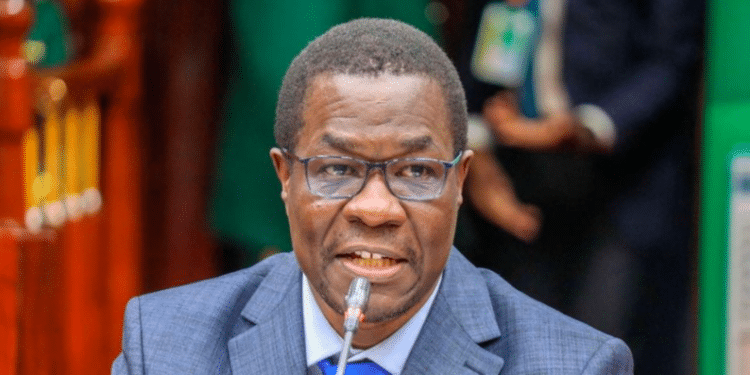
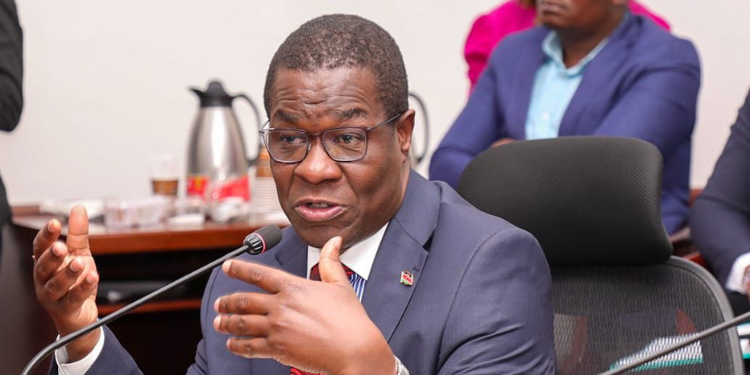
Energy and Petroleum Cabinet Secretary (CS) Opiyo Wandayi has called on Oil Marketing Companies (OMC) to release any petroleum products they may be withholding, noting that hoarding will not be tolerated under any circumstances.
Addressing the press on Wednesday, March 25, CS Opiyo Wandayi accused some oil marketers and retailers of deliberately withholding fuel in anticipation of future price increases.
He described such practices as commercially opportunistic, against the public interest, and a breach of licensing obligations.
“So, all licensed oil marketing companies are strongly reminded of their legal obligation to maintain a continuous supply and to release products at appropriate prices. Let me just emphasize that,” Wandayi said.
“The oil marketing companies are well aware of the conditions that come with their licences, and they must not engage in any unorthodox practices, any unethical practices, to take advantage of the current situation, of the crisis that is currently unfolding in the world. That would, of course, invite very serious sanctions.”
Further, he directed that all oil marketing companies (OMCs) must sell fuel at the prices set by the Energy and Petroleum Regulatory Authority (EPRA).
Opiyo Wandayi Urges Kenyans to Avoid Panic Buying Fuel
CS Opiyo Wandayi assured Kenyans that the country has sufficient fuel reserves, urging citizens to remain calm and avoid panic-buying amid rising concerns about potential shortages.
He reiterated that the government’s primary responsibility is to ensure adequate supplies now, in the near future, a duty that the ministry continues to fulfill diligently.
The CS noted that the country’s fuel systems, from importation through storage, pipeline distribution, and the retail network, are functioning as required.
Also Read: Govt Downplays Fuel Shortage Fears as Kenya Loses Ksh1 Billion Per Week
The public is therefore called upon to remain calm and continue normal purchasing patterns.
Regarding oil marketing companies (OMCs), Wandayi reiterated that their licenses clearly define their obligations and warned that any violation of these conditions will result in serious consequences.
The clarification comes after the United Energy and Petroleum Association warned of a potential nationwide fuel shortage unless the EPRA adjusts current fuel prices.
Also Read: Explainer: How Kenya Imports Fuel and Supplies Petrol Stations Countrywide
Government-to-Government Deal
Wandayi said none of the government-to-government (G2G) partners or international oil companies (IOCs) have reported difficulties in meeting their contractual obligations.
He stressed that the framework agreements with the IOCs do not restrict them from sourcing fuel from any particular region of the world, noting that the Strait of Hormuz is just one of several supply routes.
Wandayi added that the IOCs are well-established corporate entities with the capacity to source fuel globally and ensure delivery to Kenya, leaving no cause for alarm.
On pricing, he indicated that the government has adequate tools to manage the situation when necessary.